

 Français
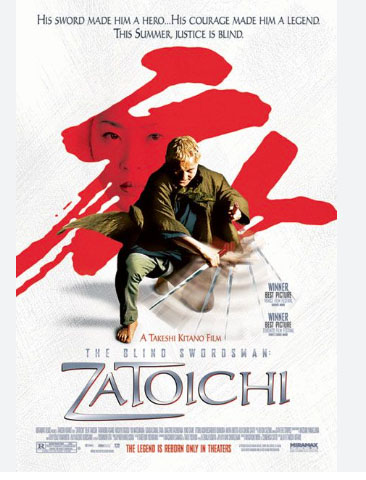
Zatoichi
Synopsis
Set in 19th-century Japan, Zatoichi is a blind, unassuming itinerant masseur and gambler who wanders the rural countryside. Beneath his humble, frail exterior and walking cane lies a legendary master swordsman possessing lightning-fast reflexes and lethal blade skills. Arriving in a remote mountain town terrorized by a brutal local yakuza gang and corrupt merchants, Zatoichi vows to protect the innocent townspeople. Along the way, he crosses paths with disguised geishas seeking vengeance for their murdered parents. The film delivers a thrilling, stylish samurai masterpiece.
The Making of the Film
Director, writer, and star Takeshi Kitano helmed this acclaimed jidai-geki samurai film, revitalizing the classic legendary Japanese blind-swordsman character created by novelist Kan Shimozawa. The production was designed to blend traditional samurai cinema with Kitano's signature deadpan dark humor, graphic action choreography, and a surprising musical dance finale. Filmmakers utilized stunning Japanese countryside locations and vibrant practical effects to stage the lightning-fast sword fights. The project was built to be a global arthouse blockbuster.
Critical Reception
Critics offered widespread critical acclaim, praising Takeshi Kitano's brilliant direction, electrifying sword-fight choreography, and the innovative integration of traditional rhythm into action scenes. Reviewers commended the film's perfect balance of gritty samurai violence, touching character moments, and joyous comedic beats. Some critics noted its stylized violence, yet universally lauded its artistic brilliance and entertainment value. It emerged as an international art-house triumph.
Audiences embraced the movie with immense enthusiasm, turning it into a global box office success and winning top honors at international film festivals. Viewers were mesmerized by Zatoichi casually walking through towns while effortlessly dispatching corrupt thugs in lightning-fast bloody sword flashes. The rhythmic tap-dance finale surprised and delighted fans worldwide. Many praised it as a modern masterpiece of samurai cinema.
The film achieved ultimate awards-season triumph, winning the prestigious Silver Lion for Best Director at the Venice Film Festival along with multiple Japanese Academy Awards. Takeshi Kitano earned global acclaim. The project cemented its status as an immortal classic of samurai cinema.
Behind-the-Scenes Stories
Director Takeshi Kitano wanted to reinvent the classic Shintaro Katsu character for modern audiences while honoring traditional samurai folklore. He dyed his hair bright blonde for the role, adding a striking modern visual flair to the traditional period setting. The production team collaborated with master sword-fight choreographers to ensure the blade combat looked lightning-fast and brutal.
Shooting across historical Japanese studio backlots and scenic rural provinces required careful coordination of stunt rigging and blood-squib effects. Managing rhythm-based action choreography demanded precise editing timing. Maintaining a striking visual palette required careful cinematography.
During the intense sword-fight sequences, Takeshi Kitano performed with cold, effortless precision, dispatching opponents with sudden bursts of motion. The final tap-dance musical sequence involved weeks of rigorous choreography rehearsals for the entire cast. These practical efforts created cinema history.
Takeshi Kitano led the cast as Zatoichi, supported by Tadanobu Asano, Michiyo Ookusu, Gadarkanaru Taka, and Yuko Daike. The casting process gathered Japanese cinematic royalty. The resulting ensemble delivered peerless dramatic chemistry.
Themes Explored
The film explores justice versus corruption, blindness and inner vision, revenge, honor, and community resilience. It examines how quiet humility can triumph over arrogant brutality. The narrative ultimately champions protection of the innocent through decisive action.
Ending Explained
Zatoichi defeats the corrupt yakuza boss and unmasks the hypocritical local magistrate who was secretly masterminding the town's terror, bringing final justice to the region. As he walks away down the dusty road, he encounters a blinded swordsman whom he previously spared; in a poetic final moment, the blind swordsman swings blindly at Zatoichi, who easily parries it and gently notes that true blindness is failing to see the truth. Zatoichi continues his solitary journey. The ending offers a brilliant, poetic samurai resolution.
Meaning of the Title
The title "Zatoichi" directly names the legendary blind-swordsman protagonist of Japanese popular culture, signaling an iconic folk hero returning to the screen. It symbolizes hidden mastery and justice. The concise title set an international action tone.
Original Soundtrack
Composed by Keiichi Suzuki, the musical score is a fantastic masterpiece featuring traditional Japanese folk instruments blended with modern rhythmic percussion and the hypnotic stomping beats of the tap-dance finale. The innovative musical cues amplify the action rhythms, delighting music lovers.
Latest News
- The film remains an immortal milestone in modern samurai cinema, celebrated for Takeshi Kitano's brilliant direction and the iconic tap-dance finale.
Similar Films
Fans of stylish samurai cinema will enjoy 13 Assassins (2010), Yojimbo (1961), Blade of the Immortal (2017), and Lone Wolf and Cub (1972), all exploring swordsmen.