

 Français
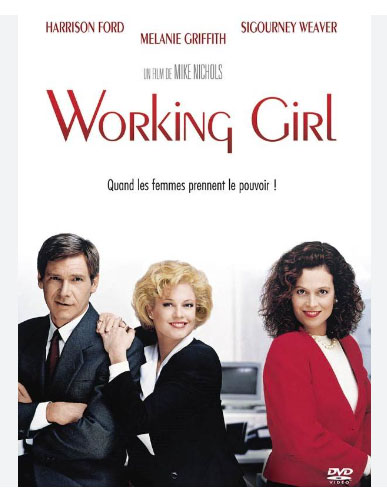
Working Girl
Synopsis
Tess McGill is a sharp, ambitious Wall Street secretary from Staten Island with a brilliant head for business who is repeatedly blocked from advancement by snobbish male executives. When her glamorous, manipulative female boss breaks her leg on a skiing trip, Tess discovers that her boss is planning to steal her brilliant corporate merger idea. Seizing the opportunity while her boss is incapacitated, Tess poses as an executive, teams up with an investment banker, and launches the major corporate takeover herself. As romance and corporate betrayal collide, she fights for her rightful place in the boardroom.
The Making of the Film
Director Mike Nichols helmed this iconic romantic comedy-drama, working from a clever, whip-smart screenplay by Kevin Wade that captured the booming corporate ambition of 1980s New York. The production was designed to be a feminist fairy tale celebrating working-class intelligence and corporate empowerment. Filmmakers utilized authentic New York skyscrapers, Staten Island ferries, and Wall Street offices to capture the bustling financial district. The project was built to be a definitive crowd-pleasing classic.
Critical Reception
Critics offered widespread critical acclaim, praising Melanie Griffith's star-making lead performance, Harrison Ford's charming romantic turn, and Sigourney Weaver's hilarious villainy. Reviewers commended Mike Nichols's brilliant direction, which blends sharp corporate satire with a heartwarming Cinderella romance. Some critics noted its fairy-tale predictability, yet universally lauded its empowering feminist message and witty dialogue. It emerged as a massive box office smash.
Audiences embraced the movie with immense enthusiasm, turning it into a massive box office hit and an enduring cultural touchstone of 1980s cinema. Viewers were mesmerized by Tess McGill trading sneakers for high heels on the Staten Island ferry, her big hair, and her triumph over snobbish executives. The iconic theme song "Let the River Run" by Carly Simon became an anthem of corporate empowerment. Fans continue to celebrate its retro style.
The film achieved ultimate awards-season triumph, winning the Academy Award for Best Original Song for Carly Simon. Melanie Griffith, Sigourney Weaver, and Joan Cusack all earned well-deserved Academy Award nominations. The project cemented its status as an immortal classic of 1980s cinema.
Behind-the-Scenes Stories
Director Mike Nichols wanted to capture the aspirational energy of working-class women breaking through the glass ceiling of Wall Street in the 1980s with style and humor. He cast Melanie Griffith because she brought genuine vulnerability and toughness to Tess McGill. The production team collaborated with high-end financial consultants to ensure the merger plot looked authentic.
Shooting across authentic New York financial districts and Staten Island ferries required careful crowd coordination and permits. Managing fast-paced corporate boardroom dialogue demanded rigorous rehearsal from the cast. Maintaining a glossy, aspirational visual palette required careful cinematography.
During the famous boardroom climax scene where Tess exposes her stolen idea, Melanie Griffith delivered her lines with commanding poise, creating an iconic cinematic moment. Sigourney Weaver brought hilarious, catty perfection to her plaster-cast villainy. These practical efforts resulted in masterclass cinema.
Melanie Griffith, Harrison Ford, and Sigourney Weaver led the iconic cast, supported by Alec Baldwin, Joan Cusack, and Philip Bosco. The casting process gathered powerhouse talent. The resulting ensemble delivered peerless dramatic chemistry.
Themes Explored
The film explores corporate glass ceilings, class mobility, female empowerment, workplace ethics, and ambition. It examines how working-class intelligence and intuition can outsmart Ivy League elitism. The narrative ultimately champions merit and authenticity over snobbery.
Ending Explained
Tess exposes her boss's corporate theft during a high-stakes merger meeting, proving that the original idea was entirely hers through clever circumstantial evidence. Instead of being fired for posing as an executive, she is rewarded for her brilliant business acumen by the company executives, who offer her a real management position. She settles into her brand-new corner office, greeted respectfully by her own secretary. The ending offers a breathtaking, triumphant feminist fairy-tale resolution.
Meaning of the Title
The title "Working Girl" directly highlights the protagonist's blue-collar roots and ambitious grind in the corporate world, celebrating female labor and determination. It symbolizes economic mobility and empowerment. The catchy title sets an iconic 1980s tone.
Original Soundtrack
Composed by Carly Simon, featuring her legendary Oscar-winning anthem "Let the River Run," the soundtrack is an absolute masterpiece of uplifting 1980s pop. The soaring vocals amplify Tess's morning commute across the Staten Island ferry, delighting music lovers.
Latest News
- The film remains an immortal milestone in cinema, celebrated for defining feminist corporate empowerment in the 1980s and Carly Simon's anthem.
Similar Films
Fans of empowering corporate comedies will enjoy The Devil Wears Prada (2006), 9 to 5 (1980), Legally Blonde (2001), and Baby Boom (1987), all celebrating career success.