

 Français
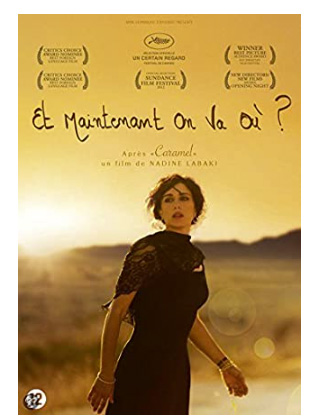
Where Do We Go Now?
Synopsis
In a remote Lebanese village, a church and a mosque stand side by side, reflecting the coexistence of Christian and Muslim communities. However, repeated conflicts and the loss of loved ones have created growing tensions among the men. Determined to prevent another tragedy, the village women unite and develop increasingly inventive plans to distract their husbands and sons from religious divisions. Their schemes include surprising performances, fabricated miracles and unexpected visitors. Through humor, compassion and collective determination, the women attempt to preserve peace and protect the fragile harmony of their community.
The film's origins
Where Do We Go Now? was conceived by Lebanese filmmaker Nadine Labaki as a story about religious coexistence and the devastating consequences of sectarian conflict. Growing up in Lebanon during periods of civil unrest and political instability profoundly influenced her understanding of the relationship between religion, community and violence. She wanted to explore the subject without creating a conventional political drama or presenting a simplistic division between opposing groups. The central idea was to imagine women from different religious backgrounds joining forces to protect their families from the destructive influence of conflict. Labaki developed the screenplay with Jihad Hojeily and Rodney Al Haddad, drawing inspiration from the social and historical realities of Lebanese society. The project was not an adaptation of a specific novel, but an original fictional story shaped by experiences and concerns familiar to the filmmaker. The decision to combine comedy, musical elements and drama allowed the subject to be approached through warmth and humanity rather than through violence alone. The women became the emotional center of the story because their shared grief transcends religious differences. The film ultimately reflects Labaki's belief that solidarity and compassion can create possibilities for peace even in deeply divided communities.
Reviews and reception
Professional critical reviews:
Where Do We Go Now? received a generally positive response from critics, particularly for its sensitive treatment of religious coexistence. Nadine Labaki was praised for addressing a serious political and social subject through a combination of humor, musical sequences and emotional storytelling. Reviewers appreciated the performances of the women and the film's ability to move between comedy and tragedy without abandoning its central message. Some critics considered certain situations overly theatrical, but many recognized the originality of its approach to sectarian tensions. Its emotional warmth and distinctive perspective helped distinguish it from more conventional films about conflict in the Middle East.
Audience reception:
The film attracted considerable attention at international festivals and found an audience beyond Lebanon. Its combination of humor, music and universal themes made it accessible to viewers unfamiliar with the country's political history. Audiences responded particularly strongly to the solidarity between women from different religious communities. The film also benefited from the growing international recognition of Nadine Labaki as a filmmaker. Its successful festival circulation and international distribution helped introduce Lebanese cinema to a wider public.
Awards and recognition:
Where Do We Go Now? received important recognition at several international festivals in 2011. It won the People's Choice Award at the Toronto International Film Festival, one of its most significant distinctions. It also received the Audience Award at the San Sebastián International Film Festival and a youth jury award at the Festival International du Film Francophone. The film was selected for the Un Certain Regard section of the Cannes Film Festival. These achievements confirmed its international appeal and established it as one of the most visible Lebanese productions of its year.
Behind-the-scenes stories
Director's inspirations:
Nadine Labaki drew inspiration from her childhood experiences in Lebanon, where political instability and armed conflict affected everyday life. She was particularly interested in the way religious divisions could transform ordinary relationships between neighbors and families. Rather than concentrating exclusively on the men involved in political and religious disputes, she imagined women who refuse to accept another cycle of violence. Their solidarity represents an alternative form of resistance based on humor, affection and practical action. The director wanted the film to remain emotionally accessible while addressing a subject with profound historical consequences.
Production challenges:
Filming required finding locations that could convincingly represent a Lebanese village where a church and mosque coexist. The production took place in several Lebanese communities, including Taybeh, near Baalbek, as well as Meshmesh, Douma and Jeita. The shooting lasted approximately two months, from October to December 2010. Coordinating the ensemble cast and the numerous village scenes required careful organization. Another challenge involved integrating music and choreographed sequences into a story that also addressed grief and religious tension. The filmmakers needed to preserve the authenticity of the setting while creating a fictional community with its own recognizable identity.
A memorable scene:
One of the film's most memorable sequences involves the women attempting to distract the men through an elaborate deception. Their plan to introduce unexpected entertainment into the village demonstrates the lengths to which they are willing to go to prevent another conflict. The scene combines humor with an underlying sense of desperation, because the women understand that another confrontation could have irreversible consequences. Their behavior is both playful and courageous, revealing how ordinary people can develop extraordinary strategies when their community is threatened. The sequence also illustrates the film's central idea that creativity and solidarity can sometimes accomplish what political arguments cannot.
Originally considered casting:
Nadine Labaki not only directed the film but also appeared as one of its principal performers. The production relied heavily on an ensemble of Lebanese actors, including Layla Hakim and Claude Baz Moussawbaa. Its casting approach helped create the impression of a genuine village community rather than a story centered on a single conventional protagonist. Reliable public documentation does not establish a definitive list of alternative actors initially considered for the principal roles.
Themes explored
Religious coexistence: The film explores the possibility of Christian and Muslim communities living together despite historical tensions and external pressures.
Peace and reconciliation: The women attempt to prevent violence by creating opportunities for dialogue and understanding.
Women's solidarity: Their collective determination demonstrates the strength of cooperation across religious and cultural divisions.
Grief and memory: The loss of husbands, sons and fathers affects the entire village and provides the emotional foundation of the story.
Love and family: Protecting loved ones becomes a motivation that transcends religious identity and political disagreement.
Humor as resistance: Comedy becomes a way of confronting fear and preventing destructive conflicts from dominating everyday life.
The absurdity of sectarian violence: The film questions the logic of fighting people who share the same community, memories and fundamental human needs.
Ending explained
The ending brings the village women's efforts to a dramatic and emotional conclusion. Their plans have demonstrated how far they are willing to go to prevent the men from returning to religious violence. However, the film does not suggest that peace can be guaranteed through a single ingenious intervention. The community remains vulnerable to the divisions and external influences that threaten its coexistence. The women's actions ultimately emphasize that preserving peace requires continuous effort, mutual understanding and a willingness to recognize shared humanity. Their solidarity offers an alternative to the destructive logic of revenge and religious hostility. The conclusion is both hopeful and bittersweet because it acknowledges the fragility of peace in a society marked by historical conflict. Rather than providing an easy political solution, the film leaves viewers with a powerful question about how ordinary people can protect the possibility of living together.
Meaning of the title
The title Where Do We Go Now? expresses the uncertainty experienced by a community that has endured repeated conflict and loss. It is a question about the future, but also about the direction society should take when old divisions threaten to destroy everyday life. The women are not simply asking where their village is heading geographically; they are questioning how their families can continue living together without repeating the violence of the past. The title therefore has a universal meaning that extends beyond Lebanon. It invites audiences to reflect on the choices available to communities confronted with hatred, fear and the possibility of reconciliation.
Original soundtrack
The music plays an important role in the film's emotional identity. The original score was composed by Khaled Mouzanar, Nadine Labaki's husband and frequent creative collaborator. Singer and songwriter Tania Saleh wrote the lyrics for the songs featured in the production. The musical sequences combine humor, emotion and cultural expression, helping the characters communicate feelings that ordinary dialogue cannot always convey. Rather than functioning merely as background music, the songs become part of the narrative and reinforce the women's collective identity. The soundtrack contributes significantly to the film's distinctive balance between comedy and drama.
Similar films
Caramel (2007): Another Nadine Labaki film exploring the lives, relationships and solidarity of women in Lebanese society.
Capernaum (2018): A socially conscious Lebanese drama examining human dignity and the consequences of difficult living conditions.
The Insult (2017): A Lebanese drama exploring how personal disagreements can become entangled with wider historical and political divisions.
Paradise Now (2005): A Palestinian film examining the human consequences of political conflict and violence.
The Band's Visit (2007): A warm comedy-drama about cultural misunderstandings, human connections and unexpected solidarity.