

 Français
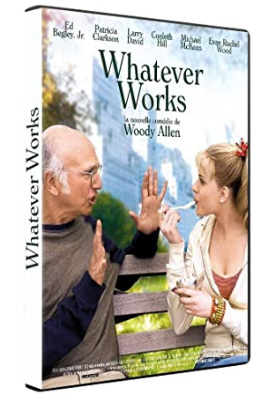
Whatever Works
Synopsis
Boris Yellnikoff is an eccentric, misanthropic former Columbia University quantum physicist living in Greenwich Village who constantly berates humanity. His cynical routine is upended when he takes in Melody St. Ann Celestine, a naive, runaway young woman from the deep South who arrives on his doorstep. Despite their absurd age difference and clashing worldviews, Boris marries her out of sheer condescending amusement. When Melodys hyper-religious southern mother and repressed father arrive in New York, comical chaos ensues as everyone undergoes unexpected personal transformations.
The Making of the Film
Writer and director Woody Allen originally wrote the screenplay in the 1970s with actor Zero Mostel in mind for the lead role. After Mostels passing, the script sat on a shelf for decades before Allen revived it for actor Larry David. The project marked Allens return to shooting a comedy in New York City after several European-set films.
Critical Reception
Critics gave the film mixed reviews, with some praising Larry Davids blistering, pitch-perfect misanthropic performance and Allens sharp comedic dialogue. Other reviewers felt that the cynical worldview and age-gap romance tropes felt tired and overly familiar. Overall reception appreciated the snappy New York comedic timing.
Public reception was modest, finding an appreciative audience among Woody Allen loyalists and fans of Larry Davids unique comedic persona. Viewers enjoyed the rapid-fire philosophical rants and eccentric character interactions. It remains a quirky minor entry in Allens vast filmography.
The film did not receive major mainstream cinematic awards, reflecting its modest independent release scale. Larry Davids performance was celebrated by comedy critics for channeling Allens neurotic persona seamlessly. Its New York cynical charm found a dedicated niche audience.
Filming Anecdotes
Director Woody Allen drew inspiration from classic misanthropic comedy archetypes and his own lifelong love for Greenwich Village streetscapes. He chose authentic New York locations to capture the bohemian atmosphere of cafes and apartments. His direction encouraged Larry David to unleash his signature neurotic ranting style freely on screen.
Production went smoothly on a compact independent schedule in Manhattan, with Allen granting his actors comfortable creative freedom. Evan Rachel Wood brought energetic innocence to her role as the naive southern runaway. Patricia Clarkson added wonderful comedic timing as her repressed mother undergoing a bohemian awakening.
A memorable sequence involves Boris breaking the fourth wall directly to the audience on a New York sidewalk to explain his cynical quantum theories. The scene establishes his arrogant yet hilarious worldview right from the opening minutes. Davids natural delivery anchored the comedic style.
The casting process was straightforward once Allen realized Larry David was the ideal living embodiment of his neurotic cinematic alter ego. David was cast immediately, bringing his iconic Curb Your Enthusiasm persona to the big screen. Evan Rachel Wood was chosen to provide a stark, youthful comedic contrast.
Themes Explored
The film explores cynicism, unconventional relationships, existential philosophy, and unexpected personal growth. It challenges rigid moral codes and embraces life through chaotic acceptance. Whatever works to find happiness is justified.
NULL
Title Significance
The title refers to the films central philosophical mantra that whatever method or delusion helps a person get through life is acceptable. It highlights the pragmatic acceptance of human absurdity.
NULL
NULL
Similar Films
Other similar films include Annie Hall, Midnight in Paris, and Curb Your Enthusiasm: The Movie.