

 Français
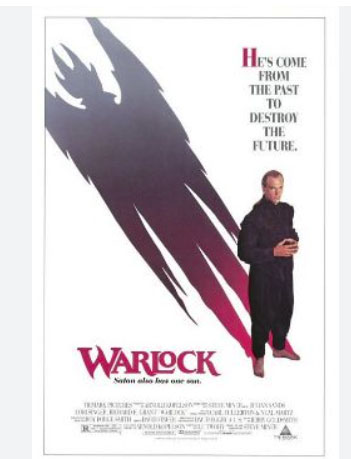
Warlock
Synopsis
In Boston in the year 1693, a vicious, bloodthirsty warlock sentenced to death for witchcraft escapes execution by making a pact with the Devil to travel forward in time to 20th-century Los Angeles. A valiant 17th-century witch hunter pursues him across the centuries to stop his apocalyptic plan to assemble the three parts of an ancient Satanic Bible that will destroy the Earth. Trapped in modern America, the warlock wreaks supernatural havoc using hexes, curses, and body horror. The duo engages in a high-stakes supernatural cat-and-mouse chase.
The Making of the Film
Director Steve Miner helmed this dark supernatural horror-action film, working from a clever screenplay by David Twohy that mixed historical witch-hunting lore with modern fish-out-of-water horror. The production was designed to deliver high-concept B-movie thrills with polished Hollywood studio production values. Filmmakers utilized practical makeup effects, optical illusions, and Los Angeles locations to construct the supernatural showdown. The project was built to be a thrilling, fast-paced genre classic.
Critical Reception
Critics offered mixed-to-positive reviews, praising Julian Sands's deliciously chilling, charismatic villain performance and Lori Singer's energetic hero turn. Reviewers commended Steve Miner's efficient direction, which blends creepy witchcraft curses with inventive action set pieces and dark humor. Some critics noted traditional horror-sequel tropes in the plotting, yet acknowledged its high entertainment value and stylish practical effects. It emerged as a beloved cult favorite among horror fans.
Audiences embraced the movie with immense enthusiasm, turning it into a cult classic on home video and cable television. Viewers were mesmerized by Julian Sands's suave, terrifying portrayal of an ancient warlock adapting to modern microwaves, cars, and credit cards while casting deadly hexes. The practical makeup effects and suspenseful cat-and-mouse chases kept horror fans thoroughly entertained. Many praised it as a fun, well-executed supernatural thriller.
While traditional major film academies bypassed the horror feature, it earned Saturn Award nominations for its horror achievements and Julian Sands's villainous performance. Sands's iconic role earned enduring cult acclaim. The project successfully secured its legacy as a cherished 1980s horror gem.
Behind-the-Scenes Stories
Director Steve Miner wanted to create a supernatural thriller that treats witchcraft with dark, menacing seriousness while injecting clever modern-world humor. He cast British actor Julian Sands because his striking, aristocratic features brought a chilling elegance to the ancient warlock. The production team collaborated with practical special effects legends to design gruesome curses and levitation stunts.
Shooting elaborate supernatural action sequences across Los Angeles streets and historical studio sets required complex wire work and optical illusion coordination. Managing practical makeup prosthetic applications demanded hours of daily preparation for the cast. Maintaining a suspenseful, spooky visual palette required careful cinematography.
During the gruesome aging and hex sequences, Julian Sands performed with gleeful theatrical villainy, terrifying the cast and crew between takes. The practical makeup effects team utilized mechanical puppets and latex appliances to achieve realistic body horror. These practical efforts brought tactile terror to the screen.
Julian Sands and Lori Singer led the cast as the Warlock and Cassandra, supported by Richard E. Grant as the witch hunter. The casting process gathered fantastic talent. The resulting ensemble delivered peerless dramatic chemistry.
Themes Explored
The film explores witchcraft mythology, time travel, supernatural cat-and-mouse survival, religious zealotry, and modern alienation. It examines how ancient evils adapt to contemporary technological societies. The narrative ultimately champions courage and resourcefulness over dark magic.
Ending Explained
Following a brutal cross-country pursuit, the witch hunter finally corners the warlock at a remote salt mine—salt being a fatal weakness to dark magic—and defeats him in a final explosive magical showdown. The warlock is destroyed, and the scattered pages of the Satanic Bible are neutralized, saving the world from apocalypse. The modern survivors find peace knowing the ancient evil has been vanquished. The ending offers a satisfying, thrilling horror resolution.
Meaning of the Title
The title "Warlock" directly names the primary supernatural villain of the film, distinguishing a male witch of dark power. It sets an instant magical horror tone and highlights the monstrous antagonist. The concise title became a cult horror brand.
Original Soundtrack
Composed by Jerry Goldsmith, the musical score is an absolute masterpiece featuring chilling choral arrangements, eerie synthesizer pads, and driving orchestral action motifs. The haunting musical cues heighten the witchcraft suspense, delighting music lovers.
Latest News
- The film remains a cherished cult classic on home video and streaming, celebrated for Julian Sands's iconic performance as the malevolent warlock.
Similar Films
Fans of 1980s supernatural horror will enjoy The Evil Dead (1981), The Gate (1987), Child's Play (1988), and Fright Night (1985), all exploring spooky entities.