

 Français
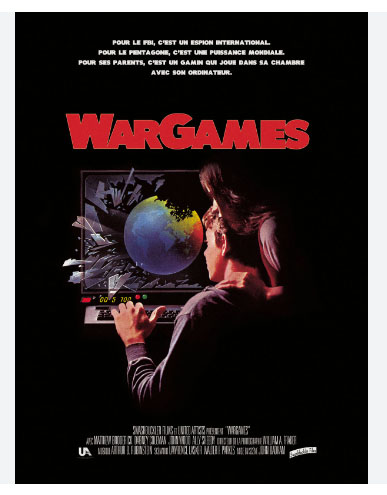
WarGames
Synopsis
David Lightman is a brilliant, bored Seattle high school computer whiz and hacker who accidentally breaches a top-secret military supercomputer named WOPR while searching for unreleased video games. Unaware that the system controls America's nuclear arsenal, David initiates a simulated game of global thermonuclear war against the computer, believing it to be harmless entertainment. As the supercomputer takes the simulation literally and begins preparing actual nuclear retaliation against the Soviet Union, DEFCON levels rise toward World War III. David and his girlfriend must race against time to stop the machine before it triggers armageddon.
The Making of the Film
Director John Badham helmed this high-tech techno-thriller, working from a clever screenplay by Lawrence Lasker and Walter F. Parkes that captured the burgeoning anxieties of the early personal computer age. The production was designed to blend teenage hacker culture with Cold War nuclear dread. Filmmakers utilized actual military defense installations and state-of-the-art computer sets to construct NORAD command centers. The project was built to be a thrilling, prescient blockbuster.
Critical Reception
Critics offered widespread critical acclaim, praising Matthew Broderick's charismatic lead performance, sharp script writing, and the film's terrifyingly plausible tech-thriller premise. Reviewers commended Badham's efficient direction, which builds unbearable nail-biting suspense as the computer nears launching actual missiles. Some critics noted minor adolescent hacker tropes, yet lauded its groundbreaking exploration of artificial intelligence and computer security. It emerged as a massive summer box office smash.
Audiences embraced the movie with immense enthusiasm, turning it into a cultural phenomenon and inspiring a whole generation of real-life computer programmers and cybersecurity experts. Viewers were mesmerized by acoustic couplers, 300-baud modems, and the chilling voice of the WOPR computer asking to play "Global Thermonuclear War." The tension-filled climax kept theatergoers on the edge of their seats. Many praised it as a definitive 1980s classic.
The film achieved major recognition, earning multiple Academy Award nominations, including Best Original Screenplay, Best Cinematography, and Best Sound. Matthew Broderick earned international stardom. The project cemented its status as an immortal techno-thriller milestone.
Behind-the-Scenes Stories
Director John Badham and the screenwriters spent months researching nascent computer hacker subcultures and military defense installations to ensure the technology felt authentic to 1983 standards. They cast young Matthew Broderick to bring relatable adolescent charm and intelligence to the hacker role. The production team consulted with early computer scientists to design realistic terminal screens.
Shooting elaborate NORAD underground command center sequences on massive Hollywood sound stages required intricate electronic props, glowing screens, and military consultant oversight. Managing complex computer terminal dialogue demanded rigorous timing from the cast. Maintaining high technical authenticity required careful design.
During the famous final stalemate sequence where the computer plays tic-tac-toe against itself, the actors performed amidst flashing lights and frantic military extras, maintaining high suspense. The voice of the WOPR computer was provided by actor John Wood, recorded with subtle mechanical modulation. These practical efforts created cinema history.
Matthew Broderick and Ally Sheedy led the cast as David Lightman and Jennifer Mack, supported by Dabney Coleman, John Wood, and Barry Corbin. The casting process gathered fantastic talent. The resulting ensemble delivered peerless dramatic chemistry.
Themes Explored
The film explores artificial intelligence, nuclear deterrence, Cold War paranoia, computer security, and adolescent responsibility. It examines how unchecked automation and military reliance on machines can lead to global catastrophe. The narrative ultimately champions human logic over machine escalation.
Ending Explained
WOPR becomes trapped in an infinite recursive loop playing tic-tac-toe against itself repeatedly as it calculates that nuclear war is a strange game where "the only winning move is not to play." Recognizing the futility of mutually assured destruction, the supercomputer aborts the missile launch sequence and locks out the launch codes. Humanity is saved from nuclear annihilation through mathematical stalemate. The ending offers a breathtaking, iconic resolution.
Meaning of the Title
The title "WarGames" directly refers to the military simulation exercises and the hacker game that accidentally triggers a global nuclear crisis. It highlights the dangerous blurring of lines between simulation and reality. The catchy title sets an instant techno-thriller tone.
Original Soundtrack
Composed by Arthur B. Rubinstein, the musical score is a fantastic electronic-orchestral triumph featuring pulsing synthesizers, urgent brass, and computer sound effects. The modern musical cues amplify the NORAD countdown anxiety, delighting music lovers.
Latest News
- The film remains an immortal milestone in techno-thriller cinema, celebrated for anticipating modern computer hacking and artificial intelligence dilemmas.
Similar Films
Fans of 1980s techno-thrillers and hacker movies will enjoy Hackers (1995), Sneakers (1992), The Net (1995), and Terminator 2: Judgment Day (1991), all exploring AI danger.