

 Français
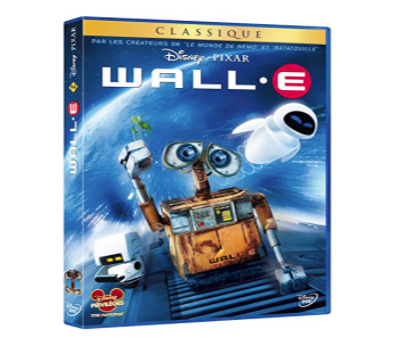
WALL·E
Synopsis
Set in the distant future, Earth has been abandoned by humanity and turned into a toxic, trash-covered wasteland managed entirely by silent, lonely compaction robots. WALL-E is the last functioning compact robot of his kind, who has spent centuries conscientiously organizing garbage while developing a charming personality and collecting human trinkets. His solitary routine is upended by the arrival of EVE, a sleek, high-tech probe sent to scan the planet for organic life. When WALL-E uncovers a sprouting green plant and hands it to EVE, her ship returns to the Axiom, a massive luxury starliner housing lazy, weightless human descendants. WALL-E embarks on an accidental space adventure that ultimately sparks humanity's return home.
The Making of the Film
Director Andrew Stanton conceived the core idea during a lunch brainstorming session with Pixar colleagues in 1994, pondering what would happen if humanity had to leave Earth and forgot to turn off the last robot. Stanton wanted to create a largely dialogue-free first act relying entirely on visual storytelling, animation, and Chaplin-esque physical comedy.
Critical Reception
Professional critics universally acclaimed the film as a masterpiece of modern animation and science fiction, praising its bold visual storytelling, environmental message, endearing robot characters, and profound emotional depth.
The general public and family audiences made the film a massive global box office smash and an instant cultural treasure.
The film won the Academy Award for Best Animated Feature, alongside five total Oscar nominations, establishing itself among the greatest films of the 21st century.
Filming Anecdotes
Director Andrew Stanton drew inspiration from classic silent film comedians like Charlie Chaplin and Buster Keaton, as well as legendary sci-fi cinema like '2001: A Space Odyssey' and 'Alien'.
Production involved groundbreaking camera work and lighting design supervised by legendary cinematographer Roger Deakins to achieve realistic optical lens effects in a fully digital animated environment.
During the sound design sessions, veteran sound designer Ben Burtt crafted unique mechanical vocalizations for WALL-E and EVE using vintage machinery and organic sounds.
Initially, various preliminary script sketches were developed over a decade before Stanton finalized the heartwarming robot romance and environmental narrative.
Themes Explored
The film explores environmental destruction and consumerism, technological dependence, the preservation of nature, and the awakening of human consciousness.
Ending Explanation
The ending shows WALL-E and EVE successfully integrating the plant into the Axiom's Holo-Detector, disabling the rogue autopilot computer and guiding humanity's return to a regenerating Earth.
Title Significance
The title 'WALL·E' is an acronym standing for Waste Allocation Load Lifter - Earth-Class, designating the mechanical purpose of the endearing protagonist.
Similar Films
Up, The Iron Giant, Big Hero 6, Interstellar