

 Français
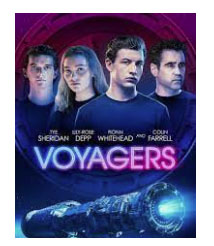
Voyagers
Synopsis
In the near future, Earth is facing imminent ecological collapse, forcing scientists to launch a multi-generational spaceship mission to colonize a distant habitable planet. Thirty specially bred, emotionally muted teenagers are raised in isolation to crew the vessel under the guidance of a sole adult mentor. When two inquisitive youths discover that their daily water rations contain a chemical suppressant meant to block their emotions, they stop taking it. As repressed rage, fear, and sexual desire flood the ship, the utopian mission descends into tribal anarchy and violence.
The Making of the Film
Writer and director Neil Burger conceived the project as a sci-fi psychological thriller exploring human nature, free will, and societal collapse. The film was explicitly designed as a futuristic retelling of William Golding's classic novel Lord of the Flies set aboard a deep-space vessel. Burger drew inspiration from classic sociological experiments, dystopian literature, and real-life space exploration psychology. The production team constructed immersive, claustrophobic spaceship sets to enhance the claustrophobic atmosphere of isolation.
Critical Reception
Critics offered mixed reviews upon release, praising its high-concept premise, tense psychological atmosphere, and strong young ensemble cast. Reviewers noted that Neil Burger successfully translated the classic allegorical themes of Lord of the Flies into a sleek sci-fi setting. Some film critics, however, felt that the narrative relied too heavily on predictable thriller tropes in its second half. Despite mixed critical opinions, science fiction enthusiasts appreciated its dark exploration of human tribalism.
Audiences enjoyed the tense psychological thriller for its fast-paced suspense, moral dilemmas, and sleek futuristic design. Viewers praised the breakout performances of Tye Sheridan, Lily-Rose Depp, and Fionn Whitehead as the young crew members turn against each other. It found a welcoming audience on streaming and digital platforms among fans of dystopian survival stories. Many appreciated that it raised challenging philosophical questions about freedom versus security.
Although major mainstream cinematic awards bypassed the sci-fi release, it earned recognition among technical guilds for its production design and sound editing. The atmospheric spaceship set construction received praise from film critics associations. The young cast's intense physical commitments were celebrated by action and thriller fans. These acknowledgments helped cement its reputation as a chilling modern sci-fi allegory.
Behind-the-Scenes Stories
Neil Burger was heavily inspired by classic sociological literature examining how civilization disintegrates when institutional controls are removed. He wanted to explore whether human beings are inherently violent or shaped by their environment and chemical conditioning. The visual style utilized cold metallic interiors, stark blue lighting, and sterile laboratory aesthetics. The director also drew from real-life astronaut training protocols and psychological studies on sensory deprivation.
Constructing a massive, multi-level spaceship set that allowed for continuous tracking shots presented significant logistical challenges for the crew. The young cast underwent rigorous physical and tactical training prior to principal photography to prepare for the violent mutiny sequences. Shooting in closed soundstages for weeks at a time induced a genuine sense of cabin fever among the actors, enhancing their on-screen unease. Despite these intense conditions, the technical crew successfully delivered a polished dystopian world.
During the filming of the tense confrontation scenes, Tye Sheridan and Fionn Whitehead maintained fierce physical intensity between takes. The actors utilized improvised movement workshops to portray the sudden awakening of physical senses and repressed emotions. Crew members reported feeling genuinely unsettled during the chaotic mob scenes inside the ship corridors. The palpable tension among the young cast created an electric atmosphere on set.
Casting directors searched for an elite ensemble of young Hollywood actors who could project both naive innocence and terrifying primal aggression. Tye Sheridan was chosen for the lead role of Suli due to his grounded emotional sincerity. Fionn Whitehead was cast as the unhinged antagonist Zac, bringing chilling menace to the role. Lily-Rose Depp rounded out the lead trio as the observant scientist Drana, anchoring the moral compass of the mission.
Themes Explored
The film heavily explores the fragility of human civilization, social conditioning, and the eternal struggle between order and chaos. It examines whether free will and passion are worth the inherent risk of violence and destruction. Another core motif is the loss of innocence when youth are thrust into positions of absolute power and survival. It also touches upon ecological doom, institutional manipulation, and primal human tribalism.
Ending Explained
The film concludes with the surviving crew members finally recognizing the destructive futility of their tribal warfare after years of bloodshed. Suli and Drana manage to restore order and remind the remaining youths of their original scientific purpose among the stars. The spaceship continues its long multi-generational voyage toward the habitable planet with renewed hope and emotional maturity. The final haunting shot shows the vessel drifting peacefully into deep space, bearing the survivors toward a brighter future.
Meaning of the Title
The title refers literally and metaphorically to the young crew members who are lifelong travelers journeying across the cold vacuum of space. It evokes the epic scope of interstellar migration combined with the internal psychological voyage of self-discovery. The straightforward phrasing sets immediate expectations for a deep-space adventure. It encapsulates both the physical mission and the emotional awakening of the characters.
Similar films include Lord of the Flies, High Life, Passengers, and Snowpiercer, which feature closed-ecosystem survival, social collapse, and sci-fi allegories.