

 Français
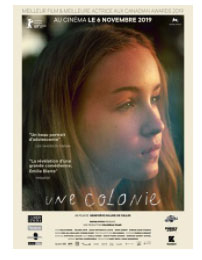
A Colony
Synopsis
A Colony follows Mylia, a shy, observant 12-year-old girl living in rural Quebec who is struggling to navigate the awkward transition from elementary school to high school. Feeling isolated from her peers and strained by tension between her parents on their struggling family farm, Mylia finds solace when she befriends a rebellious local Indigenous boy named Jimmy who lives on a nearby reserve, and a sophisticated older high school girl named Jacinthe. As Mylia experiences her first taste of teenage parties, romance, and cultural identity, she learns to find her own voice.
The Making of the Film
Written and directed by Canadian filmmaker Geneviève Dulude-De Celles, the film was conceived as a sensitive, semi-autobiographical coming-of-age drama exploring rural youth isolation, friendship, and cultural identity in Quebec. The inspiration stemmed from Dulude-De Celles's own adolescence in rural Drummondville. The production utilized authentic rural Quebec farm locations, natural lighting, and a cast of mostly non-professional young actors.
Critical Reception
Critics universally praised A Colony as a masterwork of delicate coming-of-age cinema, praising Emilie Bierre's exceptional, nuanced lead performance, naturalistic dialogue, and empathetic direction. Reviewers highlighted the film's subtle exploration of Indigenous-settler relations in rural schools, avoiding heavy-handed preaching. The tender tone received widespread acclaim.
Audiences embraced the movie as a touching, authentic portrait of early adolescence.
The film earned numerous awards, including the Crystal Bear at the Berlin International Film Festival and multiple Canadian Screen Awards.
Behind-the-Scenes Stories
Geneviève Dulude-De Celles drew heavy inspiration from her own childhood memories growing up in rural Quebec and local school dynamics.
Casting the young lead roles involved an extensive talent search across rural Quebec schools to find authentic non-professional teenagers.
During production, young lead actress Emilie Bierre delivered a remarkably restrained and mature performance.
Casting Emilie Bierre brought immense emotional authenticity and vulnerability to the protagonist.
Themes Explored
The film explores rural adolescence, middle school bullying, cultural identity, Indigenous friendship, family farm tension, and coming-of-age.
Ending Explained
The poignant conclusion shows Mylia standing up to school bullies and embracing her friendship with Jimmy, stepping into her teenage years with newfound inner strength.
Meaning of the Title
Reference to both a school science project about insect colonies and the broader metaphor of social cliques and cultural colonization (A Colony) in high school.
Similar films include Eighth Grade, The Tree of Wooden Idols, Minari, and Boyhood.