

 Français
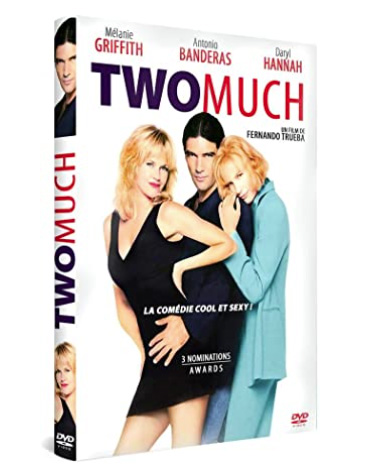
Two Much
Synopsis
Art Dodge, a charming con man who sells paintings, falls head over heels for the wealthy Betty Kerner. When he also meets her sister Liz, he cannot resist her either. To court both women at once, he invents a twin brother and plays both roles, juggling the lies. As the deception grows, so do the complications, and Art risks losing everything.
The Making of the Film
Two Much is based on the 1975 novel of the same name by Donald E. Westlake, a prolific crime and comic writer. The Spanish director Fernando Trueba, who had won an Academy Award for Best Foreign Language Film for Belle Époque, adapted it for the screen in an English-language production. Antonio Banderas, then a rising star in Hollywood, played Art, while Melanie Griffith and Daryl Hannah played the two sisters. Joan Cusack and Danny Aiello were also part of the cast. The film was shot largely in Florida. It aimed to be a screwball comedy in the spirit of classic Hollywood farces.
Reviews and reception
Summary of professional reviews
The film was not well received by critics, who found the comedy forced and the plot contrived. Some singled out the cast's energy and charm, but the overall reaction was lukewarm. It was considered a minor entry in the careers of its stars.
Audience reception
The film did not attract large audiences and was a commercial disappointment. Over time, it has been remembered mostly as an obscure romantic comedy and for the real-life romance of its stars. Some viewers enjoy it as a light and silly farce.
Awards and nominations
Two Much did not win significant awards. Its recognition has come mainly from its place in the careers of Antonio Banderas and Melanie Griffith.
Filming anecdotes
Production difficulties
The production was a mix of Spanish and American talent, which required adapting different styles of filmmaking. The comedy relied on precise timing and on the actor playing two roles, which added complexity to the shoot.
Anecdote about a particular scene
The most famous off-screen story involves Antonio Banderas and Melanie Griffith, who began a romance during the making of the film. They later married in 1996. Their relationship is often mentioned in discussions of the movie.
Themes explored
The film is a classic comedy of deception and mistaken identity. It explores how a small lie can grow out of control, forcing the liar to invent more and more. Love and greed are intertwined, since Art is attracted to both the women and their money. The story also plays with the idea of double lives. It is a light farce that does not take itself seriously. Its humor is based on timing, disguises and misunderstandings.
Ending explained
As the lies grow more and more tangled, Art's double identity becomes impossible to maintain. The truth finally comes out, and the characters must confront the consequences of his deception. The film resolves its comic tangle with a romantic conclusion, in keeping with the tradition of screwball comedies. Art learns that love cannot be built on lies. The ending is meant to be light and happy rather than realistic.
Meaning of the title
The title is a pun on the expression too much. By replacing too with two, it hints at the central comic idea: one man playing two roles and courting two women. It also suggests that the situation is too much for anyone to handle. The wordplay captures the film's playful spirit.
Similar Films
- Some Like It Hot (1959): a classic comedy of disguise.
- Mrs. Doubtfire (1993): a man takes on a false identity for love.
- Dave (1993): a man impersonates someone else.
- Bringing Up Baby (1938): a screwball comedy about chaos and romance.
- Desperado (1995): another film starring Antonio Banderas.