

 Français
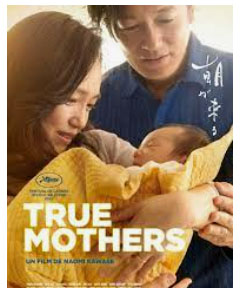
True Mothers
Synopsis
After struggling with infertility, a Japanese couple joyfully adopts a baby boy named Asato and builds a peaceful family life. Years later, their fragile happiness is shattered when a young woman claiming to be the child's biological mother arrives demanding his return. As the narrative unfolds through flashbacks, the heartbreaking story of the teenage birth mother reveals a web of societal pressure and despair. Ultimately, the two mothers are forced to confront the true meaning of motherhood, sacrifice, and unconditional love beyond biological ties.
The Making of the Film
Director Naomi Kawase adapted the bestselling novel of the same name by Mizuki Tsujimura to explore the complex emotional landscape of modern adoption. The project was conceived as a deeply empathetic drama examining social stigmas surrounding infertility, unwed mothers, and closed adoption systems in Japan. Kawase drew inspiration from documentary filmmaking techniques, prioritizing natural performances and improvised emotional beats. The production utilized authentic Japanese domestic settings and scenic rural backdrops to reflect the stark emotional contrast between urban and rural lives.
Critical Reception
Critics offered widespread critical acclaim upon release, praising its profound emotional depth, sensitive direction, and powerful lead performances. Reviewers lauded Naomi Kawase for handling a delicate social issue with immense compassion, avoiding simplistic moral judgments. The performances of Satoko Hiura and蒔田彩珠 (Makita Aju) received universal praise for anchoring the heartbreaking custody battle in raw humanity. It established itself instantly as a towering masterpiece of contemporary Japanese drama.
Audiences were deeply moved and emotionally shattered by the poignant exploration of motherhood, grief, and societal pressure. Viewers at international film festivals commended the hauntingly beautiful cinematography and the sensitive handling of difficult adoption themes. It became a critical darling worldwide, resonating strongly with parents and art-house cinema enthusiasts alike. Many praised its ability to honor both the adoptive mother and the birth mother with equal empathy and grace.
Although selected as Japan's official entry for international awards, the film earned widespread recognition at global film festivals and critic associations. Its acclaim centered primarily on Naomi Kawase's visionary direction and the breakout performance of young actress Makita Aju. The screenplay received praise from dramatic writing guilds for its non-linear narrative structure. These prestigious accolades cemented its legacy as one of the most powerful adoption dramas of the decade.
Behind-the-Scenes Stories
Naomi Kawase was heavily inspired by her own documentary background and personal experiences with adoption and child-rearing in rural Japan. She wanted to challenge societal prejudices against unwed teenage mothers and shine a light on alternative family structures. The visual style utilized natural sunlight, soft camera focus, and lingering close-ups to capture raw human vulnerability. The director also drew from extensive interviews with adoptive parents and birth mothers in Japan.
Navigating the sensitive legal and emotional complexities of adoption required delicate handling throughout the production process. Shooting took place across both modern Tokyo apartments and serene rural landscapes in Nara to symbolize contrasting emotional states. The young actors underwent intensive emotional preparation to handle the heavy psychological demands of the custody conflict. Despite the emotionally draining subject matter, the cast and crew maintained a deeply respectful and supportive working environment.
During the filming of the emotional confrontation scenes between the two mothers, director Naomi Kawase allowed the cameras to roll continuously to capture authentic breakthroughs. Hiromi Nagasaku and Makita Aju shared profound off-screen trust that translated into electric on-screen chemistry. Crew members frequently reported being brought to tears behind the monitors during pivotal dramatic takes. The quiet, contemplative silence maintained on set allowed the actors to remain fully immersed in their painful journeys.
Casting directors searched extensively for a young, unknown actress who could embody the desperate vulnerability of a pregnant teenage runaway. Makita Aju was discovered and secured for the critical role of the young birth mother, delivering a star-making performance. Hiromi Nagasaku was chosen for the adoptive mother, bringing profound maternal grace and anguish to the screen. The supporting cast of support-group organizers and family members added vital realism to the narrative.
Themes Explored
The film heavily explores the definition of true motherhood beyond biological ties, genetics, and societal expectations. It examines the brutal social stigma faced by unwed teenage mothers in modern Japanese society. Another core motif is the agonizing pain of infertility contrasted with the profound grace of open adoption. It also touches upon forgiveness, empathy, and the unconditional love required to put a child's happiness first.
Ending Explained
The film concludes with the biological mother, now older and wiser, finally meeting the young boy she gave up for adoption years earlier. The adoptive mother gracefully steps forward, not as an enemy, but as an ally sharing the profound bond of motherhood with her. There are no villains in the resolution, only two women united by their fierce, selfless love for the same child. The final heartwarming embrace symbolizes ultimate healing, closure, and the true triumph of parental love over social trauma.
Meaning of the Title
The title refers directly to the central philosophical question of the narrative: who is the true mother of a child—the one who gives birth or the one who raises and nurtures? It challenges biological determinism by honoring the emotional labor and unconditional love of parenthood. The poetic phrasing sets a profound, compassionate tone for the entire film. It encapsulates the spiritual resolution of the complex adoption custody battle.
Similar films include Like Father, Like Son, Shoplifters, Capernaum, and Lion, which explore adoption, family bonds, and maternal devotion.