

 Français
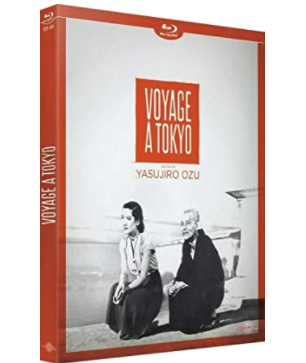
Tokyo Story
Synopsis
An elderly couple, Shukichi and Tomi, travel from their small seaside town to Tokyo to visit their grown-up children. They discover that their sons and daughters are too busy with their own lives to pay them much attention. Only their widowed daughter-in-law Noriko takes the time to look after them with real warmth. As the trip comes to a close, the family must face the fragile nature of life and the distance that grows between generations.
The Making of the Film
Tokyo Story, released in Japan in 1953, was directed by Yasujiro Ozu and co-written with his longtime collaborator Kogo Noda. The story was inspired by the American film Make Way for Tomorrow by Leo McCarey, which also deals with elderly parents neglected by their children. Ozu transposed the idea to postwar Japan, a country undergoing rapid change, where traditional family ties were being tested by modern life. The film became one of the central works in his career, distilling his gentle, humanist style. It was only released in France in 1978, which explains the date in many catalogues.
Reviews and Reception
Summary of Professional Reviews
Critics have long hailed Tokyo Story as one of the greatest films ever made. They praise its quiet emotional power, its restrained performances and its elegant simplicity. Its slow rhythm can challenge some viewers, but most critics see it as a profound meditation on family and mortality.
Audience Reception
In Japan, the film was well received on release, and over the decades it has grown into a beloved classic around the world. Viewers often say that it moves them deeply, especially those who have experienced the loss of a parent. It is regularly recommended as an entry point to Japanese cinema.
Awards Won
The film received recognition in Japan and abroad, including the Sutherland Trophy awarded by the British Film Institute in 1958. Decades later, it topped the directors' poll in the 2012 Sight and Sound survey of the greatest films of all time, and it also ranked highly in the critics' poll.
Filming Anecdotes
Director's Inspirations
Ozu was interested in portraying everyday life with honesty and subtlety, using ordinary family situations to reveal universal truths. He avoided melodrama, believing that restraint could be far more moving than big emotional scenes.
Anecdote About a Particular Scene
Ozu is famous for his low camera position, known as the "tatami shot", which places the viewer at the eye level of someone sitting on a Japanese floor. This approach gives the film a calm, intimate feeling and invites us to observe the characters like quiet guests in their home.
Originally Planned Casting
Chishu Ryu, who plays the elderly father, was only in his late forties during filming, yet he convincingly portrayed a man in his seventies. Setsuko Hara, as the kind Noriko, delivered what many consider her defining performance.
Themes Explored
Tokyo Story is about the gap between generations and the way modern life can pull families apart. It reflects on aging, loneliness and the quiet disappointments of life. The film also deals with duty and kindness, contrasting the indifference of the biological children with the warmth shown by an in-law. Postwar Japan's changing social landscape provides an important background, as old traditions give way to new priorities. Above all, it is a gentle reflection on impermanence and the acceptance of loss.
Ending Explained
After Tomi falls ill and dies, the family gathers briefly for the funeral, and then quickly returns to their busy lives. Noriko stays a little longer and confesses to her sister-in-law that she, too, is lonely and uncertain about the future. Shukichi gives her his wife's watch as a token of gratitude, and she weeps quietly. The film ends with the old man alone in his house, looking out at the sea, a moving image of solitude and acceptance.
Meaning of the Title
The Japanese title, Tokyo Monogatari, translates literally as "Tokyo Tale" or "Tokyo Story". The title suggests a simple, universal narrative, one that could belong to any family. Tokyo itself represents the modern world, a place of busy lives and distance, where the older generation finds little room.
Similar Films
- Late Spring: another Ozu masterpiece about family and change.
- Make Way for Tomorrow: the American film that inspired Ozu.
- Departures: a gentle Japanese drama about life and death.
- Still Walking: Hirokazu Kore-eda's tender family portrait.