

 Français
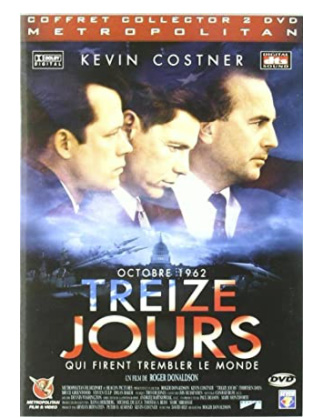
Thirteen Days
Synopsis
In October 1962, American spy planes discover Soviet nuclear missiles being installed in Cuba, just ninety miles from Florida. Inside the White House, President John F. Kennedy, his brother Robert and special assistant Kenny O'Donnell have only days to decide how to respond without triggering nuclear war. Pressed by hawkish generals on one side and diplomatic uncertainty on the other, they walk a razor-thin line between force and restraint. The film recreates the tension of the Cuban Missile Crisis from inside the room where it happened.
The Making of the Film
Thirteen Days draws on historical research into the Cuban Missile Crisis, especially the book The Kennedy Tapes, which collected transcripts of the secret recordings made in the White House during those tense days. The title also echoes Robert Kennedy's own memoir of the crisis. Screenwriter David Self shaped this material into a political thriller, using the real conversations as the backbone of the dialogue. Kevin Costner was drawn to the project and chose to play Kenny O'Donnell, a Kennedy aide whose role is somewhat expanded for dramatic purposes. Director Roger Donaldson, who had made No Way Out and Thirteen Days' fellow tense thrillers, wanted to put audiences inside the decision-making process rather than on the battlefield. The film was released in December 2000.
Reviews and Reception
Summary of Professional Reviews
Critics generally praised the film as a gripping, intelligently staged political thriller. Bruce Greenwood's portrayal of John F. Kennedy and Steven Culp's Robert Kennedy were widely admired. Some reviewers criticized Kevin Costner's Boston accent and felt that O'Donnell's importance was exaggerated, and historians pointed out several liberties taken with the facts.
Audience Reception
The film did only modest business at the box office, but it gained a steady following among history buffs and fans of political dramas. Viewers appreciated its tight pacing and the way it makes a well-known event feel genuinely suspenseful. It is still often used as a lively introduction to the Cold War.
Filming Anecdotes
Director's Inspirations
Roger Donaldson wanted to show the human side of a crisis that has often been told in dry, historical terms. He relied on the real transcripts of the meetings so that the audience could hear how fragile and uncertain the discussions really were.
Production Difficulties
Recreating the White House and the military settings required close attention to period details, from uniforms to technology. The cast also had to master the distinctive speech patterns of the Kennedys and their advisers. Balancing historical accuracy with the needs of a dramatic story proved one of the project's greatest challenges.
Themes Explored
Thirteen Days is a study of leadership under extreme pressure and the weight of decisions that could affect millions of lives. It explores the tension between military force and diplomacy, showing how easily a single misjudgment could have ended in catastrophe. The film also looks at the importance of trust and loyalty within a small circle of advisers. Secrecy and public image play an important role, as the president must manage both the crisis and the story told to the world. Underneath it all runs a sobering question: how close did humanity come to the brink?
Ending Explained
After days of negotiation, secret channels and near-misses, the Soviet Union agrees to withdraw its missiles from Cuba. In exchange, the United States quietly promises not to invade Cuba and to remove its own missiles from Turkey later on. The film ends on a mood of exhausted relief, as the characters realize how narrowly a nuclear war was avoided. Kennedy's final reflections hint that the world was saved as much by restraint and luck as by strategy.
Meaning of the Title
The title refers to the thirteen days of the crisis, from the discovery of the missiles on October 16 to the resolution on October 28, 1962. The countdown structure reinforces the sense that every day mattered and that the world was living on borrowed time. It also recalls Robert Kennedy's account of the same events, giving the film a historical weight.
Original Soundtrack
Trevor Jones' score adds a solemn, ominous undertone to the political drama. It uses restrained, brooding themes that underline the sense of impending danger without overwhelming the dialogue.
Similar Films
- Dr. Strangelove: a darkly comic take on nuclear brinkmanship.
- Fail Safe: a tense drama about the threat of accidental war.
- The Missiles of October: an earlier dramatization of the same crisis.
- Vice: a political drama set inside the corridors of power.