

 Français
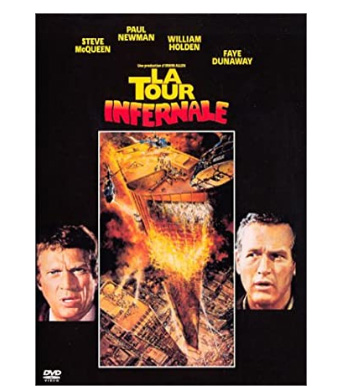
The Towering Inferno
Synopsis
On the opening night of the tallest skyscraper in the world, a fire breaks out on a high floor and quickly spreads. The architect and the fire chief must work together to save the hundreds of guests trapped at the top of the building. With the elevators useless and the flames rising, every minute counts. The film is a landmark of the disaster genre.
The Making of the Film
The Towering Inferno was based on two novels: The Tower by Richard Martin Stern and The Glass Inferno by Thomas N. Scortia and Frank M. Robinson. Two studios, Twentieth Century Fox and Warner Bros., had each acquired the rights to one of the books, and they decided to join forces rather than compete. It was the first major co-production between two Hollywood studios. Producer Irwin Allen, the master of the disaster genre, took charge of the project. John Guillermin directed the dramatic scenes, while Allen himself directed the action sequences. The film assembled a star-studded cast, including Paul Newman, Steve McQueen, William Holden, Faye Dunaway and Fred Astaire. It was released in 1974 and was one of the biggest successes of the decade.
Critical Reception
Summary of professional reviews
Critics were mixed on the film's script and its long running time, but nearly all agreed that the spectacle was extraordinary. The special effects and the sense of danger were widely praised. The cast was admired, with Fred Astaire's performance often singled out. Over time, the film has come to be seen as a classic of the disaster genre.
Public reception
The film was one of the highest-grossing films of 1974, earning more than 100 million dollars. Audiences were thrilled by its scale and by the sight of two superstars sharing the screen. It remains a favorite among fans of 1970s cinema.
Awards received
The Towering Inferno received eight Academy Award nominations, including Best Picture. It won three Oscars, for Best Cinematography, Best Film Editing and Best Original Song for We May Never Love Like This Again. Fred Astaire was also nominated for Best Supporting Actor.
Behind-the-Scenes Stories
Production difficulties
The production built enormous sets and staged real fire sequences, which required serious safety precautions. Real firefighters were consulted to make the action as credible as possible.
Anecdote about a particular scene
The film became famous for a billing dispute between its two stars. Paul Newman and Steve McQueen both wanted top billing, and the solution was a clever layout of the credits, with McQueen's name on the left and Newman's name placed higher on the right.
Themes Explored
The film is about the dangers of greed and negligence. The fire is caused by cost-cutting and poor wiring, and the story criticizes those who put profit before safety. It also celebrates courage and sacrifice, especially the firefighters who risk their lives. The characters' reactions show different sides of human nature, from panic to selflessness. The film reflects the anxiety of an era that was beginning to doubt its faith in technology. It remains a powerful reminder of what can go wrong when ambition outruns caution.
Ending Explained
The crisis ends when the fire chief decides to blow up the water tanks on the roof, flooding the building and putting out the fire. Many people are saved, but the cost is high, and not everyone survives. In the final scene, the fire chief warns the architect that the next disaster might claim thousands of lives. The ending carries a lasting message about responsibility and safety.
Meaning of the Title
The title combines the image of a giant skyscraper with the word inferno, which evokes hell. It tells the audience that this magnificent tower is about to become a death trap. The contrast between towering height and burning ruin is the film's central idea.
Original Soundtrack
The score was composed by John Williams, who was also working on other classic disaster films in the same period. His music mixes tension and grandeur. The song We May Never Love Like This Again won the Academy Award for Best Original Song.
Similar Films
For other classics of 1970s disaster cinema, try The Poseidon Adventure and Earthquake. Backdraft and Die Hard follow in its tradition, while Skyscraper offers a modern take on the burning tower. The Korean film The Tower is another spiritual successor.