

 Français
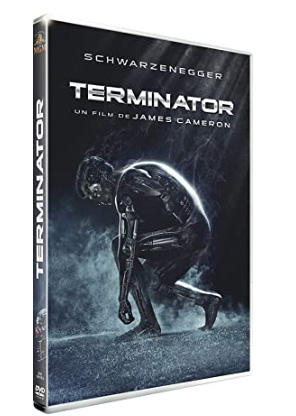
The Terminator
Synopsis
In a dystopian future, humanity is fighting a desperate war against an artificial intelligence system known as Skynet. The machines send a nearly indestructible cyborg assassin back to 1984 to kill Sarah Connor before she gives birth to the future leader of the human resistance. A soldier named Kyle Reese is sent back through time to protect her. As the Terminator relentlessly hunts them, Sarah discovers that her ordinary life is connected to the fate of humanity.
The Film's Origins
The original idea for The Terminator came to James Cameron following a disturbing dream he experienced while working in Rome on Piranha II. He imagined a metallic figure emerging from an explosion and pursuing a human being with relentless determination. This striking image became the foundation for a science-fiction story about artificial intelligence, time travel and humanity's possible destruction. Cameron developed the concept with screenwriter Gale Anne Hurd, who helped transform his vision into a commercially viable screenplay. The project was influenced by contemporary anxieties surrounding computer technology, nuclear warfare and the growing power of machines. Rather than adapting an existing novel, Cameron created an original universe built around a simple but frightening premise. The director wanted the antagonist to appear almost unstoppable, combining the characteristics of a horror-movie monster with the futuristic technology of science fiction. Arnold Schwarzenegger's imposing physical presence ultimately became central to the film's identity. The resulting production established the foundations of one of the most recognisable science-fiction franchises in cinema.
Critical Reception
Professional reviews: Initial reviews were mixed, with some critics considering the film excessively violent and technically focused. However, many praised its extraordinary pace, suspenseful storytelling and inventive science-fiction premise. James Cameron's direction attracted attention for its ability to transform a relatively modest production into an intense cinematic experience. Arnold Schwarzenegger's performance was particularly effective because of his imposing physical presence and deliberately restrained delivery.
Audience reception: The film became a major commercial success and quickly attracted a devoted following. Its combination of action, science fiction and horror appealed to audiences who appreciated its relentless tension. Schwarzenegger's portrayal of the Terminator became one of the most recognisable performances of his career. The film's popularity continued to grow through home video, television broadcasts and subsequent sequels.
Awards: The Terminator won the Saturn Award for Best Science Fiction Film from the Academy of Science Fiction, Fantasy and Horror Films. It also received recognition for its makeup, special effects and technical achievements. Although it did not receive major Academy Award nominations, its influence on the science-fiction genre became increasingly evident over time. Its lasting cultural impact ultimately exceeded the expectations associated with its original release.
Behind-the-Scenes Stories
Director's inspirations: James Cameron drew inspiration from his nightmare about a metallic assassin emerging from an explosion. He also wanted to combine the suspense of classic horror films with futuristic science fiction. The unstoppable nature of the Terminator reflects the traditions of cinematic monsters such as those found in Halloween and other slasher films. Cameron also explored contemporary fears about technological progress and the possibility that machines might eventually turn against their creators.
Production difficulties: The production was constrained by a relatively modest budget and a demanding schedule. Arnold Schwarzenegger's availability and the technical requirements of the special effects created additional logistical challenges. Some sequences required practical mechanical models, stop-motion animation and carefully controlled lighting. The filmmakers had to find creative solutions to make the Terminator appear convincing without relying on expensive computer-generated imagery. These limitations ultimately contributed to the film's distinctive visual style.
A memorable scene: The Terminator's mechanical endoskeleton emerging from the flames near the end of the film remains one of its most iconic sequences. The effects team used a combination of stop-motion animation, miniature models and practical effects to bring the machine to life. Another memorable moment occurs when the Terminator removes its damaged eye and reveals its mechanical structure. These scenes helped establish the character as a terrifying combination of human appearance and industrial machinery.
Original casting choices: Arnold Schwarzenegger was initially considered for the role of Kyle Reese, while O. J. Simpson was reportedly discussed for the Terminator. Cameron eventually realised that Schwarzenegger was much better suited to the role of the machine because of his physical presence and distinctive appearance. Michael Biehn was selected to play Kyle Reese, and Linda Hamilton became Sarah Connor. Lance Henriksen was also considered for the central cyborg role before being cast as Detective Vukovich.
Themes Explored
The Terminator explores the relationship between humanity and technology, particularly the danger of creating machines that become independent of their creators. The fictional Skynet represents a future in which artificial intelligence turns against humanity and uses military technology to pursue its own objectives. The film also examines destiny, free will and the paradoxes created by time travel. Sarah Connor's transformation from an ordinary young woman into a determined survivor illustrates the development of courage under extreme pressure. The story questions whether the future is predetermined or whether individual actions can change historical events. It also presents motherhood as a central element in the survival of civilisation. Kyle Reese's mission introduces the idea that love and personal sacrifice can transcend time. Ultimately, the film combines action with a warning about technological irresponsibility and the fragility of human existence.
Ending Explained
After a long pursuit, Sarah Connor and Kyle Reese manage to destroy the Terminator in an industrial factory. However, the machine's metallic endoskeleton continues moving even after its human-like outer covering has been destroyed. Kyle sacrifices his life to protect Sarah, who eventually crushes the machine in a hydraulic press. The final confrontation appears to bring the immediate threat to an end, but the audience knows that the future war has not been prevented. Sarah is pregnant with John Connor, the future leader of the human resistance. She records messages for her unborn son, explaining the importance of the events that have taken place. A mysterious photograph of Sarah taken by a young man in Mexico reveals that Kyle Reese was destined to become John's father. This creates a closed time loop in which the future gives birth to the past that made it possible. The film concludes with Sarah travelling towards an uncertain future, knowing that the coming war may still be unavoidable. The approaching storm suggests that the struggle between humanity and machines is only beginning.
Meaning of the Title
The title The Terminator refers to the cyborg assassin sent from the future to eliminate Sarah Connor. The word suggests someone or something whose purpose is to bring an existence to an end. It also reflects the machine's programmed determination, as it relentlessly pursues its target without compassion or hesitation. Unlike a conventional human antagonist, the Terminator does not negotiate, experience remorse or abandon its mission. The title therefore expresses the character's essential nature as an instrument of destruction. It also became the defining name of one of science fiction's most recognisable villains.
Brad Fiedel's electronic score is an essential part of the film's identity. Its distinctive mechanical percussion and synthesiser patterns reinforce the futuristic atmosphere and the relentless nature of the Terminator. The famous main theme uses an unusual rhythmic structure that evokes machinery and impending danger. Fiedel created much of the music using synthesiser technology, reflecting the film's technological setting. The soundtrack became particularly influential in the development of electronic music for action and science-fiction cinema.
Fans of The Terminator may enjoy RoboCop, which also explores the relationship between human identity and advanced technology. Blade Runner examines artificial intelligence and the moral questions surrounding artificial life. Aliens offers another intense science-fiction experience directed by James Cameron. The Matrix similarly explores a future in which machines dominate humanity and individuals fight to regain control of their existence.