

 Français
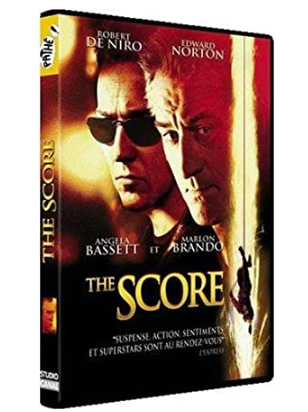
The Score
Synopsis
Nick Wells is an experienced safecracker who is preparing to retire from a life of crime and concentrate on his jazz club. His plans are interrupted when an old associate proposes a major theft involving a valuable sceptre hidden inside a heavily protected customs building. Nick is persuaded to work with a younger thief named Jack Teller, who has already found a way to infiltrate the institution. As the operation becomes more complicated, distrust develops between the two men. Their partnership turns into a dangerous game of deception in which nobody can be certain who is really in control.
The Making of the Film
The Score was directed by Frank Oz from a screenplay by Kario Salem, Lem Dobbs and Scott Marshall Smith. The project was developed as a sophisticated crime thriller built around a carefully planned robbery and the relationship between two generations of thieves. Frank Oz was attracted to the opportunity to direct a more restrained dramatic story, relying on performances and tension rather than constant action. Robert De Niro was cast as Nick Wells, an experienced criminal whose desire for a normal life conflicts with his professional instincts. Edward Norton played Jack Teller, a younger thief whose ambition and intelligence make him both a valuable partner and a potential threat. Marlon Brando appeared as Max, the intermediary who brings the two men together. The production was particularly notable for bringing together three major actors with very different screen histories. The film uses the architecture of a customs building and the technical details of a complex robbery to create suspense. Its narrative focuses on planning, deception and the psychological relationship between its central characters. The result is a traditional heist thriller built around star performances and an elaborate final twist.
Critical Reception
Professional critical response: The Score received mixed to generally positive reviews from critics. Many appreciated the performances of Robert De Niro and Edward Norton, as well as the presence of Marlon Brando. The film's restrained approach and focus on professional criminal techniques were also noted. Some reviewers considered the screenplay predictable and felt that the story relied too heavily on familiar heist conventions. Nevertheless, the central performances helped maintain interest throughout the film.
Audience reception: The film attracted viewers interested in sophisticated crime thrillers and ensemble performances. Its cast was a major attraction, particularly the opportunity to see De Niro, Norton and Brando together. Audiences generally appreciated the careful construction of the robbery and the tension between the two central characters. The film did not become a major blockbuster, but it found a stable audience through theatrical distribution and home video. It remains of interest to fans of classic heist stories.
Awards and recognition: The Score did not receive a major international awards record. Its most notable recognition comes from the prestige of its cast and its place within the tradition of American crime thrillers. The performances of De Niro, Norton and Brando were frequently discussed in reviews. Although it was not a major awards contender, the film remains a recognisable example of early-2000s studio crime cinema.
Behind-the-Scenes Stories
Director's inspirations: Frank Oz approached the film as a character-driven heist story in which suspense emerges from the interaction between experienced criminals. He wanted to explore the difference between a professional who has developed discipline over many years and a younger figure motivated by ambition. The director also emphasised the practical details of the robbery, making the planning process an important part of the entertainment. The film's restrained tone reflects its focus on intelligence, patience and deception.
Production challenges: The production required a convincing representation of a highly protected customs building and the technical systems surrounding the valuable object. The filmmakers had to create a sense of physical geography so that viewers could understand the different stages of the robbery. Working with three major actors also required careful coordination of schedules and performances. The scenes depended heavily on subtle changes in expression and dialogue rather than elaborate physical action.
A memorable scene: The central robbery sequence is built around the tension of entering a secure building without attracting attention. Jack must use his position inside the institution to help Nick carry out the operation. The scene becomes increasingly suspenseful as small technical problems threaten to expose the plan. Its effectiveness comes from the contrast between the apparent calm of the characters and the risks involved in every movement.
Originally considered casting: Robert De Niro, Edward Norton and Marlon Brando formed the film's central trio. Their different acting styles gave the story an unusual dynamic, particularly in scenes involving Max's manipulation of the two thieves. Angela Bassett played Diane, Nick's partner, while Gary Farmer appeared in a supporting role. The casting was one of the production's principal attractions and helped give the film its distinctive presence.
Themes Explored
The Score explores trust, ageing, ambition, professional pride and the difficulty of leaving behind a life built around deception. Nick wants to retire and protect his personal relationship, but his experience makes it difficult to abandon the world he understands best. Jack represents a younger generation that sees risk as an opportunity and values success over stability. Their partnership exposes the tension between experience and ambition. The film also examines the difference between apparent cooperation and genuine loyalty, suggesting that every criminal relationship contains the possibility of betrayal.
Explaining the Ending
The final revelation shows that Nick has anticipated the deception surrounding the sceptre and has used his experience to turn the situation to his advantage. The apparent success of the robbery is not exactly what the other characters believe it to be. Nick manages to escape with the valuable object while leaving his rivals convinced that they have controlled the operation. His decision demonstrates that patience and professional discipline can overcome youthful ambition and manipulation. The ending also allows Nick to fulfil his desire to leave criminal life behind and return to a more ordinary existence. The final moments reveal the importance of his relationship with Diane, which has been threatened by his involvement in the robbery. Rather than celebrating crime itself, the conclusion presents the theft as the final act of a man who wants to regain control over his future.
The Meaning of the Title
The title The Score refers to the planned theft at the centre of the story. In criminal slang, a score is a successful robbery or a valuable opportunity to obtain money or goods illegally. The word also suggests the carefully calculated plan that Nick and Jack attempt to execute. Its musical meaning may also evoke Nick's connection to jazz and the rhythm of a well-organised operation. The title therefore combines criminal ambition with the precision and timing required for a successful heist.
The film features an original score by Howard Shore, whose music provides a restrained and atmospheric background for the robbery. Its subtle orchestral textures reinforce the tension without overwhelming the performances. The musical atmosphere also reflects Nick's connection to jazz through his club. The soundtrack supports the film's mature tone and its emphasis on patience, calculation and suspense.
Similar films include Heat, directed by Michael Mann, which examines professional criminals and their personal lives; The Thomas Crown Affair, directed by John McTiernan, which centres on an elaborate theft; Inside Man, directed by Spike Lee, which builds a sophisticated bank robbery mystery; and Thief, directed by Michael Mann, which follows an experienced safecracker seeking a different life.