

 Français
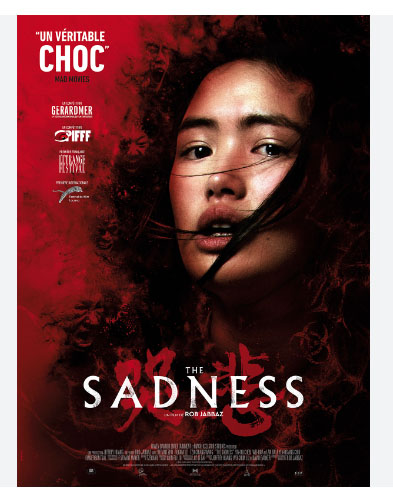
The Sadness
Synopsis
Set in Taipei, a young couple finds their morning routine abruptly shattered when a mutated strain of the "Alvin virus" suddenly sweeps across the city. Unlike typical zombie plagues, the pathogen does not destroy higher brain functions; instead, it strips away all moral inhibitions, driving infected individuals into psychotic frenzies of unspeakable sadism, torture, and perversion. As society collapses into absolute anarchist carnage in a matter of hours, Jim and Kat become separated. They must fight their way through a nightmarish urban hellscape to reunite.
The Making of the Film
Canadian-born director Rob Jabbaz helmed this hyper-violent Taiwanese horror film, pushing the boundaries of extreme body horror and pandemic-era panic. The production was designed to be an unflinching, maximum-intensity exploitation film inspired by Garth Ennis's comic book series Crossed. Filmmakers utilized brutal practical special effects, gallons of fake blood, and relentless pacing to construct the urban apocalypse. The project was built to shock and terrify gore-horror enthusiasts.
Critical Reception
Critics offered polarized reviews, universally acknowledging the film's technical proficiency, jaw-dropping practical special effects, and sheer relentless terror while recoiling from its extreme sadism. Reviewers praised Rob Jabbaz's uncompromising vision and high-octane pacing that never lets the audience catch their breath. Some critics argued that the relentless depravity crossed the line into tastelessness, yet praised its effectiveness as pure extreme cinema. It became a legendary talking point in horror circles.
Audiences within the extreme horror community embraced the movie with cult-like enthusiasm, praising its refusal to sanitize modern zombie-horror tropes. Viewers found the chaotic societal collapse and unapologetic gore to be a thrilling, terrifying rollercoaster ride. Screenings at international fantasy festivals generated massive word-of-mouth buzz. It quickly cemented its status as a modern extreme horror milestone.
While mainstream film academies completely bypassed the ultra-violent horror feature, it earned multiple awards and accolades across international fantasy and horror film festivals. Its groundbreaking practical gore effects received widespread technical praise. The film successfully carved out a notorious legacy in modern horror cinema.
Behind-the-Scenes Stories
Director Rob Jabbaz drew inspiration from extreme comic books and societal anxieties surrounding viral pandemics, wanting to explore the darkest corners of human malice. He insisted on utilizing practical prosthetic special effects rather than digital CGI gore whenever possible to give the violence tangible weight. The production team worked around the clock to reset bloody massacre scenes.
Shooting intense, bloody urban riot sequences across busy Taipei streets required meticulous stunt coordination, road closures, and extensive cleanup protocols. Managing large groups of screaming, blood-drenched extras demanded rigorous organization from the assistant directors. Maintaining high adrenaline levels throughout brutal shooting schedules tested the cast.
During the horrifying subway massacre sequence, actors performed amidst slippery fake blood and complex stunt rigs, maintaining intense manic energy on camera. The special effects crew spent hours applying intricate wound prosthetics to the infected cast members. These practical preparations brought visceral realism to the nightmare.
Betty St. Front and Regina Lei starred as the separated young couple Jim and Kat, supported by Berant Zhu. The casting process focused on finding brave actors willing to commit fully to extreme horror conditions. The resulting ensemble delivered terrifyingly convincing performances.
Themes Explored
The film explores the thin veneer of civilization, the pathology of sadism, viral hysteria, and the breakdown of societal morality. It examines how easily human empathy can be erased when moral restraints are removed. The narrative ultimately delivers an apocalyptic warning about human nature.
Ending Explained
Jim eventually becomes infected by the virus after a brutal confrontation, losing his moral inhibitions and turning against Kat. In a heartbreaking climax, Kat manages to escape the quarantined city on a helicopter, but realizes she may carry the latent pathogen within her. The ambiguous, tragic conclusion offers no happy salvation, only lingering dread. The ending cements the bleak, uncompromising tone of the entire outbreak.
Meaning of the Title
The title "The Sadness" serves as a deeply ironic understatement describing the apocalyptic virus that actually unleashes pure, unadulterated sadistic ecstasy and cruelty. It highlights the psychological horror of the infection stripping away human decency. The concise title sets a dark, disturbing tone.
Latest News
- The film remains a legendary touchstone for discussions surrounding extreme horror cinema and practical special effects.
Similar Films
Fans of extreme horror and zombie gore will enjoy Train to Busan (2016), 28 Days Later (2002), Martyrs (2008), and The Crazies (2010), all exploring viral chaos.