

 Français
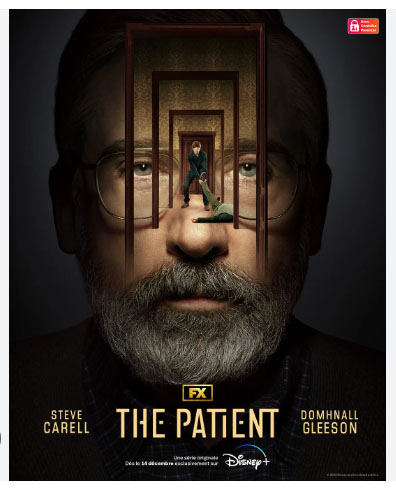
The Patient
Synopsis
Alan Strauss, a grieving Jewish therapist struggling with recent personal loss, accepts a mysterious new patient named Sam Fortner. He soon discovers that Sam is not suffering from ordinary psychological distress, but is actually a prolific serial killer seeking professional help to curb his murderous urges. Sam kidnaps Alan, chaining him in a basement cell to force him to cure his homicidal compulsions before the police intervene. Trapped in a claustrophobic psychological nightmare, Alan must use all his therapeutic expertise and intellect to stay alive while navigating his own grief.
The Making of the Film
Creators Joel Fields and Joe Weisberg developed the psychological thriller miniseries as a deeply intimate, tightly wound exploration of trauma, morality, and captivity. The production was intentionally designed to take place almost entirely within a single basement set to maximize claustrophobic tension. Filmmakers focused on deep psychological dialogue, Jewish cultural motifs, and complex moral dilemmas rather than explicit gore. The project was built around a powerhouse two-hander acting dynamic.
Critical Reception
Critics offered widespread critical acclaim, praising the brilliant performances and electric claustrophobic chemistry between Steve Carell and Domhnall Gleeson. Reviewers commended the miniseries for its unique premise, tight writing, and thoughtful exploration of guilt, parental abuse, and the limits of therapy. Some critics noted that the final episodes struggled slightly to maintain the intense momentum of the opening setup, yet lauded its overall ambitious scope. It was celebrated as a prestige television triumph.
Audiences embraced the psychological thriller for its nail-biting suspense, intellectual depth, and deeply disturbing character studies. Viewers found the moral standoffs between the therapist and his captor endlessly fascinating and emotionally draining. The unique short-episode format kept streaming audiences hooked through every agonizing twist. Many praised it as one of the most gripping miniseries of the year.
The series achieved major award recognition, earning multiple Emmy Award nominations, including Outstanding Lead Actor for Steve Carell and Supporting Actor for Domhnall Gleeson. Domhnall Gleeson's chilling performance won widespread critical praise. The project successfully cemented its status as a masterclass in psychological television.
Behind-the-Scenes Stories
Creators Joel Fields and Joe Weisberg wanted to craft a narrative that examines whether even the most depraved human mind can be rehabilitated through empathy and psychoanalysis. They incorporated elements of Jewish theology and mourning rituals to ground Alan Strauss's internal grief. The production team constructed a meticulous basement set designed to feel increasingly oppressive over time.
Shooting almost entirely within a single confined room required creative camera blocking and varied lighting angles to prevent visual monotony. Maintaining intense psychological tension across dialogue-heavy scenes demanded rigorous rehearsal and emotional focus from the lead actors. Steve Carell spent hours chained to the basement bed post, adding physical realism to his captive state.
During the dramatic therapy sessions, Carell and Gleeson performed extended, unbroken dialogue scenes that felt like intense theatrical stage plays. The crew maintained a quiet, respectful atmosphere on set to preserve the heavy emotional gravity of the material. These practical choices enhanced the raw authenticity of the thriller.
Steve Carell and Domhnall Gleeson led the cast as Alan Strauss and Sam Fortner, supported by Linda Emond and David Alan Grier. The casting process focused on finding dramatic heavyweights who could project quiet vulnerability and terrifying menace. The resulting ensemble delivered masterclass performances.
Themes Explored
The series explores psychological captivity, the limits of psychotherapy, generational trauma, familial abuse, and Jewish identity. It examines how grief can cloud human judgment and survival instincts. The narrative ultimately questions whether monstrous minds can ever truly achieve redemption.
Ending Explained
Alan realizes that Sam is fundamentally incapable of stopping his murders and makes a desperate, fatal attempt to escape or alert the outside world, resulting in Sam killing him. Before his death, Alan manages to record a heartbreaking video message to his estranged family, expressing love and forgiveness. Sam ultimately chains himself in his mother's basement, mailing Alan's videotape to the authorities so someone will finally stop him. The ending offers a devastating, tragic conclusion to the psychological ordeal.
Meaning of the Title
The title "The Patient" serves as a brilliant double entendre referring both to the captive therapist who must patiently endure his imprisonment and the serial killer patient seeking a cure. It highlights the inversion of traditional power dynamics in a therapeutic setting. The concise title sets a dark psychological tone.
Latest News
- The miniseries remains a widely studied and celebrated masterclass in tight psychological storytelling on streaming platforms.
Similar Films
Fans of psychological thrillers and captive dramas will enjoy Misery (1990), Silence of the Lambs (1991), Room (2015), and Mindhunter (2017), all exploring dark minds.