

 Français
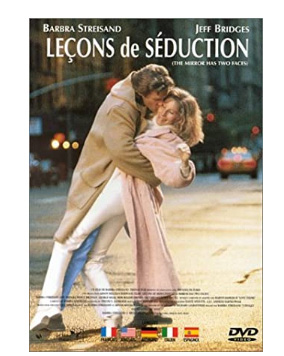
The Mirror Has Two Faces
Synopsis
The Mirror Has Two Faces is a witty and touching romantic comedy-drama directed by and starring Barbra Streisand. Set in New York City, the story follows Rose Morgan, a middle-aged, unpretentious literature professor at Columbia University who lives with her overbearing mother and struggles with body image insecurities. When she meets Gregory Larkin, a brilliant, emotionally detached mathematics professor who is weary of passionate heartbreak and seeks a purely intellectual, platonic marriage based on companionship rather than sex, they agree to an unusual wedding. As they live together as roommates, Rose undergoes a stunning physical and emotional transformation, hoping to ignite genuine romance in her dispassionate husband. The film explores beauty, intellect, and mature love.
The Making of the Film
Barbra Streisand directed, produced, and starred in the project, adapting the 1958 French film 'Le Miroir à deux faces' while heavily infusing it with her own comedic sensibilities and themes on female self-worth. Streisand worked closely with screenwriter Richard LaGravenese to craft sharp intellectual dialogue between the two academic protagonists. The production utilized stunning New York City university campus locations and elegant apartments. Jeff Bridges was cast as the mathematically minded husband, bringing warmth and charm to the unconventional romance.
Critical Reception
Professional critics offered generally favorable reviews, praising Barbra Streisand's confident direction, witty screenplay, and the wonderful chemistry between Streisand and Jeff Bridges. Reviewers highlighted Lauren Bacall's phenomenal, scene-stealing supporting performance as Rose's sharp-tongued mother, which earned her an Academy Award nomination. Critics commended the film for exploring mature romantic themes and intellectual compatibility rather than standard youthful flings. It became a solid box office success.
Audiences responded with warm enthusiasm, enjoying the sparkling romantic banter, beautiful New York settings, and the inspiring physical and emotional transformation of the protagonist. Viewers appreciated the mature, thoughtful take on marriage and self-acceptance. Word-of-mouth recommendations sustained its popularity on home video.
The film achieved major awards success, earning two Academy Award nominations: Best Supporting Actress for Lauren Bacall and Best Original Song for Marvin Hamlisch and Robert John Lange's 'I Finally Found Someone'.
Behind-the-Scenes Stories
Director Barbra Streisand drew inspiration from classic Hollywood romantic comedies, French cinema, and personal reflections on aging and beauty standards in media. Coordinating the transformation scenes required meticulous wardrobe and hair styling to highlight Rose's gradual self-discovery. During the filming of the intense apartment debate scenes, Streisand and Jeff Bridges engaged in sparkling verbal sparring that enhanced their intellectual chemistry. Before Jeff Bridges was cast, various other veteran Hollywood actors were considered for the mathematics professor role.
Themes Explored
Self-Worth, Intellectual Romance, Marriage, Aging, Transformation, Beauty
Ending Explained
The heartwarming romantic climax shows Gregory realizing he is deeply in love with Rose, leading to a passionate reconciliation in Paris that validates their mutual affection.
Meaning of the Title
The title symbolizes both literal reflections and the dual nature of how people perceive themselves versus how they are seen by others in romance.
Original Soundtrack
Marvin Hamlisch composed a sweeping, romantic orchestral score featuring the hit duet 'I Finally Found Someone' performed by Barbra Streisand and Bryan Adams.
As Good as It Gets, Something's Gotta Give, It Could Happen to You, You've Got Mail