

 Français
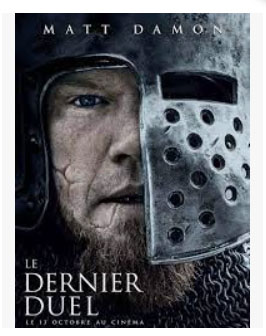
The Last Duel
Synopsis
This gripping, epic historical drama medieval thriller set in 14th-century France chronicles the bitter feud between Norman knight Jean de Carrouges and his former squire Jacques Le Gris. When Carrouges's noble wife, Marguerite de Carrouges, publicly accuses Le Gris of a brutal sexual assault, a tense legal battle ensues before King Charles VI, who decrees that the dispute must be settled by a harrowing trial by combat to the death. Presented through a unique three-chapter Rashomon-style perspective structure reflecting each protagonist's distinct subjective truth, the narrative exposes medieval hypocrisy and brutal institutional misogyny. It is a masterclass in historical filmmaking.
The Making of the Film
The project originated from writer-producers Matt Damon and Ben Affleck adapting Eric Jager's acclaimed 2004 historical non-fiction book 'The Last Duel: A True Story of Trial by Combat in Medieval France'. Director Ridley Scott was immediately drawn to the compelling structural concept of telling the same historical event through three distinct viewpoints. Filmmakers sought to provide Marguerite de Carrouges with a voice long buried by medieval history. Inspiration was drawn from historical court transcripts, medieval warfare records, and classic cinematic epics. The creative team aimed to produce an unflinching, prestigious historical masterpiece.
Critical Reception
Critics offered generally favorable reviews, praising Ridley Scott's muscular direction, the innovative three-perspective structure, and standout performances by Jodie Comer, Matt Damon, Adam Driver, and Ben Affleck. Reviewers noted that the film successfully used its historical setting to examine timely themes of consent, truth, and patriarchal oppression with unflinching power. The brutal, visceral final jousting sequence received universal acclaim for its bone-crunching realism. While its box office run was unfortunately muted, its critical reputation remains exceptionally high.
Audience reception was enthusiastic among history enthusiasts and cinephiles who appreciated the film's grand scale and thoughtful thematic depth. Viewers on public platforms praised Jodie Comer's powerhouse lead performance, stunning medieval set designs, and intense battle choreography. Fans of historical epics celebrated Ridley Scott's return to form. Word-of-mouth sustained strong home video and streaming popularity.
Awards season brought recognition from various critics' associations, honoring Jodie Comer's extraordinary acting achievement and the production's exquisite costume design and art direction. Critics praised the film for its bold narrative structure and powerful social resonance. These accolades cemented its status as a premier historical epic of the decade.
Behind-the-Scenes Stories
The director drew visual inspiration from 14th-century illuminated manuscripts, muddy medieval battlefield paintings, and gritty historical dramas to establish an authentic, tactile aesthetic. Every stone castle, muddy village, and suit of armor was constructed with meticulous historical precision on physical soundstages and locations in France and Ireland. The production team collaborated with medieval historians and armorers to ensure that combat weapons and jousting rules mirrored actual 1386 protocols. These artistic choices created an impeccably realized medieval world.
Production presented intense physical challenges, requiring Matt Damon, Adam Driver, and Jodie Comer to undergo grueling combat training and wear heavy, authentic steel armor during freezing shoots. Jodie Comer delivered a towering performance while mastering complex period French dialects and emotional trauma. Shooting on location in medieval castles exposed the crew to harsh weather conditions. Furthermore, maintaining distinct visual color grades for each character's subjective chapter required obsessive editorial precision.
During the filming of the brutal, fifteen-minute final duel, the actors and stunt crews executed bone-crunching practical horseback charges and weapon impacts with total professional commitment. To maintain authentic tension, Ridley Scott utilized multiple camera setups to capture the visceral brutality of medieval combat. The crew utilized natural lighting to accentuate the grim historical tone. This rigorous dedication resulted in a legendary cinematic climax.
Casting was anchored by securing phenomenal rising star Jodie Comer as Marguerite, whose emotional strength and vulnerability drove the entire moral core of the film. Matt Damon and Adam Driver brought intense rivalry and complexity to the knights. Supporting roles featured Ben Affleck in a memorable comedic supporting turn as the decadent Count Pierre. This star-studded casting strategy was the absolute secret to the film's dramatic success.
Themes Explored
The narrative deeply explores themes of subjective truth, systemic misogyny, and the brutal realities of medieval justice. It examines the courage of women speaking out against powerful men, honor, and toxic masculinity. Additionally, it highlights class privilege, religious hypocrisy, and the search for objective truth in a biased world. Ultimately, the film reflects on justice, courage, and the timeless fight for bodily autonomy.
Ending Explained
Jean de Carrouges slays Jacques Le Gris in a brutal, bloody trial by combat after a desperate wrestling match on the muddy arena floor, proving God's will and clearing his family's honor, while Marguerite watches safely knowing her truth has triumphed. Although Carrouges returns home a celebrated hero, the final poignant epilogue reminds viewers that Marguerite lived the rest of her days under a cloud of societal suspicion without ever retracting her courageous truth. The sobering resolution underscores the high price of speaking out against patriarchal power.
Meaning of the Title
The title directly references the historical judicial duel of 1386, which was famously the last officially sanctioned trial by combat in French history.
Similar Films
Films sharing similar medieval historical epics, trial by combat, and gritty realism include Kingdom of Heaven (2005), Braveheart (1995), and The Duelists (1977).