

 Français
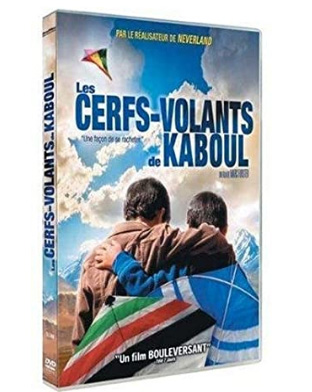
The Kite Runner
Synopsis
In Kabul in the 1970s, Amir, a boy from a wealthy family, shares an unshakable friendship with Hassan, the son of his father's servant and a member of the persecuted Hazara minority. After a kite-fighting tournament, Amir fails to help Hassan when he is attacked, a betrayal that haunts him long after. The Soviet invasion forces Amir and his father to flee to California, where Amir becomes a writer. Years later, a phone call from Pakistan brings him back to Afghanistan to face his past and make amends.
The Making of the Film
The Kite Runner is adapted from the 2003 debut novel by Khaled Hosseini, which became a worldwide bestseller and introduced millions of readers to Afghan history and culture. The novel was inspired by Hosseini's memories of growing up in Kabul and his experience as an Afghan exile in the United States. It tells a story about friendship, guilt and redemption that seemed made for the screen. The screenplay was written by David Benioff, who worked to condense a sprawling novel into a feature film while keeping its emotional core. Marc Forster, the director of Monster's Ball and Finding Neverland, was chosen to direct, drawn to the story of a man seeking forgiveness. The production was a co-venture between DreamWorks and Paramount Vantage. A decision was made to film much of the dialogue in Dari, with English subtitles, to preserve the authenticity of the setting. Because filming in Afghanistan was not possible, the city of Kashgar in western China was used to stand in for Kabul. The film reached audiences in the United States in December 2007.
Reviews and Reception
Critics were generally positive, praising the sincerity of the story, the performances of the young actors and the visual evocation of Afghan life. Some reviewers felt that the film followed the novel too faithfully, which made certain coincidences and emotional beats feel melodramatic. Others admired Forster's restraint in portraying the film's most painful moments. The cinematography and music also received widespread praise. Many agreed that the adaptation remained moving even when it was imperfect.
The public response was warm, in large part thanks to the novel's huge readership. Viewers connected strongly with the story's emotional core and with the universal themes of friendship and regret. The film also stirred controversy, particularly in Afghanistan, where its depiction of ethnic tensions and violence was sensitive. It remains one of the best-known screen portrayals of Afghan life for Western audiences.
The film received a Golden Globe nomination for Best Foreign Language Film. Alberto Iglesias earned an Oscar nomination for Best Original Score for his work. These nominations reflected the film's artistic ambition and emotional impact. It was not a sweeping awards-season success, but it left a clear mark.
Filming Anecdotes
Forster wanted to ground the film in authentic details, so he cast Afghan and Afghan-diaspora performers and let much of the dialogue play out in Dari. Homayoun Ershadi, an Iranian actor known for Taste of Cherry, played Amir's father, Baba. The kite-fighting scenes were designed to capture the joy of Afghan childhood before the war. Kites became the film's central visual motif, soaring above the rooftops of the city.
The most serious challenge concerned the young actors, who appear in a harrowing scene that reflects the novel's darkest moment. Out of concern for their safety, since the sequence could make them targets in Afghanistan, the studio postponed the film's release and arranged for the boys to be relocated. The decision attracted considerable media attention. The production also had to rebuild Kabul in China, which required close coordination with local crews.
The kite tournament is the film's centerpiece and was shot with great care. It shows Hassan running the fallen kite with unshakable loyalty, and it sets up the memory that will haunt Amir for the rest of his life. The scene captures both the thrill of the competition and the fragility of a friendship that cannot survive society's divisions.
Themes Explored
At its heart, The Kite Runner is a story about guilt and the long road to redemption. Amir's failure to defend Hassan casts a shadow over his entire life, and the film shows how an unspoken betrayal can shape a person's identity. The relationship between the two boys is also a portrait of social division, since Amir is a Pashtun and Hassan a Hazara, a minority treated as inferior. The film explores the complicated bond between fathers and sons, especially Amir's hunger for his father's approval. Exile and belonging form another major theme, as the characters build new lives in America while carrying their homeland with them. Finally, the film asks whether it is ever possible to make amends for the past, and what courage it takes to try.
Ending Explained
In the final act, Amir returns to Afghanistan and learns the truth about Hassan and about his own family. He discovers that Hassan's son, Sohrab, is in danger, and he risks his life to rescue the boy from a cruel Taliban official who was once his childhood tormentor. After a violent confrontation, Amir takes Sohrab to the United States and gives him a home. The film ends in California, where Amir and Sohrab fly a kite together. Amir offers to run the kite for the boy, repeating the words Hassan once said to him, and Sohrab responds with a faint smile. The final image suggests that redemption is a lifelong process, and that a damaged child can begin to heal when someone chooses to stay.
Meaning of the Title
The title refers to the kite runner, the boy who chases the fallen kites during kite-fighting tournaments, a role Hassan performs with remarkable skill and devotion. The phrase becomes a symbol of loyalty, as Hassan promises to run any kite for Amir, saying for you, a thousand times over. It also evokes childhood innocence, which the story shows being lost through betrayal and war. By the end, the idea of running the kite passes from one generation to another, becoming a gesture of atonement and hope.
Original Soundtrack
The Spanish composer Alberto Iglesias wrote the score, which earned him an Oscar nomination for Best Original Score. His music blends traditional Afghan sounds with a delicate orchestral palette, evoking both the beauty of Kabul and the sorrow of exile. The score supports the film's emotional arc without overwhelming its quiet moments.
Similar Films
- Atonement (2007), Joe Wright
- Slumdog Millionaire (2008), Danny Boyle
- Osama (2003), Siddiq Barmak
- Charlie Wilson's War (2007), Mike Nichols
- The Swallows of Kabul (2019), Zabou Breitman and Eléa Gobbé-Mévellec