

 Français
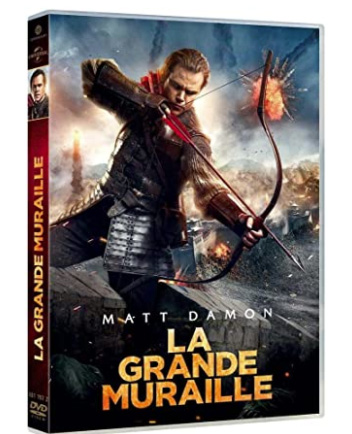
The Great Wall
Synopsis
A European mercenary traveling through ancient China in search of black powder finds himself imprisoned within a massive fortress atop the Great Wall. He soon discovers that the iconic fortification was built not just to keep out human invaders, but to hold back terrifying hordes of ravenous, mythical monsters. Alongside an elite army of Chinese warriors, he joins the fierce defense to save humanity from destruction. This epic historical fantasy blends Hollywood spectacle with grand Chinese cinema aesthetics.
The Making of the Film
The idea for The Great Wall originated as a massive international co-production project spearheaded by Legendary Pictures and Chinese producers to bridge Hollywood blockbuster filmmaking with Chinese cinematic scale. Director Zhang Yimou was brought on board to infuse the monster-action premise with his signature visual splendor, vibrant color palettes, and breathtaking choreography. The narrative was inspired by Chinese folklore regarding mythical beasts combined with the legendary history surrounding the construction of the Great Wall. The production was designed to showcase unprecedented cross-cultural cinematic collaboration on a massive global budget.
Critical Reception
Professional critics gave mixed-to-negative reviews to The Great Wall, criticizing its thin plot, predictable character arcs, and reliance on CGI spectacle over emotional substance. Reviewers noted that despite Zhang Yimou's gorgeous visual direction and vibrant costume design, the script struggled to engage audiences on a deep narrative level. The public response was varied; international box office markets performed decently, but domestic North American ticket sales fell short of expectations. Audiences appreciated the high-octane action sequences and colorful army formations, though many found the story formulaic. The film was recognized primarily for its technical achievements in production design and costume work rather than major storytelling awards.
Filming Anecdotes
Director Zhang Yimou drew heavy inspiration from traditional Chinese military history, ancient martial arts strategies, and grand theatrical pageantry to design the elaborate battle sequences. Production was a massive international logistical feat, requiring enormous soundstages in China, a crew consisting of hundreds of technicians from dozens of countries, and meticulously crafted props. During the filming of the intricate bungee-cord warrior combat scenes, stunt performers underwent intense weeks of specialized training to execute the synchronized maneuvers safely. Before Matt Damon was cast as the lead mercenary, several other western actors were considered, but Damon's global box office appeal secured him the primary role.
Main Themes
The film explores themes of cross-cultural unity, redemption, self-sacrifice, and the power of teamwork in the face of an existential threat. It highlights how individuals from completely different backgrounds can find common ground and mutual respect through shared struggle. Additionally, it celebrates duty, honor, and the defense of civilization against chaotic destruction.
Ending Explanation
The climax resolves the epic siege as the European mercenary and his allies devise a daring plan to defeat the monster queen by infiltrating the heart of the beast swarm using hot-air balloons and explosive black powder. After a tense battle of wits and courage, they successfully destroy the queen, causing the entire hive-mind monster army to collapse instantly. The mercenary earns the ultimate respect of the Chinese commanders, choosing to return home a changed man with a renewed sense of honor.
Title Significance
The title refers directly to the historic and architectural marvel that serves as the primary setting and central character of the film: the Great Wall of China. It emphasizes the wall's dual purpose as both a monumental historical defense structure and a mystical barrier holding back supernatural evil.
NULL
NULL
Kingdom of Heaven, Pacific Rim, 47 Ronin, Godzilla