

 Français
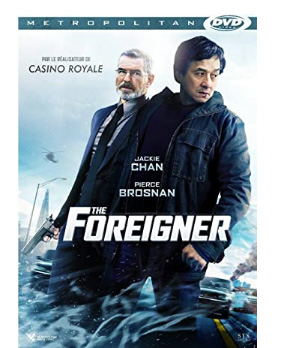
The Foreigner
Synopsis
Quan Ngoc Minh is a humble London-based restaurant owner with a shadowy past whose teenage daughter is killed in a senseless politically motivated bombing claimed by a splinter IRA group. Desperate for justice, Quan approaches British government official Liam Hennessy for the names of the terrorists, believing Hennessy has inside knowledge. When Hennessy stonewalls him, Quan unleashes his specialized military training from his past as a Vietnam War guerrilla, waging a one-man psychological and physical war to force answers. As Hennessy tries to manage the escalating chaos and political fallout, Quan proves to be a relentless and lethal adversary.
The Making of the Film
Director Martin Campbell adapted the film from Stephen Leather's acclaimed 1992 novel 'The Chinaman', bringing his trademark gritty action direction to a political thriller. The filmmaker wanted to explore an aging father's desperate quest for vengeance against the backdrop of Northern Irish political negotiations. The production prioritized realistic hand-to-hand combat and guerrilla warfare tactics over flashy superhero action. The script was crafted to give Jackie Chan a rare, deeply serious dramatic and action-oriented role.
Critical Reception
Professional reviews were generally positive, with critics praising Jackie Chan's remarkable, subdued dramatic performance alongside Pierce Brosnan's complex political antagonist. Reviewers commended Martin Campbell for delivering a taut, intelligent political thriller with expertly choreographed action sequences that respected the mature subject matter. It achieved strong commercial and critical success worldwide.
Public reception was enthusiastic among action thriller fans who were thrilled to see Chan tackle a grounded, serious dramatic role rather than martial arts comedy. Viewers appreciated the tense cat-and-mouse dynamic between the two veteran leads. Word-of-mouth propelled the film to solid box office returns.
Awards recognition included praise from action film academies and international box office success, cementing its reputation as one of Chan's finest later-career thrillers.
Shooting anecdotes
Director Martin Campbell drew inspiration from classic 1970s political thrillers and espionage dramas dealing with terrorism and government compromise.
Production encountered logistical challenges coordinating outdoor guerrilla warfare action sequences across busy London streets and rural Irish settings.
During the intense forest tracking sequence, Jackie Chan performed rigorous physical stunts despite his advancing age to maintain absolute realism.
Initial casting successfully paired two legendary international stars who brought instant gravitas to their respective roles.
Themes explored
The film explores grief, vengeance, political terrorism, government corruption, and the lingering scars of past conflicts. It examines how personal loss can drive an ordinary man to unleash forgotten lethal skills. It also highlights the messy reality of political compromise.
Explanation of the ending
The climax resolves with Quan uncovering the full conspiracy and eliminating the actual terrorists before quietly walking away, while Hennessy is left politically ruined and compromised by his own associates. It offers a satisfying yet somber conclusion to a tale of relentless vengeance.
Meaning of the title
The title refers metaphorically to the protagonist's isolated status as an outsider in a foreign country, disconnected from political systems and seeking justice on his own terms.
Taken, Man on Fire, A Most Wanted Man, The Equalizer