

 Français
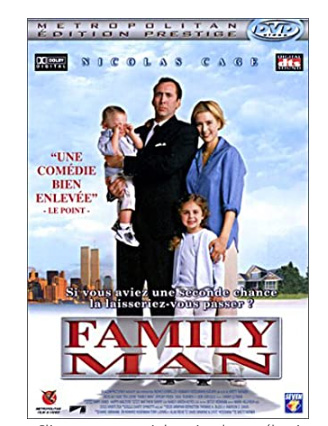
The Family Man
Synopsis
Jack Campbell is a wealthy and successful investment banker living a luxurious bachelor lifestyle in New York City. On Christmas Eve, an unexpected encounter with a mysterious stranger causes him to experience an entirely different version of his life. He awakens in a suburban home with Kate, the woman he once loved, and two children he never had in his original reality. Suddenly forced to experience the responsibilities of marriage and family life, Jack initially struggles to adapt. However, as he becomes increasingly attached to his new surroundings, he begins questioning the choices that led him to pursue wealth instead of love. His experience forces him to reconsider what truly makes a life meaningful.
The Film's Origins
The Family Man was developed as an original romantic fantasy screenplay written by David Diamond and David Weissman. The project explores the familiar idea of an individual discovering what life might have become if he had made different choices. Its central premise draws on the tradition of Christmas stories involving personal transformation and second chances. Director Brett Ratner was interested in combining romantic comedy with a more emotional reflection on family and personal fulfillment. Nicolas Cage became involved as Jack Campbell, bringing his experience in both dramatic and comic roles to the production. Téa Leoni was selected to portray Kate Reynolds, the woman whose relationship with Jack forms the emotional foundation of the story. The filmmakers wanted the contrast between Jack's luxurious New York lifestyle and his imagined suburban existence to feel convincing. The production was released during the Christmas season of 2000, reinforcing its connection with holiday storytelling. Its narrative also recalls the moral questions explored in classic films about alternative lives and personal choices.
Critical Reception
Professional Reviews: The Family Man received generally mixed reviews from critics. Many reviewers appreciated Nicolas Cage and Téa Leoni's performances and the film's warm emotional atmosphere. Its central idea was considered appealing, particularly because it encouraged viewers to reflect on the relationship between wealth and happiness. Some critics found the storyline predictable and considered its fantasy elements insufficiently developed. Others appreciated its accessible combination of romance, comedy, and Christmas sentiment. The performances and the film's central moral question were generally regarded as its strongest qualities.
Audience Reception: The film attracted audiences looking for an emotional romantic comedy during the Christmas season. Its message about family, love, and the importance of personal choices resonated with many viewers. The contrast between Jack's wealthy bachelor lifestyle and his alternative family life created an accessible source of humor and reflection. Over time, the film developed a loyal following among admirers of romantic fantasy. Its reputation has grown particularly strong during the holiday period, when audiences frequently rediscover its message.
Awards and Recognition: The Family Man did not receive major Academy Award recognition. Téa Leoni received attention for her performance and earned nominations from organizations recognizing comedy and romantic performances. The film also attracted recognition through its television and home-video distribution. Its lasting popularity has been more closely connected to audience appreciation than to major industry awards. It remains a recognizable Christmas-themed romantic fantasy from the early 2000s.
Behind-the-Scenes Stories
Director's Inspirations: Brett Ratner wanted to create a film that combined romantic comedy with a meaningful examination of personal priorities. He was interested in the idea that people often judge their success through financial achievements while overlooking emotional relationships. The Christmas setting provided an opportunity to explore family, generosity, and second chances. The director also wanted to make Jack's transformation believable by showing how ordinary domestic responsibilities gradually become meaningful to him. The film uses fantasy as a way of examining very real questions about happiness.
Production Challenges: The production needed to create two convincing versions of Jack's life. One required the atmosphere of a wealthy Manhattan investment banker, while the other needed to represent an ordinary suburban family environment. The filmmakers had to maintain visual and narrative continuity between these contrasting worlds. Working with child actors and coordinating family scenes required careful organization. The Christmas setting also meant that locations, decorations, and production schedules had to be planned around the holiday atmosphere.
Memorable Scene: The scenes in which Jack gradually becomes involved in ordinary family activities are among the film's most meaningful moments. His initial discomfort with parenting and domestic responsibilities creates humor, but it also reveals how unfamiliar he has become with emotional intimacy. As he begins enjoying time with his children and Kate, the audience sees his priorities changing. The Christmas sequences reinforce the contrast between material success and the warmth of family life. These moments establish the emotional foundation for his eventual decision.
Originally Considered Casting: Nicolas Cage was selected for the central role of Jack Campbell, while Téa Leoni became Kate Reynolds. Don Cheadle portrayed Cash, the mysterious stranger whose intervention changes Jack's life. Jeremy Piven played Arnie, Jack's colleague and friend in his original reality. The production also involved child actors Makenzie Vega and Jake Milkovich. The final cast brought together performers experienced in comedy, romance, and dramatic storytelling. There is no sufficiently documented complete list of alternative actors seriously considered for every principal role.
Themes Explored
The Family Man explores love, family, ambition, materialism, personal choices, and the meaning of happiness. Its central message challenges the assumption that professional success and financial wealth automatically lead to a fulfilling life. Jack initially believes that his career and luxurious lifestyle represent the highest form of achievement. His alternative existence reveals the emotional value of everyday family experiences. The film also examines the importance of commitment and the sacrifices required to maintain meaningful relationships. Christmas becomes a symbolic moment of reflection and renewal. Jack's transformation demonstrates that personal fulfillment often comes from connections with others rather than material possessions. The story also raises questions about destiny and whether people can recognize the value of their choices before it is too late. Ultimately, it celebrates love and family as essential elements of a meaningful existence.
Ending Explained
After experiencing an alternative life with Kate and their children, Jack begins to understand what he sacrificed when he chose his career over their relationship. He eventually returns to his original reality, where he once again has wealth and professional success but no family. The experience leaves him emotionally transformed, and he can no longer view his former lifestyle in the same way. He decides to search for Kate, hoping that their relationship might still have a future. When he finds her, she is living independently and preparing for a professional opportunity in Paris. Jack approaches her and tries to explain the extraordinary experience he has undergone. Although she initially has no reason to believe his story, the emotional connection between them becomes apparent. The final moments leave their future open but suggest that a new beginning may be possible. The ending emphasizes that the most important decisions in life are often connected to love rather than ambition.
Meaning of the Title
The title The Family Man refers to the identity Jack discovers in his alternative life. Initially, he defines himself through professional success, wealth, and independence. His experience as a husband and father reveals another possible version of himself, one centered on emotional responsibility and family relationships. The expression family man also traditionally describes someone who places the needs of loved ones at the center of his life. The title therefore represents the transformation of Jack's priorities and his discovery of a different understanding of success.
Original Soundtrack
Danny Elfman composed the original score, creating a warm musical atmosphere suited to the film's romantic and Christmas themes. His compositions combine orchestral arrangements with gentle melodies that emphasize the emotional transformation of the protagonist. The music helps distinguish Jack's original corporate environment from the more intimate atmosphere of his alternative family life. The soundtrack also reinforces the film's sentimental tone during its most important relationship scenes. Elfman's work contributes to the production's identity as a Christmas fantasy about love and personal renewal.
Similar Movies
Films with comparable themes include It's a Wonderful Life, the classic Christmas fantasy about a man discovering the value of his existence. Click explores the consequences of controlling time and neglecting family relationships. Sliding Doors examines how different choices can lead to entirely different lives. About Time explores love, family, and the possibility of changing personal experiences. The Holiday also combines romance, personal transformation, and the emotional atmosphere of the Christmas season. These films share The Family Man's interest in alternative lives and the meaning of happiness.