

 Français
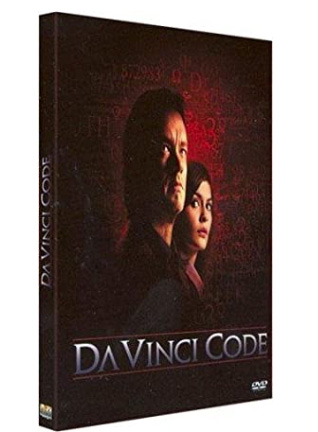
The Da Vinci Code
Synopsis
When the curator of the Louvre is murdered, Harvard symbologist Robert Langdon is summoned to Paris and finds himself a suspect. With the help of cryptologist Sophie Neveu, the dead man's granddaughter, he follows a trail of clues hidden in the works of Leonardo da Vinci. The pair uncover a secret that could shake the foundations of Christianity. Pursued by the police and a fanatical albino monk, they race to find the truth.
The Making of the Film
The film is based on Dan Brown's 2003 novel, which became one of the best-selling books of all time. Brown built his story from theories about the Holy Grail and secret societies, drawing on earlier works such as the 1982 book The Holy Blood and the Holy Grail. The authors of that book later sued Brown for plagiarism but lost the case in a London court. Sony acquired the film rights, and Ron Howard was chosen to direct, with Akiva Goldsman writing the screenplay. Tom Hanks was cast as Robert Langdon, joined by Audrey Tautou, Ian McKellen, Paul Bettany and Jean Reno. The film was shot partly in Paris, and the production was granted access to the Louvre. It was also chosen as the opening film at the Cannes Film Festival in 2006.
Reviews and reception
Summary of professional reviews
Critics were largely unimpressed. Many found the film long, talky and less thrilling than the novel, and Hanks's performance was seen as subdued. Others admired the visual style, the locations and the intrigue. It was generally considered a respectable but uninspired adaptation.
Audience reception
Despite the lukewarm reviews, the film was a giant commercial success, earning about 760 million dollars worldwide. The popularity of the novel ensured a huge audience, and many viewers enjoyed the puzzles and the settings. Its subject also provoked intense debate, particularly among religious groups. It remains one of the most discussed thrillers of its decade.
Awards and nominations
The film received only a few nominations, notably for Hans Zimmer's score, which was nominated for a Golden Globe. It did not win major prizes, but its box office results far outweighed any lack of awards.
Filming anecdotes
Director's inspirations
Howard approached the film as a classical mystery thriller, with a focus on atmosphere, art history and secret codes. He wanted the audience to enjoy the intellectual puzzle as much as the chase. The settings, from the Louvre to Rosslyn Chapel, give it a sense of mystery.
Production difficulties
The film created controversy even before its release because of its treatment of religious history, and some churches refused permission to film inside their buildings. Westminster Abbey declined, so Lincoln Cathedral was used as a substitute. Filming at the Louvre also required careful scheduling to avoid disturbing the museum.
Anecdote about a particular scene
The sequence in the Louvre, where Langdon and Sophie decode the curator's final message, set the tone for the film. The glass pyramid, which appears in the final scene, plays a key role in the story. Many tourists have since visited the museum to retrace the film's locations.
Themes explored
The central theme is the conflict between faith and history, and between official truth and hidden knowledge. The film questions how religious doctrine is shaped and who controls the narrative. It also explores the power of secret societies and the lengths people will go to protect or reveal a secret. Art and symbolism are essential, as the clues are hidden in famous paintings. The role of women in history, especially the figure of Mary Magdalene, is another important topic. Finally, the film looks at how belief can bring both comfort and violence.
Ending explained
Langdon and Sophie finally trace the Holy Grail to a hidden location beneath the Louvre, marked by the Rose Line. They discover that Sophie is a descendant of Jesus Christ and Mary Magdalene, the last member of the secret bloodline. Sophie decides not to reveal this to the world, choosing to preserve the mystery and her own freedom. Langdon realizes that the faith of millions does not depend on proof. The ending suggests that the search for truth is sometimes more important than its answer.
Meaning of the title
The title refers to the secret code hidden in the works of Leonardo da Vinci, whose paintings, such as The Last Supper, are said to contain clues about the Grail. The word code suggests a cryptic puzzle to be solved by the hero. Naming the artist makes the film feel like a treasure hunt through art history. It also provides a powerful hook for audiences.
Original Soundtrack
Hans Zimmer composed the score, which blends mysterious choral passages with suspenseful strings. The cue Chevaliers de Sangreal became one of the most recognizable pieces of the film, with its soaring and dramatic theme. The music was nominated for a Golden Globe and helps lift many of the film's quieter moments.
News
The Robert Langdon series continued with Angels & Demons and Inferno, and a television adaptation of The Lost Symbol was released in 2021. The Da Vinci Code still draws visitors to the Louvre and remains a reference for conspiracy thrillers.
Similar Films
- Angels & Demons (2009): the next Robert Langdon adventure.
- National Treasure (2004): a treasure hunt through American history.
- Indiana Jones and the Last Crusade (1989): a quest for the Holy Grail.
- The Ninth Gate (1999): a mystery about a rare book and the occult.
- Sherlock Holmes (2009): a stylish detective adventure with clues and puzzles.