

 Français
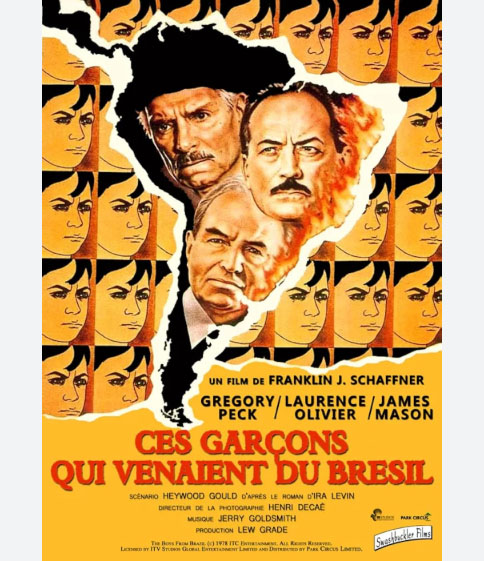
The Boys from Brazil
Synopsis
An aging Nazi hunter living in Paraguay stumbles upon a sinister conspiracy involving former SS officers hiding in South America. Led by the notorious doctor Josef Mengele, the conspirators are orchestrating the systematic assassination of dozens of civil servants worldwide. As the investigator digs deeper, he uncovers a horrifying genetic plot aimed at resurrecting the Third Reich through cloned children. He must race against time to stop the chilling scheme before it reaches fruition.
The Making of the Film
Director Franklin J. Schaffner adapted the feature from Ira Levin's bestselling 1976 suspense novel, capturing the paranoia of post-WWII manhunts. The production benefited from an incredible star-studded cast, pairing legendary actors Laurence Olivier and Gregory Peck in intense dramatic confrontations. Filmmakers sought to blend historical true-crime resonance with science-fiction bio-conspiracy elements to heighten psychological tension. Locations across Europe and North America were carefully utilized to recreate the secretive atmosphere of global espionage.
Critical Reception
Professional critics offered generally favorable reviews, praising the powerhouse lead performances of Olivier and Peck and the sheer audacity of the plot. Many reviewers noted that while the premise stretched credibility, the tense direction and stellar acting kept audiences thoroughly engaged. Audiences appreciated the gripping cat-and-mouse thriller dynamic and dark historical undertones. The film earned multiple Academy Award nominations, including a Best Actor nod for Laurence Olivier.
Behind-the-Scenes Stories
Gregory Peck initially hesitated to play the villainous Nazi doctor Josef Mengele because he had spent his career playing noble heroes. Laurence Olivier reportedly suffered from health difficulties during production yet delivered an intensely dedicated, fierce performance as the aging Nazi hunter. The complex clone plot required careful narrative pacing to keep viewers guessing without confusing the central conspiracy. Director Franklin J. Schaffner maintained a tightly controlled, suspenseful tone throughout all international shooting schedules.
Themes Explored
The film explores the chilling ethical boundaries of genetic engineering, nature versus nurture, and the eternal shadow of fascism. It examines whether evil is born in human DNA or shaped entirely by environmental upbringing. Vigilance against totalitarian ideologies remains a core motif throughout the pursuit of justice.
Ending Explained
The Nazi hunter manages to disrupt the assassination schedule and exposes the sinister cloning files before collapsing from exhaustion. The cloned children are left protected from the remaining conspirators, neutralizing the immediate threat of a renewed Reich. The chilling final note leaves viewers pondering whether the genetic seed of tyranny can ever be fully eradicated.
Meaning of the Title
The title refers to the secret network of cloned Adolf Hitler children raised in various adoptive homes across Brazil as part of the master plot.
Similar films include Marathon Man, The Odessa File, and The Omen for their tense conspiracy thrillers.