

 Français
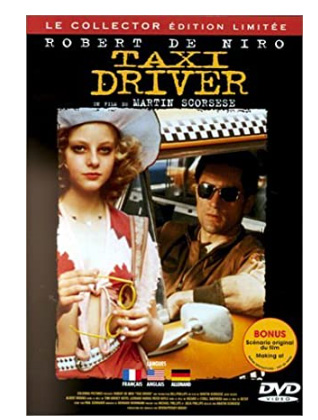
Taxi Driver
Synopsis
A mentally troubled Vietnam veteran named Travis Bickle works as a night-time taxi driver in New York City. Increasingly disturbed by the violence, corruption and loneliness surrounding him, he becomes obsessed with cleaning up the streets. His attention turns to a young prostitute named Iris, whom he wants to rescue from her exploitative environment. As his isolation deepens, Travis gradually develops a dangerous obsession with violence and revenge.
The Film's Origins
The original idea for Taxi Driver came from screenwriter Paul Schrader, who was experiencing a period of profound personal isolation and emotional distress. During this difficult time, he became fascinated by the idea of a lonely individual wandering through a city without any meaningful human connection. Schrader drew inspiration from his own experiences in New York, particularly the atmosphere of its streets during the early 1970s. He also incorporated elements of existential literature and the psychological portraits of alienated characters found in European cinema. The screenplay was conceived as a personal exploration of loneliness, obsession and urban violence rather than a conventional crime story. Martin Scorsese immediately connected with its dark atmosphere and agreed to direct the project. Robert De Niro became deeply involved in understanding Travis Bickle, studying the psychology of isolated individuals and preparing extensively for the role. The film was not adapted from a novel or a true story, although its emotional foundations were influenced by Schrader's personal experiences and contemporary American society.
Critical Reception
Professional reviews: Critics widely praised Martin Scorsese's direction, Paul Schrader's screenplay and Robert De Niro's extraordinary performance. The film was particularly admired for its unsettling atmosphere, innovative cinematography and uncompromising depiction of urban alienation. Jodie Foster also received considerable recognition for her mature performance as Iris, despite her young age. Some contemporary critics found the violence disturbing, but many recognised the film's artistic ambition and psychological complexity.
Audience reception: The film gradually established itself as one of the defining American movies of the 1970s. Its disturbing portrayal of New York resonated with audiences familiar with the social tensions and urban insecurity of that period. Although its subject matter was controversial, its powerful characters and memorable dialogue helped it develop a lasting following. Over the decades, it has become a landmark of American cinema and continues to attract new generations of viewers.
Awards: Taxi Driver won the prestigious Palme d'Or at the 1976 Cannes Film Festival. It received four Academy Award nominations, including Best Picture, Best Actor for Robert De Niro, Best Supporting Actress for Jodie Foster and Best Original Score for Bernard Herrmann. Jodie Foster subsequently won the BAFTA Award for Best Supporting Actress. Robert De Niro also received several major critics' awards for his performance. These honours confirmed the film's importance in the history of modern American filmmaking.
Behind-the-Scenes Stories
Director's inspirations: Martin Scorsese drew inspiration from the atmosphere of New York during the 1970s, when the city was struggling with crime, economic difficulties and social tensions. He wanted the streets to feel threatening and almost hallucinatory, reflecting Travis's deteriorating mental state. Scorsese also incorporated visual and narrative influences from film noir and European psychological cinema. His Catholic upbringing contributed to the film's recurring imagery of guilt, redemption and moral purification.
Production difficulties: The production faced practical challenges when filming in New York, particularly because of the city's crowded streets and unpredictable nighttime conditions. The filmmakers also had to work carefully with the film's disturbing subject matter and its portrayal of violence involving a young character. Robert De Niro was simultaneously preparing for other professional commitments and devoted considerable time to understanding the taxi-driving profession. The production nevertheless maintained a relatively intimate atmosphere, allowing Scorsese to preserve the screenplay's personal and psychological character.
A memorable scene: One of the film's most famous moments is Travis speaking to his reflection while practising a confrontation with an imaginary opponent. Robert De Niro improvised the now-iconic dialogue, creating a scene that perfectly illustrates the character's growing instability. Another particularly memorable sequence is the climactic shootout in the apartment building. Its graphic intensity was achieved through carefully choreographed camera movements, editing and practical effects. The sequence remains one of the most influential depictions of cinematic violence in American film history.
Original casting choices: Robert De Niro was ultimately selected for the role of Travis Bickle after his success in Mean Streets and The Godfather Part II. Several actresses were considered for the role of Iris before Jodie Foster was chosen. Her casting required special attention because of the character's age and the sensitive nature of the material. Harvey Keitel was cast as Sport, the man exploiting Iris, while Cybill Shepherd played Betsy. The final ensemble brought together several performers who would become important figures in American cinema.
Themes Explored
Taxi Driver explores loneliness, alienation and the psychological consequences of social isolation. Travis Bickle feels disconnected from ordinary human relationships and gradually becomes unable to distinguish between moral responsibility and personal obsession. The film examines urban decay, poverty, prostitution and the invisible suffering of people living on the margins of society. It also questions the seductive appeal of violence as a means of restoring order or personal dignity. Travis's desire to become a hero is contrasted with his increasingly unstable mental condition. The story explores masculinity, frustration, sexual repression and the difficulty of establishing meaningful connections. Religious imagery and references to purification suggest that Travis sees violence as a distorted form of redemption. Ultimately, the film leaves viewers questioning whether society creates its own monsters or merely fails to recognise them.
Ending Explained
The final sequence takes place after Travis carries out a violent attack against the men controlling Iris. He kills Sport and several other individuals, leaving behind a scene of extraordinary brutality. Although his actions appear motivated by a desire to rescue the young girl, the violence also reflects the culmination of his psychological breakdown. Travis attempts to take his own life but discovers that he has run out of ammunition. When the police arrive, he makes a gesture resembling a gun pointed at his head, underlining the extent of his mental collapse. The story then jumps forward to a newspaper account portraying him as a heroic figure for saving Iris. Her parents thank him, and Betsy briefly returns to his taxi as a passenger. This apparently positive conclusion is deliberately ambiguous because the audience knows how unstable and violent Travis has become. The final glance in his rear-view mirror suggests that his psychological problems have not necessarily disappeared. Scorsese leaves open the possibility that the apparent redemption is only temporary and that another violent episode could occur.
Meaning of the Title
The title Taxi Driver refers directly to Travis Bickle's occupation as a night-time taxi driver in New York. His profession places him in constant contact with the city's different social environments without allowing him to become part of any of them. The taxi becomes a symbolic space separating Travis from the outside world, allowing him to observe society through a window while remaining fundamentally isolated. The title is deliberately ordinary, contrasting with the extraordinary psychological transformation taking place inside the protagonist. It also suggests that the story is not primarily about a conventional hero but about an anonymous individual whose private frustrations gradually become dangerous.
Bernard Herrmann's original score is one of the film's most celebrated artistic elements. Combining melancholic saxophone melodies with unsettling orchestral passages, the music reflects Travis Bickle's loneliness and growing psychological instability. Herrmann completed the score shortly before his death in December 1975, making Taxi Driver his final film composition. The haunting main theme creates a striking contrast between romantic melancholy and the violence depicted on screen. Its contribution to the film's atmosphere remains one of the most memorable achievements in cinematic music.
Viewers interested in Taxi Driver may also appreciate The King of Comedy, another Martin Scorsese film exploring obsession and social alienation. Joker offers a similarly disturbing portrait of an isolated man whose relationship with society deteriorates. A Clockwork Orange examines violence, morality and the darker aspects of human behaviour. American Psycho explores psychological instability and the disturbing contradictions of modern urban life.