

 Français
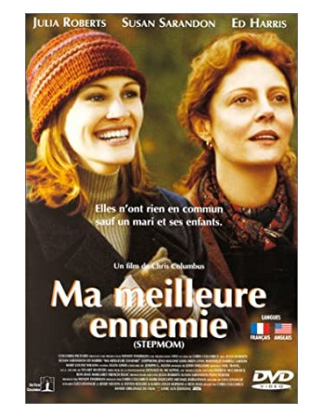
Stepmom
Synopsis
Jackie Harrison is a devoted mother of two who has been divorced for three years and still struggles to accept the presence of Isabel, the young, career-driven photographer who is now dating her ex-husband Luke. Isabel tries hard to win over Anna and Ben, but the children resist her at every turn. A devastating medical diagnosis suddenly changes everything for Jackie and her family. The two women, forced to set aside their rivalry, must find a way to share the future of the children they both love.
The Making of the Film
Stepmom grew out of a desire to tell a story about modern family life, in which divorce and remarriage create complicated bonds that are rarely portrayed honestly. The film was directed by Chris Columbus, who was best known for family comedies such as Home Alone and Mrs. Doubtfire. The screenplay credits five writers, including Gigi Levangie Grazer, Jessie Nelson, Steven Rogers, Karen Leigh Hopkins and Ron Bass. Julia Roberts and Susan Sarandon, who starred as Isabel and Jackie, also served as executive producers, which gave them a strong voice in shaping the story. The project had a deeply personal dimension for Columbus, who dedicated the film to his mother, Irene, who had died of cancer the year before. The film uses the unusual relationship between a mother and her successor to explore love, jealousy and sacrifice. It was produced by Wendy Finerman and released by Columbia Pictures on Christmas Day 1998. The film was positioned as a major holiday release, combining a big-name cast with a deeply emotional story.
Reviews and Reception
Critics gave the film mixed reviews. Many praised the strong performances of Julia Roberts and Susan Sarandon, whose scenes together carry real emotional weight. Others considered the story manipulative and overly sentimental, accusing it of pushing too hard for tears. Ed Harris was often singled out for bringing quiet depth to a thinly written role. The young actors, especially Jena Malone, also drew attention for their natural performances.
Audiences responded much more warmly, especially during the holiday season. The film grossed roughly 160 million dollars worldwide on a budget of about 50 million, making it a clear commercial success. Many viewers found the story deeply moving, particularly those who had experienced divorce or blended families. It remains a favorite for people who enjoy emotional family dramas.
Susan Sarandon received a Golden Globe nomination for Best Actress in a Drama. Ed Harris won the National Board of Review award for Best Supporting Actor, an honor given for his work in Stepmom and The Truman Show. Julia Roberts won a Blockbuster Entertainment Award for Favorite Actress in a Drama. The film was not a major Oscar contender, but its leads were widely recognized.
Filming Anecdotes
Columbus has said that the death of his mother shaped the emotional tone of the film. The story of a mother facing mortality and preparing her children for life without her carried a deeply personal resonance for him. He chose to treat the subject with sincerity rather than irony, even if some critics later found the result too sentimental. The dedication at the end of the film is a quiet reminder of that origin.
The script went through many hands, with a long list of credited writers and producers, which is often a sign of a project reshaped repeatedly during development. The tone had to balance comedy, family drama and a terminal illness, a difficult mix to maintain. The film's emotional scenes required careful pacing, since much of its power depends on the moments between mother and children. Despite these challenges, the production was completed in time for its Christmas release.
Julia Roberts and Susan Sarandon were both stars and executive producers, which meant they were involved in the creative decisions as well as the performances. Their contrasting screen personalities suited the opposition between the polished, ambitious Isabel and the warm, instinctive Jackie. Jena Malone and Liam Aiken played the children, and Ed Harris completed the family triangle as the father. The combination of established stars and young actors was central to the film's appeal.
Themes Explored
Stepmom is above all a story about motherhood and what it means to love children who are not your own. It explores the rivalry between two women who are very different, and shows how that rivalry gives way to respect once they recognize what they share. Illness and mortality hang over the story, forcing the characters to face questions that everyday life usually pushes aside. The film also examines the aftermath of divorce, including the loyalty conflicts and resentments that linger in a split family. Forgiveness and acceptance are central, as each character has to let go of something in order to move forward. The children's perspective gives the story an honest and sometimes painful clarity. Ultimately, the film suggests that family is defined by care and commitment rather than blood alone.
Ending Explained
As Jackie's illness advances, she and Isabel move from open hostility to a fragile understanding. Jackie realizes that Isabel will play a vital role in her children's lives, and she chooses to trust her rather than resist her. In her last Christmas with the family, Jackie finds peace and shares an emotional farewell with her children and with Isabel. After her death, the film shows that the family continues, now held together by the love of both women. The ending is a tearful celebration of what Jackie leaves behind and of the new bond formed in her absence.
Meaning of the Title
The title refers to Isabel's role as the stepmother of Anna and Ben, a role that carries many stereotypes and a great deal of emotional difficulty. The word stepmom is both affectionate and slightly loaded, suggesting someone who stands in the shadow of the real mother. Over the course of the film, the title takes on a deeper meaning as Isabel earns her place in the children's hearts. It becomes a story about how a stepmother can become a true parent, without replacing the mother who came before her.
Similar Films
- Kramer vs. Kramer (1979), Robert Benton
- Terms of Endearment (1983), James L. Brooks
- Beaches (1988), Garry Marshall
- Mrs. Doubtfire (1993), Chris Columbus
- Steel Magnolias (1989), Herbert Ross