

 Français
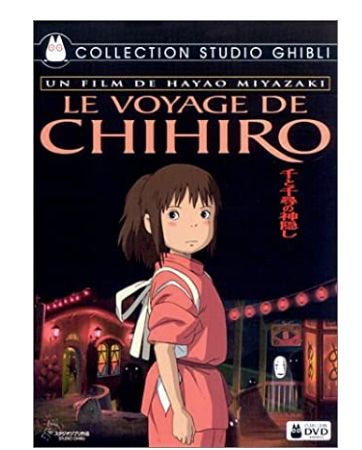
Spirited Away
Synopsis
During her family's move to the suburbs, a sullen ten-year-old girl named Chihiro wanders into a seemingly abandoned amusement park. When her parents are mysteriously transformed into pigs by a witch, Chihiro finds herself trapped in a magical realm ruled by spirits and gods. To survive and save her family, she must take a job at a mystical bathhouse run by the formidable witch Yubaba. Along the way, she loses her name, faces numerous trials, and discovers inner courage she never knew she possessed.
The Making of the Film
Hayao Miyazaki was inspired to create the film after observing the ten-year-old daughter of a family friend and realizing there were few cinematic role models for girls that age. He wanted to build a magical space where children could test their resilience and independence. The bathhouse setting was inspired by traditional Japanese hot spring bathhouses carrying rich folklore. Miyazaki wrote the script day by day without a fixed storyboard, allowing the organic development of the magical world to guide him.
Critical Reception
Spirited Away received universal critical acclaim, earning praise for its breathtaking hand-drawn animation, imaginative world-building, and profound coming-of-age narrative. Audiences embraced its enchanting characters and rich blend of Japanese mythology with universal human truths. It made history by becoming the first anime film to win the Academy Award for Best Animated Feature. It remains widely regarded as a pinnacle of modern cinematic art.
Filming Anecdotes
Hayao Miyazaki drew upon various traditional Japanese folklore tales and architectural styles when designing the elaborate bathhouse. The production team visited historical hot spring towns in Japan to gather authentic visual details for the setting. Voice actors recorded their lines with intense emotional dedication, with Rumi Hiiragi bringing genuine vulnerability to Chihiro. The intricate animation required immense manual labor, with every single spirit and creature meticulously hand-drawn and colored.
Themes Explored
The movie explores themes of identity, personal growth, and the importance of remembering who you are in a consumerist society. It critiques modern human greed through the transformation of parents and the gluttony of No-Face. Environmental awareness and respect for nature are subtly woven into the cleansing of the polluted river spirit. Furthermore, it highlights how hardship can cultivate inner strength and maturity.
Explanation of the Ending
Chihiro successfully completes her final test by correctly identifying her parents among a group of identical pigs, breaking the spell. As she crosses back into the human world with her family, her parents have no memory of the magical events that transpired. However, Chihiro retains a faint, mud-caked hair tie as a tangible proof of her journey, showing she has fundamentally changed. The ending emphasizes that while the magical world fades, the growth achieved within it remains permanent.
Meaning of the Title
The original Japanese title translates to "Sen and Chihiro's Spirited Away," reflecting how the witch Yubaba steals part of her name to control her. "Spirited away" refers to traditional folklore where humans are mysteriously abducted or hidden by supernatural spirits. The title encapsulates Chihiro's literal and spiritual displacement into a realm beyond normal human comprehension. It signifies a profound transition from one state of being to another.
Joe Hisaishi composed an iconic, emotionally resonant orchestral score that perfectly captures both the wonder and melancholy of the magical realm.
My Neighbor Totoro, Princess Mononoke, Alice in Wonderland, Coraline