

 Français
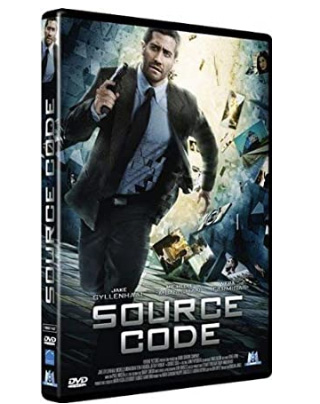
Source Code
Synopsis
Captain Colter Stevens wakes up on a commuter train in Chicago in the body of a stranger, just minutes before the train explodes. He is actually part of a secret government program that sends him into the last eight minutes of a dead man's life to find the bomber. Each time he dies, he is sent back to try again with new clues. As he gets closer to the truth, he also begins to fall for a woman on the train and to question what is real.
The Making of the Film
Source Code was written by Ben Ripley, whose script combined the time-loop structure of Groundhog Day with the spy-thriller feel of a race against the clock. Duncan Jones, who had impressed critics with his low-budget science-fiction debut Moon, was chosen to direct his second feature. Jones was drawn to the idea of a man who must live the same eight minutes over and over, and to the emotional questions it raised. Jake Gyllenhaal was cast as Colter Stevens, with Michelle Monaghan, Vera Farmiga and Jeffrey Wright in the main supporting roles. The film was made on a moderate budget of about 32 million dollars and shot largely in Montreal, which doubled for Chicago. The production was released in the spring of 2011 by Summit Entertainment. It was intended as a smart, accessible thriller with a human heart.
Reviews and reception
Summary of professional reviews
Critics were very enthusiastic, praising the clever script, the tight pacing and the performance of Jake Gyllenhaal. Many compared it favorably with classic time-loop thrillers and noted that it managed to be emotional as well as exciting. A few reviewers felt that the final act strained credibility.
Audience reception
The film was a solid success, earning about 147 million dollars worldwide on a budget of roughly 32 million. Audiences enjoyed the suspense and the twists, and word of mouth was strong. It has remained a favorite among fans of intelligent science fiction. It is often recommended as an example of a mid-budget thriller done right.
Awards and nominations
Source Code was nominated for several genre awards, including the Saturn Awards, for its direction and its screenplay. It did not compete for the major Academy Awards. Its recognition came mainly from critics and science-fiction fans who praised its originality.
Filming anecdotes
Director's inspirations
Jones has said that he wanted to make a film that had the thrill of an action movie but also asked questions about identity and memory. He was inspired by classic science-fiction stories and by the paranoid thrillers of the 1970s. The repeated train sequences were designed to feel fresh each time.
Production difficulties
Because the train scenes are repeated again and again, the production had to shoot many variations of the same events with slightly different actions and dialogue. The cast and crew had to track a complex continuity. The visual effects for the explosion, which is shown several times, also needed careful planning.
Anecdote about a particular scene
One of the film's best-known touches is the voice of Colter's father, played by Scott Bakula, the star of the time-travel series Quantum Leap. Fans of that show recognized the casting as a sly tribute. The final moments, in which the story freezes on a joyful image, are also widely discussed.
Themes explored
The film is about identity, memory and the meaning of a life that may be coming to an end. It raises questions about whether a short moment can matter as much as a long life. Technology and its ethical limits are central, since the military uses a human being as a tool. Love and connection can arise in the briefest of encounters. The story also explores the idea of second chances and the possibility of changing the outcome of a tragedy. It is a thriller with a philosophical edge.
Ending explained
After preventing the bombing in the Source Code, Colter asks to be allowed to go back one last time. Captain Goodwin agrees to turn off his life support once he has completed the mission. In the final run, Colter saves the passengers, and the moment freezes as he stays in the alternate reality with Christina. He also sends a message to Goodwin in the real world, telling her that everything is going to be fine. The ending suggests that his choice created a new reality in which he can live.
Meaning of the title
The Source Code is the name of the secret program that lets a person relive the last eight minutes of someone else's life. The word source suggests the origin of events, while code points to the technological and mysterious nature of the device. In the film, it also becomes a symbol of the way fate can be rewritten. The title is short and sleek, matching the film's tone.
Original Soundtrack
Chris Bacon composed the score, which blends tension-filled electronic textures with sweeping orchestral themes. The music helps to build the sense of a ticking clock and gives the emotional scenes extra weight. It was widely noticed for its ability to keep the repeated scenes exciting.
Similar Films
- Moon (2009): Duncan Jones's first film, a thoughtful science-fiction story.
- Groundhog Day (1993): the classic comedy about a man trapped in a loop.
- Edge of Tomorrow (2014): a soldier relives the same day to defeat an alien invasion.
- Looper (2012): a smart time-travel thriller.
- Minority Report (2002): a futuristic thriller about preventing crime.