

 Français
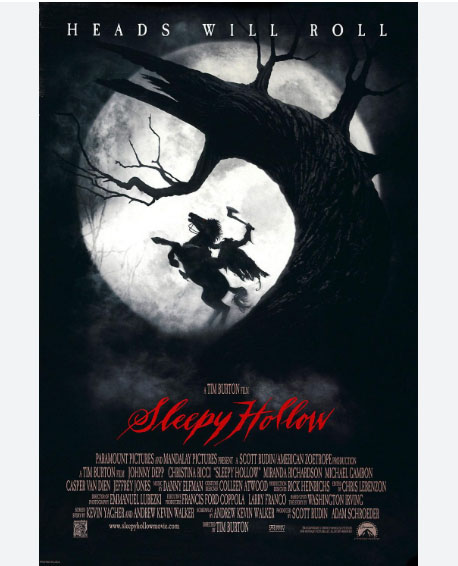
Sleepy Hollow
Synopsis
This atmospheric, gothic supernatural horror masterpiece follows Ichabod Crane, an eccentric, rational-minded constable from late-18th-century New York City who is dispatched to the spooky, isolated Dutch farming village of Sleepy Hollow to investigate a string of gruesome, ritualistic decapitations. Skeptical of superstition and armed only with primitive forensic science tools, Ichabod is horrified to discover that the local legend is terrifyingly real: a bloodthirsty Headless Horseman is roaming the misty woods and claiming victims. As he uncovers a dark municipal conspiracy involving hidden land grabs and dark witchcraft, he falls in love with the enigmatic Katrina Van Tassel. It is a visually mesmerizing, spine-chilling fairy tale.
The Making of the Film
The project originated from Paramount Pictures and producer Francis Ford Coppola's desire to adapt Washington Irving's classic 1820 short story 'The Legend of Sleepy Hollow' into a high-budget, R-rated gothic horror epic. Director Tim Burton sought to infuse the classic folklore with his signature macabre visual style, drawing deep inspiration from Hammer Horror films, German Expressionism, and classic fairy tales. Inspiration was also drawn from classic murder mysteries and supernatural horror traditions. The creative team aimed to produce a visually stunning, terrifying cinematic fairy tale.
Critical Reception
Critics offered widespread, rapturous acclaim, praising Burton's breathtaking gothic art direction, Emmanuel Lubezki's moody cinematography, Danny Elfman's eerie musical score, and Johnny Depp's quirky lead performance. Reviewers noted that Burton successfully transformed a lighthearted literary ghost story into a gruesome, beautifully stylized horror-mystery that honored classic cinematic monster traditions. The practical decapitation effects and foggy forest set pieces received universal applause. It was immediately recognized as a landmark triumph in gothic horror cinema.
Audience reception was massive and enthusiastic, driving the film to tremendous box office success worldwide and turning it into an iconic seasonal classic. Viewers on public platforms praised the terrifying Headless Horseman action sequences, spooky atmosphere, and Christina Ricci's charming performance. Fans of Tim Burton celebrated its supreme visual artistry and witty dark humor. Word-of-mouth sustained massive global popularity across generations.
Awards season brought major triumph, securing an Academy Award for Best Art Direction, alongside nominations for Best Costume Design and Best Cinematography. Guild awards praised the production's astonishing physical set designs constructed in England. These accolades cemented its status as a premier masterpiece of gothic cinema.
Behind-the-Scenes Stories
The director drew visual inspiration from classic 19th-century romantic paintings, Hammer Horror gore films, and German Expressionist silhouettes to establish an iconic gothic aesthetic. Every set, from the fog-drenched twisted woods to the Dutch colonial village, was constructed entirely as a massive physical set on soundstages in England to maintain total control over weather and lighting. The production team collaborated with special effects artists to execute practical decapitation stunts and bloody sword fights without excessive CGI. These artistic choices created an impeccably polished cinematic world.
Production presented fascinating logistical challenges, requiring Johnny Depp to ride horses and handle creepy crawlies despite his personal fears, while working tirelessly inside freezing artificial fog machines. The cast, including Christina Ricci, Michael Gambon, and Miranda Richardson, immersed themselves thoroughly in the heightened Victorian theatricality required by Burton's vision. Shooting on location in British woodlands exposed the crew to muddy, rainy weather. Furthermore, maintaining strict color palettes of desaturated blues and blood reds demanded meticulous camera filtering.
During the filming of the terrifying bridge attack sequence, actor Christopher Walken performed incredible physical stunt work as the Headless Horseman beneath terrifying prosthetic fangs and leather armor. To maintain authentic tension, Johnny Depp utilized genuine comedic nervousness and physical tics as the squeamish constable. The crew utilized practical smoke and atmospheric lighting to accentuate the spooky tone. This rigorous dedication resulted in immortal cinematic moments.
Casting was anchored by securing Burton's frequent collaborator Johnny Depp, whose eccentric charm and physical comedy drove the entire narrative engine. Christina Ricci brought mystery and grace to the role of Katrina. Supporting roles were filled with legendary British acting talent including Michael Gambon, Richard Griffiths, and Christopher Lee in a memorable cameo. This targeted casting strategy was the absolute heartbeat of the film's success.
Themes Explored
The narrative deeply explores themes of rational science versus supernatural superstition, justice, and corporate greed. It examines dark witchcraft, family betrayal, and uncovering hidden historical secrets. Additionally, it highlights romantic awakening, courage, and overcoming deep-seated childhood trauma. Ultimately, the film reflects on truth, mystery, and the terrifying dark shadows lurking beneath civilized society.
Ending Explained
Ichabod exposes the local matriarch as the wicked witch orchestrating the conspiracy who commanded the Headless Horseman to murder her rivals over land inheritance, leading to her gruesome dragging back to Hell by the horseman. Having solved the mystery and cleared his name, Ichabod returns triumphantly to New York City accompanied by Katrina and young Masbath, starting a new life of rational science and family love. The terrifying gothic fairy tale concludes with peaceful, sunny domesticity.
Meaning of the Title
The title directly references the eerie, isolated Dutch farming valley where the legendary Headless Horseman terrorizes local villagers.
Original Soundtrack
The spooky, magnificent musical score by Danny Elfman received high praise for utilizing haunting orchestral choirs, church bells, and harpsichord melodies to amplify the gothic fairy-tale mood.
Similar Films
Films sharing similar gothic horror, mystery, and Burtonesque aesthetics include Bram Stoker's Dracula (1992), From Hell (2001), and Crimson Peak (2015).