

 Français
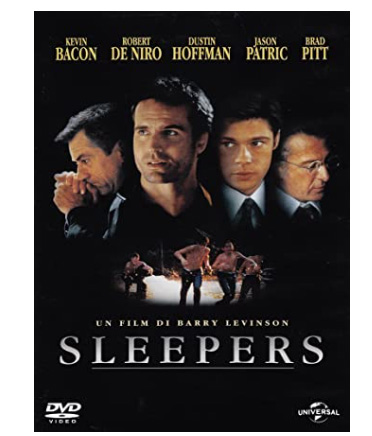
Sleepers
Synopsis
In the 1960s, four boys from Hell's Kitchen in New York grow up together under the guidance of a local priest, Father Bobby. After a prank goes terribly wrong, they are sent to a juvenile detention centre, where they suffer horrific abuse at the hands of the guards. Years later, two of them cross paths with their abuser and take revenge, while the others plan a daring scheme to save them from prison. The story is told by one of the survivors, who looks back on a friendship that was damaged but never broken.
The Making of the Film
The film is based on the 1995 novel of the same name by Lorenzo Carcaterra, which was presented as a true story. The author claimed that the events had happened to him and his childhood friends in New York in the 1960s. The book was a best seller and quickly attracted the attention of Hollywood. Barry Levinson, who had won an Oscar for Rain Man, adapted the book and directed the film himself. He wanted to explore the ideas of friendship, loyalty and the long-lasting effects of trauma. The film was made with a prestigious cast, drawing major stars such as Robert De Niro, Brad Pitt and Dustin Hoffman. The authenticity of the novel's claims was later disputed, as journalists and officials found no evidence to support them. Despite this controversy, the story remained compelling and the film found a strong audience.
Reviews and reception
Professional critics' summary
Critics gave the film mixed to positive reviews, praising the performances and the emotional power of the story. Many appreciated the strong cast, in particular Robert De Niro as the priest and Kevin Bacon as the sadistic guard. Others felt that the film was uneven, especially in the transition from the first half to the courtroom drama. The controversy over its supposed truth also drew criticism.
Audience reception
The film was a commercial success, earning more than 165 million dollars worldwide. Audiences were moved by the story of friendship and revenge, even though the subject matter was painful. Over the years, it has remained a popular choice among fans of dramas and crime films. Many viewers still discuss the moral questions it raises.
Awards
John Williams received an Academy Award nomination for Best Original Score for his work on the film. The movie was also recognised by other music and film organisations. The cast received praise, although the film was not a major awards contender. Its principal legacy has been its emotional impact.
Filming anecdotes
Director's inspirations
Levinson was drawn to the story of friendship and its test by trauma, themes he had explored in his earlier films. He wanted to present the boys' childhood with warmth and nostalgia, so that the viewer would feel the loss of innocence. The courtroom scenes were inspired by classic legal dramas. He also wanted to approach the abuse with restraint, suggesting rather than showing the worst of it.
Production difficulties
The film was shot in New York City, with many scenes filmed in the actual neighbourhood of Hell's Kitchen. Recreating the 1960s required careful attention to period details, such as costumes, cars and storefronts. The film also dealt with delicate subject matter, which required sensitivity on set. The young actors who played the boys were supported with great care during the filming of the more difficult scenes.
Anecdote about a particular scene
The courtroom sequence, in which Father Bobby lies under oath in order to save the boys, is regarded as the dramatic centre of the film. Robert De Niro delivers a subtle performance in which the priest weighs his faith against his loyalty. Another memorable scene features the group's confrontation with their former abuser in a restaurant. The scene is filmed with quiet tension, which makes it all the more powerful.
Originally planned casting
Brad Pitt, Jason Patric, Billy Crudup and Ron Eldard played the four friends as adults, while younger actors portrayed them as boys. Dustin Hoffman appeared as the washed-up lawyer Danny Snyder, adding humour to the story. Vittorio Gassman played the mobster King Benny, and Minnie Driver played Carol, a childhood friend. Kevin Bacon was cast against type as the cruel guard Sean Nokes.
Themes explored
The film is a meditation on friendship and loyalty, showing how the bonds of childhood can last a lifetime. It explores the consequences of abuse and the ways in which trauma shapes people. Another key theme is revenge and justice, as the characters question whether the law can protect them. Faith is another important element, as Father Bobby must weigh his religious beliefs against his love for the boys. The story also reflects on masculinity and the code of silence in tough neighbourhoods. It shows how the cycle of violence can pass from one generation to the next. The film also examines the weight of memory and the guilt of survivors. In the end, it asks whether it is possible to move on from the past.
Ending explained
After the former friends kill Sean Nokes in a restaurant, they are put on trial for murder. Michael, who has become an assistant district attorney, arranges to be assigned to the case so that he can sabotage the prosecution. The defence calls Father Bobby to testify that the two men were with him at the time of the killing, which is a lie. The priest agrees to lie under oath, even if it costs him his place in heaven. The jury acquits the defendants, and the friends are free. However, the price is heavy, as one of the friends dies in the process. The narrator, Shakes, looks back at his friends and the priest, and he reflects on the meaning of loyalty and forgiveness. The film ends on a bittersweet note, honouring the bond between the men.
Meaning of the title
In the world of the film, sleepers is a slang term for young offenders who are sent to a juvenile centre for a short time. The word suggests that they are asleep to the dangers that await them, and that they will be marked for life. It also hints that they are boys who have been abandoned by society. The title carries a sense of vulnerability and the loss of innocence, which is central to the story. For the main characters, being a sleeper is a stigma that never fades. The word also evokes the idea of memories that lie dormant and may wake up years later. It is a short and memorable title that sums up the haunting tone of the film.
Original Soundtrack
John Williams composed the score, which was nominated for an Academy Award. His music is gentle and sorrowful, in a style that differs from his more famous adventure scores. The score underlines the emotional core of the film without overwhelming the story. Its themes of friendship and loss linger long after the closing credits.
Similar Films
Mystic River and The Departed are other dramas about friendship, crime and moral choice. Goodfellas and A Bronx Tale offer a vision of growing up in tough neighbourhoods. The Shawshank Redemption deals with the cruelty of prison life. The Boys of St. Vincent and Boys Town are other stories of troubled youth.