

 Français
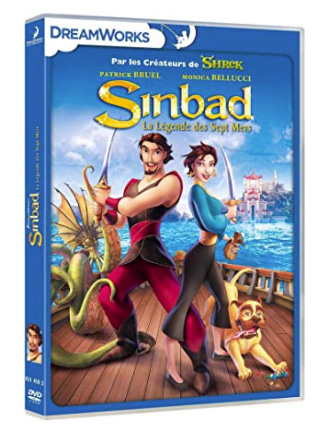
Sinbad: Legend of the Seven Seas
Synopsis
Sinbad is a charming rogue and pirate who prefers freedom and loot to responsibility. When the goddess of chaos, Eris, tricks him into stealing the Book of Peace, his childhood friend Prince Proteus offers his own life as a guarantee that Sinbad will return it. With the clock ticking, Sinbad sets sail with a feisty diplomat named Marina and a crew of rowdy sailors. Along the way, he must face sea monsters, storms and his own fear of commitment.
The Making of the Film
Sinbad: Legend of the Seven Seas was a DreamWorks Animation production directed by Tim Johnson and Patrick Gilmore. The story takes inspiration from the legendary tales of Sinbad the Sailor from One Thousand and One Nights, but creates an original adventure. Screenwriter John Logan, who would later write Gladiator, penned the script. The film blended traditional hand-drawn animation with advanced computer-generated imagery, particularly for the sea monsters and ocean scenes. It was released in July 2003 and featured an all-star voice cast.
Reviews and Reception
Summary of Professional Reviews
Critics were generally positive about the film's animation and lively adventure, and they praised its mix of traditional and digital techniques. The vocal performances, especially Brad Pitt's charismatic Sinbad and Michelle Pfeiffer's seductive Eris, were widely noted. Some reviewers found the story conventional and wished it had more emotional depth.
Audience Reception
The film was a major box-office disappointment and lost a great deal of money for DreamWorks. Over time, however, it has gained a modest cult following, with fans appreciating its adventurous spirit and visual style. It is often cited as one of the last big hand-drawn animated features of its era.
Awards Won
The film received nominations at the Annie Awards, which honor excellence in animation, in categories including voice acting and effects animation. It did not win major awards.
Filming Anecdotes
Director's Inspirations
The directors wanted to revive the old-fashioned thrill of swashbuckling adventure films. They drew on classic pirate stories and mythology to create a world of sea monsters, sirens and magical islands.
Production Difficulties
Combining hand-drawn characters with 3D environments and creatures required extensive technical work. The production team also faced pressure to make the film appeal to both children and adults, balancing humor and action with a more serious story of loyalty.
Casting initially planned
The cast includes Brad Pitt as Sinbad, Catherine Zeta-Jones as Marina, Joseph Fiennes as Proteus and Michelle Pfeiffer as Eris. Pitt was famously willing to record his lines with great enthusiasm, giving Sinbad his roguish edge.
Themes Explored
Sinbad: Legend of the Seven Seas is a story about friendship, trust and the courage to accept responsibility. Sinbad begins as a self-centered thief and gradually learns the value of loyalty. The film also explores the tension between freedom and duty, as the hero must decide between a life of adventure and one of commitment. Love and sacrifice are part of the story, especially in the bond between Sinbad and Marina. Chaos and order, personified by Eris and the Book of Peace, form the backdrop to the plot.
Ending Explained
In the final act, Sinbad realizes that he must make a real sacrifice to save his friend Proteus and prove that he has changed. By offering his own life to take Proteus's place, he shows that he has finally grown beyond selfishness. Eris, impressed or at least outwitted, lets the matter go, and the Book of Peace is returned. The film closes with Sinbad sailing off with Marina, ready for new adventures but with a deeper sense of purpose.
Meaning of the Title
The title draws on the legendary figure of Sinbad the Sailor, the hero of countless tales of sea voyages and monsters. The phrase "Legend of the Seven Seas" evokes the grandeur and mystery of the oceans and the sense of a story that has been passed down through generations. It promises a classic seafaring adventure.
Original Soundtrack
Harry Gregson-Williams composed the rousing orchestral score, which captures the grandeur of the open sea and the spirit of swashbuckling adventure. The music helps lift the action sequences and gives the film a sense of epic scale.
Similar Films
- Pirates of the Caribbean: The Curse of the Black Pearl: a swashbuckling pirate adventure.
- Treasure Planet: a Disney reimagining of a classic sea adventure in space.
- Aladdin: another tale inspired by Middle Eastern legends.
- The Adventures of Tintin: a lively, globe-trotting adventure.