

 Français
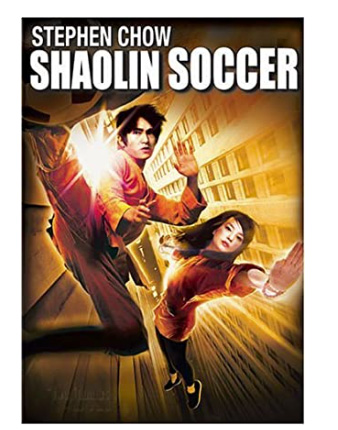
Shaolin Soccer
Synopsis
Former Shaolin monk Sing believes that the ancient martial arts of his temple could have a place in modern society. After meeting a former football coach, he decides to form a football team with his Shaolin brothers. Each player uses a different aspect of kung fu to perform extraordinary sporting feats. As the team prepares for a major tournament, they face powerful opponents and must learn to work together. Their unusual combination of football and martial arts transforms the competition into a spectacular battle of skill, humour and teamwork.
The Making of the Film
Shaolin Soccer was written, directed and produced by Stephen Chow, who also stars as Sing. The idea combines two important elements of Chinese popular culture: traditional Shaolin martial arts and modern football. Chow wanted to create a comedy in which ancient physical disciplines could be reimagined through the exaggerated language of sports entertainment. The project reflects his distinctive approach to humour, combining slapstick, parody, fantasy and emotional storytelling. The screenplay follows a group of outsiders who discover that their unusual abilities can become a source of collective strength. The production required extensive martial arts choreography and computer-generated effects to transform ordinary football movements into spectacular supernatural feats. The cast included performers with martial arts and comedy backgrounds, allowing the film to move easily between physical action and absurd humour. Its visual effects were designed to exaggerate the players' abilities while retaining the recognisable structure of a football match. The film became a major success in Hong Kong and helped introduce Stephen Chow's distinctive comic style to international audiences.
Critical Reception
Professional critical response: Shaolin Soccer received positive reviews from many critics, who praised its originality and energetic combination of sports comedy and martial arts. Stephen Chow's comic imagination was widely recognised, particularly in the exaggerated visual sequences. Some reviewers considered the humour deliberately excessive, but many appreciated the film's willingness to embrace absurdity. Its special effects and action choreography were also noted as important elements of its appeal. The film has since been regarded as one of the most distinctive sports comedies in Hong Kong cinema.
Audience reception: The film became a major hit in Hong Kong and attracted international attention after its wider distribution. Audiences responded enthusiastically to its spectacular football sequences and eccentric characters. Its mixture of martial arts, sports and slapstick made it accessible to viewers unfamiliar with Hong Kong comedy. The film also developed a strong following through international releases and home video. Its imaginative approach to football has helped it remain popular among fans of unusual sports films.
Awards and recognition: Shaolin Soccer received several awards in Hong Kong, including recognition at the Hong Kong Film Awards. It won prizes for its visual effects and other technical achievements, reflecting the importance of its inventive action sequences. Stephen Chow was also recognised for his performance and direction. The film received further attention from international film festivals and genre organisations. Its success helped establish Chow as a major creative figure in contemporary Hong Kong cinema.
Behind-the-Scenes Stories
Director's inspirations: Stephen Chow combined his admiration for martial arts cinema with his interest in football and physical comedy. He wanted to create a story in which traditional Shaolin skills could be transformed into a completely unexpected form of sporting entertainment. The director also drew on the conventions of superhero stories, allowing ordinary people to discover extraordinary abilities. The film's exaggerated style reflects Chow's belief that comedy can be most effective when it embraces the impossible.
Production challenges: The production required a complex combination of live-action football choreography and computer-generated effects. The performers had to execute carefully planned movements that could later be enhanced digitally. The filmmakers also needed to maintain the visual logic of football while introducing supernatural techniques. Coordinating the large ensemble and creating convincing matches demanded extensive preparation. The result required a distinctive visual style that could balance physical comedy with fantasy spectacle.
A memorable scene: The final football match contains some of the film's most spectacular moments. Sing and his teammates use their martial arts abilities to overcome opponents who appear physically and technically superior. The sequence combines exaggerated movements, visual effects and comic timing. Its central idea is that the players become strongest when they trust one another and combine their different abilities. The match transforms a sporting contest into a celebration of friendship and collective imagination.
Originally considered casting: Stephen Chow played Sing and assembled an ensemble of performers capable of combining martial arts with comedy. Ng Man-tat portrayed the former football coach, while the supporting team included actors whose characters each possessed a distinctive physical style. The casting was designed to make the team feel like a group of unusual individuals rather than a conventional collection of professional athletes. Their contrasting personalities contribute significantly to the film's humour.
Themes Explored
Shaolin Soccer explores teamwork, perseverance, friendship and the ability to rediscover personal value after failure. The former monks initially struggle to find a place in modern society, but their martial arts training becomes useful in an unexpected environment. The film suggests that traditional knowledge can remain meaningful when adapted creatively to contemporary life. It also celebrates the importance of cooperation, showing that individual talent becomes more powerful when combined with the abilities of others. Beneath its absurd humour, the story presents a hopeful message about second chances and the dignity of people who refuse to abandon their dreams.
Explaining the Ending
Sing and his teammates overcome their opponents in the final tournament by combining their martial arts abilities and working together. Their victory demonstrates that their unusual skills can succeed when supported by trust and collective discipline. Sing also finds personal fulfilment through his relationship with Mui, whose confidence grows as she becomes more comfortable with herself. The ending suggests that the value of the team lies not only in winning but in restoring dignity and purpose to people who had previously been overlooked. The final scenes show the unexpected popularity of Shaolin techniques in everyday life, extending the film's comic fantasy beyond the football field. The story closes on an optimistic note, celebrating creativity, friendship and the transformation of failure into achievement.
The Meaning of the Title
The title Shaolin Soccer directly combines the traditional Shaolin martial arts tradition with the modern sport of football. The two words express the film's central comic idea: bringing ancient fighting techniques into an entirely unexpected sporting environment. Shaolin represents discipline, spiritual training and martial arts heritage, while Soccer represents teamwork, competition and contemporary popular culture. Together, they describe the unusual fusion that gives the film its identity.
The soundtrack combines energetic original music with songs that support the film's comic and sporting atmosphere. Its musical style moves between heroic orchestral passages, contemporary rhythms and playful cues that accompany the exaggerated action. The score reinforces the contrast between traditional martial arts and modern football. Although the soundtrack is not as widely celebrated as some landmark film scores, it contributes strongly to the film's lively personality.
Similar films include Kung Fu Hustle, also directed by Stephen Chow, which combines martial arts and absurd comedy; Dodgeball: A True Underdog Story, directed by Rawson Marshall Thurber, which celebrates an unlikely sports team; The Karate Kid, directed by John G. Avildsen, which explores martial arts training; and Ready to Rumble, directed by Brian Robbins, which uses exaggerated comedy within a sporting environment.