

 Français
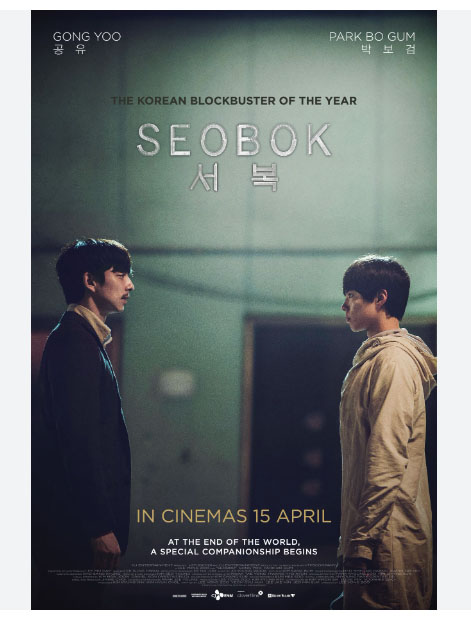
Seobok
Synopsis
Min Gi-heon, a terminally ill former intelligence agent, is given a final confidential mission by his former agency: escort Seobok, the world's first human clone, to a secure location. Seobok was created using genetic engineering to hold the secret of eternal life, making him the ultimate target for corrupt corporations, foreign intelligence, and religious zealots. As armed mercenaries ambush their transport, Gi-heon and Seobok embark on a desperate cross-country flight for survival. Through their dangerous journey, the cynical agent and the innocent clone form an unexpected bond regarding mortality and what it means to be human.
The Making of the Film
Director Lee Yong-ju helmed this high-concept sci-fi action thriller, returning to cinema with a philosophical exploration of human cloning and immortality. The production utilized sleek futuristic laboratories, gritty urban locations, and impressive visual effects to construct the sci-fi landscape. Filmmakers aimed to blend blockbuster action set pieces with quiet, existential character drama between the two contrasting leads. The casting of two major South Korean stars brought immense cinematic gravity to the philosophical premise.
Critical Reception
Critics offered mixed-to-positive reviews, praising the stellar central chemistry between Gong Yoo and Park Bo-gum and the film's ambitious philosophical themes regarding human mortality. Reviewers commended the sleek action choreography and the melancholic tone that set it apart from standard sci-fi popcorn flicks. Some critics noted that the narrative occasionally bogged down in heavy exposition and familiar genre tropes during the middle acts. Overall, it was regarded as a visually polished and emotionally engaging sci-fi drama.
Audiences embraced the movie for its emotional depth, high-stakes action, and the poignant bond between the weary agent and the innocent clone. Viewers appreciated the exploration of existential dread and what makes life precious when death is inevitable. The performances of the lead actors generated passionate fan discussions across streaming and theatrical windows. It performed solidly at the international box office.
While traditional Western film academies bypassed the Korean sci-fi feature, it earned domestic recognition and technical nominations for its visual effects and production design. Gong Yoo and Park Bo-gum's on-screen partnership earned warm praise from drama fans. The film successfully proved South Korea's versatility in high-concept science fiction.
Behind-the-Scenes Stories
Director Lee Yong-ju spent years developing the screenplay, deeply fascinated by the ethical implications of genetic engineering and human cloning. He wanted to ensure that Seobok did not feel like a cold machine, but rather a vulnerable being experiencing the wonders and terrors of the world for the first time. The production team designed pristine, sterile laboratory environments that contrasted with the dusty outside world.
Shooting complex action sequences involving telekinetic powers and explosive gunfights required intricate visual effects planning and stunt choreography. Managing the heavy emotional dialogue scenes alongside massive pyrotechnics demanded precise coordination from the crew. Ensuring Park Bo-gum's portrayal of a clone felt grounded and empathetic required extensive rehearsal.
During the intense laboratory escape sequences, Gong Yoo performed demanding physical stunts while carrying emotional exhaustion to reflect his character's terminal illness. Park Bo-gum utilized subtle physical mannerisms to convey Seobok's alien yet profoundly human innocence. These thoughtful performances anchored the sci-fi spectacle.
Gong Yoo and Park Bo-gum led the cast as Gi-heon and Seobok, supported by veteran actors Jo Woo-in and Park Byung-eun. The casting process focused on pairing two of South Korea's most beloved dramatic stars. The resulting ensemble delivered powerful emotional chemistry.
Themes Explored
The film explores human mortality, the ethics of genetic engineering, existential dread, companionship, and the definition of a soul. It examines how facing death can awaken a desire to truly live. The narrative ultimately champions human connection over scientific immortality.
Ending Explained
Seobok chooses to sacrifice himself by remaining in the exploding laboratory facility to protect Gi-heon and prevent his genetic material from falling into evil hands. Gi-heon escapes the compound, deeply transformed by his journey with the clone and inspired to face his own terminal illness with courage. Seobok achieves a quiet peace, experiencing the ocean he always dreamed of just before the final detonation. The ending offers a heartbreaking, poignant resolution to their existential bond.
Meaning of the Title
The title "Seobok" directly names the central human clone character whose existence triggers the entire geopolitical and existential conflict of the narrative. It symbolizes artificial creation, vulnerability, and the search for identity. The single-word title sets a mysterious sci-fi tone.
Latest News
- The film continues to be celebrated by international sci-fi fans as a stylish and emotionally resonant addition to Korean speculative cinema.
Similar Films
Fans of sci-fi thrillers exploring artificial life will enjoy Blade Runner 2049 (2017), Ex Machina (2014), Logan (2017), and Chappie (2015), all examining humanity.