

 Français
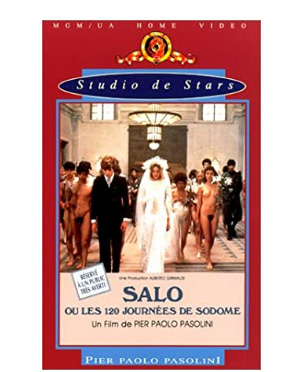
Salò, or the 120 Days of Sodom
Synopsis
Set during the final days of the Italian Fascist Republic of Salò in 1944, four wealthy, corrupt libertines—representing the church, judiciary, aristocracy, and finance—abduct a group of teenage boys and girls and lock them inside an isolated alpine villa. Over four harrowing months, the tyrants subject their helpless captives to escalating psychological humiliation, torture, and sexual depravity. The barbaric ritual serves as a chilling allegorical metaphor for the absolute corruption of totalitarian power. Total human degradation is pushed to its absolute limits.
The Making of the Film
Director Pier Paolo Pasolini conceived the uncompromising art-house masterpiece as a savage, radical cinematic adaptation of the Marquis de Sade's infamous 18th-century novel, transplanting the setting to fascist World War II Italy. Producers sought to create an unwatchable, confrontational political allegory exposing the consumerist and fascist rot underlying modern society. Pasolini utilized striking villa locations near Mantua and cast mostly non-professional actors to maintain stark, unflinching realism. Tragically, Pasolini was murdered shortly before the film's release.
Critical Reception
Critics offered deeply polarized and horrified reactions upon release, with many condemning it as vile, sadistic pornography while avant-garde cinephiles praised its brilliant political subversion. Censors across the globe banned or heavily cut the film for decades due to its extreme depictions of coprophilia, torture, and degradation. Audiences found it profoundly disturbing, often walking out of screenings in disgust. Over time, it gained universal recognition as an important, harrowing anti-fascist masterpiece. It stands as cinema's most notorious taboo film.
Behind-the-Scenes Stories
Pier Paolo Pasolini drew heavy inspiration from Dante's Inferno, the Marquis de Sade's philosophical writings, and the atrocities of Nazi-Fascist occupied Italy. The young cast members were carefully protected by their parents and production psychologists during breaks from shooting deeply disturbing scenes. During filming in northern Italy, Pasolini maintained a calm, intellectual demeanor on set despite the grim subject matter. The film's release was overshadowed by Pasolini's shocking assassination.
Themes Explored
The narrative explores absolute totalitarian power, fascist corruption, institutional sadism, consumerism, and the destruction of human dignity. It examines how authoritarian regimes treat human beings as disposable property. Furthermore, it highlights horror.
Ending Explained
Following months of unspeakable torture, the surviving youths are executed by the libertines, who dance waltzes together while watching the carnage through binoculars before the film cuts to black. A chilling, nihilistic conclusion closes the masterpiece.
Meaning of the Title
The title refers both to the Marquis de Sade's literary work and the historical Salò Republic puppet state established by Mussolini in northern Italy.
Other transgressive and extreme art-house films such as A Serbian Film, Irreversible, and Funny Games.