

 Français
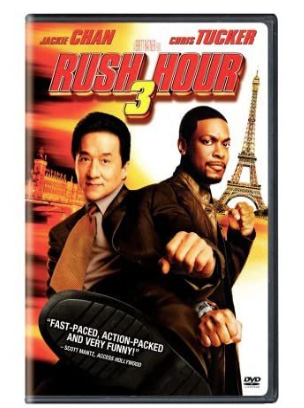
Rush Hour 3
Synopsis
Detective James Carter and Inspector Lee are reunited in Paris after Lee becomes involved in an investigation concerning the powerful Triad criminal organisation. A Chinese ambassador has been targeted because he possesses information about the identities of the organisation's leaders. When the investigation becomes dangerous, Carter and Lee travel to France to uncover a conspiracy involving international criminals. Their search takes them through Paris, underground passages and some of the city's most recognisable locations. As usual, the detectives must rely on their contrasting personalities and complementary abilities to survive a series of increasingly chaotic confrontations.
The The Making of the Film
After the success of the first two Rush Hour films, the producers decided to reunite Jackie Chan and Chris Tucker for another international adventure. Brett Ratner returned as director, maintaining the creative continuity that had helped establish the franchise. Jeff Nathanson was again involved in the screenplay, developing a story centred on the Chinese Triads and an international criminal conspiracy. The filmmakers chose Paris as the principal setting to give the third instalment a different visual identity. The European location also allowed the production to explore new forms of comedy based on cultural misunderstandings. Jackie Chan's martial arts skills remained an essential part of the project, while Chris Tucker continued to provide the fast-paced humour. Roman Polanski was cast in a memorable supporting role, adding an unusual element to the production. The film was conceived as a larger-scale continuation of the established buddy-cop formula. Its main objective was to bring the two detectives together once again while offering new locations and action sequences.
Critical Reception and Audience Response
Professional Critical Reviews: The film received mixed reviews from professional critics, many of whom felt that the franchise was beginning to repeat its established formula. Jackie Chan's physical performances and the visual appeal of the Paris setting were generally appreciated. Chris Tucker's energetic comedy remained an important part of the production, although some reviewers considered his character excessively loud. Several critics also praised the action choreography and the international scale of the adventure. However, the screenplay and its reliance on familiar comic situations attracted criticism.
Audience Reception: Audiences were generally receptive to the return of Carter and Lee, particularly viewers who had enjoyed the previous films. The familiar chemistry between Jackie Chan and Chris Tucker remained the main attraction. Paris provided an attractive setting and introduced new visual opportunities for action and comedy. Some viewers considered the third instalment less original than the earlier films, but its entertainment value and recognisable characters helped maintain its popularity. The film also benefited from the established international fan base of the franchise.
Awards and Recognition: The film did not achieve major awards recognition comparable to some of the most celebrated action productions of its period. Its principal distinction was the return of a commercially successful action-comedy partnership. The production received attention for its international locations and elaborate action sequences. Jackie Chan's continued involvement also reinforced his reputation for combining martial arts with physical comedy. The film's commercial performance demonstrated that the franchise retained an audience several years after its original success.
Behind-the-Scenes Anecdotes
Director's Inspirations: Brett Ratner wanted to give the third instalment a more European atmosphere by moving the action to Paris. The city provided a contrast with the Hong Kong and American locations of the previous films. The director continued to use the buddy-cop formula, relying on the differences between Lee's discipline and Carter's impulsive behaviour. The production also drew on the visual possibilities of French landmarks and the city's distinctive urban environment.
Production Challenges: The Paris setting required extensive location planning and coordination with local authorities. Large-scale action scenes in recognisable areas of the city created logistical challenges for the production. Jackie Chan's physical choreography required careful rehearsal and safety arrangements. The film also involved international cast members and multilingual dialogue, adding complexity to certain scenes. Maintaining the comic rhythm between Chan and Tucker remained essential throughout the shooting process.
A Memorable Scene: The Eiffel Tower sequence is one of the film's most recognisable action set pieces. Carter and Lee find themselves involved in a dangerous confrontation high above the city, creating a spectacular visual contrast between the characters and the Paris skyline. The sequence combines suspense, physical comedy and martial arts choreography. It also provides a fitting example of the franchise's approach to action, where the environment becomes an important part of the fight itself.
Originally Considered Casting: Jackie Chan and Chris Tucker returned for the third time as the central characters. Hiroyuki Sanada joined the production as Kenji, an important figure connected to Lee's past. Max von Sydow and Roman Polanski also appeared in supporting roles. No reliable alternative lead casting arrangement needs to be presented as established fact. The return of the original duo remained the principal casting decision around which the production was organised.
Themes Explored
The film explores friendship, loyalty and the importance of trusting someone whose personality is very different from your own. Lee and Carter must overcome cultural differences and personal disagreements to solve the investigation. Family history and unresolved relationships become particularly important as Lee discovers connections between the criminal organisation and his past. The story also examines corruption, secrecy and the influence of organised crime. Justice is presented as a difficult objective in a world where powerful individuals manipulate institutions. The Paris setting introduces additional cultural contrasts and humorous misunderstandings. Courage and cooperation allow the detectives to confront increasingly dangerous opponents. Ultimately, the film celebrates the strength of a friendship that survives distance, conflict and personal differences.
Explanation of the Ending
The final confrontation reveals the importance of Lee's personal connection with Kenji and the criminal organisation. Their relationship transforms the investigation into a conflict involving loyalty, identity and unresolved history. Carter and Lee eventually confront the people responsible for the conspiracy and fight to protect the ambassador and the information he possesses. The action culminates in a dangerous confrontation around the Eiffel Tower, where their combined abilities become essential. Lee must face his past while recognising that personal loyalty cannot justify criminal behaviour. Carter remains his loyal partner throughout the confrontation, despite their disagreements. The conclusion restores their friendship and allows the detectives to continue their adventures together. It closes the story while preserving the possibility of future investigations.
Meaning of the Title
The title Rush Hour 3 identifies the third instalment of the franchise and signals the return of its central characters. The expression rush hour evokes traffic, urgency and the confusion of crowded urban environments. These ideas are reflected in the detectives' constant movement through dangerous situations and chaotic encounters. The number three establishes its place in the series and communicates continuity with the previous adventures. The title is straightforward and reinforces the familiar identity of the action-comedy franchise.
Original Soundtrack
Lalo Schifrin returned to compose the original score, maintaining the musical continuity of the Rush Hour series. His music combines orchestral action themes with rhythmic passages suited to the film's comic confrontations. The score supports the physical choreography and adds tension to the investigation sequences. It also preserves the distinctive musical identity associated with Carter and Lee's adventures. The soundtrack helps maintain the balance between international action, suspense and comedy.
Similar Films
Rush Hour (1998): The first film in the franchise, introducing the two detectives and their contrasting personalities.
Rush Hour 2 (2001): The sequel that takes the investigation to Hong Kong and Las Vegas.
Shanghai Noon (2000): A martial arts buddy comedy featuring Jackie Chan and Owen Wilson.
Bad Boys II (2003): An action comedy involving two detectives with very different approaches to police work.
Lethal Weapon 4 (1998): A buddy-cop film combining friendship, humour and action.