

 Français
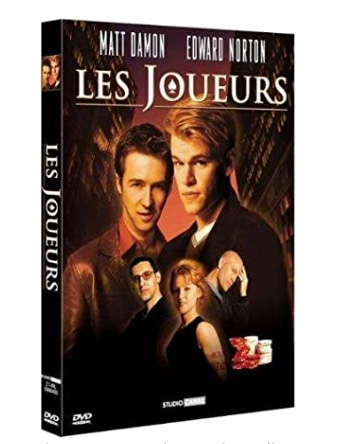
Rounders
Synopsis
Mike McDermott is a gifted young poker player and law student who loses his entire bankroll in a single hand against the menacing Teddy KGB in an underground New York club. He swears off cards and tries to build a respectable life with his girlfriend Jo. But his charming and reckless friend Worm walks out of prison and drags him straight back to the tables, along with a mountain of debt. Mike now has a handful of days to win big and settle accounts before things turn truly ugly.
The Making of the Film
Rounders was born from the real experiences of screenwriters David Levien and Brian Koppelman, two friends who spent years playing in New York's underground poker clubs in the late 1980s and early 1990s. They wrote about what they knew: the late nights, the tells, the bankroll discipline and the pull of a game that can lift you up or ruin you in a single evening. The story is not adapted from a book or a true story, but it is built from real players, real rooms and real stories swapped over cards. Miramax bought the script, and John Dahl, who had already made the sharp neo-noirs Red Rock West and The Last Seduction, was hired to direct. Dahl gave the film its moody, nocturnal look, far from the glossy casinos people usually picture. Matt Damon, fresh from the success of Good Will Hunting, took the role of Mike, with Edward Norton as the slippery Worm and John Malkovich as the unforgettable Teddy KGB. Koppelman and Levien would later go on to create the television series Billions.
Reviews and reception
Summary of professional reviews
Critics were divided when the film came out in 1998. Many praised its atmosphere, its sharp dialogue and its convincing look at the poker underworld. John Malkovich's theatrical Russian accent was widely singled out as a highlight. Others found the plot predictable and Mike a little too passive for a hero.
Audience reception
The film was a disappointment at the box office, earning only around 23 million dollars in the United States against a budget of roughly 12 million. Its real life began on home video, where word of mouth turned it into a cult favorite. After Chris Moneymaker's surprise win at the 2003 World Series of Poker, the film was suddenly rediscovered by a new generation of players. Many poker fans still say it is the film that made them want to sit at a table.
Awards and nominations
Rounders did not receive any major awards or nominations. Its real reward has been its lasting reputation as the definitive poker movie. Lines from the script are still quoted by players around the world. Its influence on the poker boom of the early 2000s is often cited by commentators.
Filming anecdotes
Director's inspirations
Dahl and the writers drew on the atmosphere of real New York card rooms rather than on Hollywood gambling clichés. The film pays tribute to the legends of the game, notably through a famous clip from the 1988 World Series of Poker final between Johnny Chan and Erik Seidel. Mike studies that hand obsessively, as a young painter might study a masterpiece. Johnny Chan himself appears in the film.
Production difficulties
The main challenge was making poker readable for people who had never played. Dahl had to film hands in a way that built tension without drowning the audience in rules. The actors were coached on how to handle cards and chips so that their gestures looked natural. The long card sequences also demanded very careful continuity.
Anecdote about a particular scene
The showdown against Teddy KGB hinges on a tiny detail: Mike notices that Teddy splits an Oreo cookie whenever he is holding a strong hand. That quirk became one of the most famous tells in cinema. The scene works because it turns a psychological duel into a quiet game of observation. Fans still remember the cookie more than the cards themselves.
Themes explored
Rounders is first of all a film about the thin line between talent and addiction. Mike is a genuinely skilled player, yet his skill keeps pushing him toward risks that endanger everything he cares about. The story also explores loyalty, as Mike repeatedly sacrifices his own future to help a friend who never really learns from his mistakes. It sets security against ambition, the tidy path of law school against the dangerous thrill of the table. The film asks whether poker is luck or skill, and answers that the best players make their own luck through patience and attention. Finally, it paints a portrait of a hidden New York, a world of smoky back rooms with its own codes and its own justice.
Ending explained
In the final act, Mike agrees to a last high-stakes match against Teddy KGB to pay off Worm's debts and his own. He wins by reading his opponent's tell and walks away with the money, ending the threat hanging over him. Worm is sent away and Mike finally accepts that he cannot live a life that denies who he is. He leaves his law studies behind and heads to Las Vegas to play for a living. The last image is of a man who has stopped fighting his own nature and chosen the game with open eyes.
Meaning of the title
In poker slang, a rounder is a professional player who travels from game to game, making the rounds of card rooms, clubs and private tables in search of profitable opponents. The word carries the idea of a life lived on the move and on the margins of normal society. It perfectly describes what Mike is destined to become by the end of the film. The title also hints at the circular trap of addiction, where a player keeps coming back to the same table.
Similar Films
- The Cincinnati Kid (1965): a classic duel between a young poker prodigy and a legendary veteran.
- The Hustler (1961): a gifted pool player risks everything against a master.
- Casino (1995): the darker, larger-scale story of gambling and organized crime in Las Vegas.
- Molly's Game (2017): a true story about high-stakes underground poker games.
- Casino Royale (2006): features a tense and stylish poker showdown at its core.