

 Français
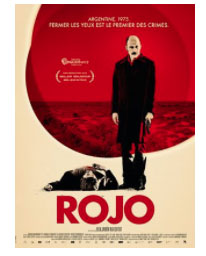
Rojo
Synopsis
Set in a provincial town in Argentina during 1975 on the eve of the brutal military dictatorship, a successful and complacent local lawyer named Claudio lives a comfortable middle-class life until a strange, aggressive stranger confronts him unprovoked at a crowded restaurant over a trivial parking dispute. Later that evening, the stranger tracks Claudio down, leading to a violent confrontation in a deserted alleyway where Claudio makes a morally corrupt, cowardly choice that turns him into an accidental accomplice to a disappearance. As a slick private investigator arrives in town to probe the missing person case, Claudio attempts to maintain his respectable bourgeois facade while paranoia consumes him. The political neo-noir thriller delivers suffocating atmospheric dread and historical critique.
The Making of the Film
Director and co-writer Benjamín Naishtat developed the political neo-noir thriller film, drawing inspiration from his family history, Argentine political archives, and the silent societal complicity that preceded the 1976 military dictatorship. The inspiration stemmed from exploring how ordinary, respectable middle-class citizens normalized moral corruption and turned a blind eye to state repression. The production team invested heavily in authentic 1970s period wardrobe styling, washed-out sepia color grading, and suburban Argentine locations. The script was meticulously structured as a slow-burn psychological thriller.
Critical Reception
Professional critics widely acclaimed the film for its suffocating 1970s neo-noir atmosphere, brilliant political subtext, and Dario Grandinetti's chilling lead performance as the compromised lawyer. Reviewers lauded Naishtat for crafting a deeply unsettling historical allegory that exposed the bourgeois apathy enabling authoritarianism. Public reception was warmly enthusiastic across international film festivals, winning multiple awards at the San Sebastián International Film Festival. The film earned widespread critical acclaim.
Behind-the-Scenes Stories
Director Benjamín Naishtat drew visual inspiration from 1970s political thrillers like The Conformist, vintage Argentine television archives, and provincial town photography. Production took place on location across historic provincial towns in Argentina, capturing retro architectural styling and dusty southern atmospheres. During the filming of tense restaurant and alleyway confrontation sequences, lead actor Dario Grandinetti maintained a brilliant poker face of bourgeois denial. The production utilized period lenses.
Themes Explored
The themes explored include societal complicity in dictatorship, bourgeois apathy, moral corruption, 1970s Argentina politics, guilt, and paranoia.
Ending Explained Ending Explained The chilling ambiguous climax shows Claudio quietly accepting his complicity in a society sliding into open military terror, trapped forever by his own cowardly silence.
Meaning of the TitleMeaning of the Title The Spanish title Rojo (Red) refers metaphorically to the political bloodshed, washed-out cinematic color grading, and moral stain contaminating the protagonist.
Original Soundtrack Cesar Lopez composed a brooding, dissonant 1970s neo-noir score featuring blaring brass and eerie synth stabs that anchored the suffocating political paranoia.
Similar Films The Secret in Their Eyes, The Conversation, Caché