

 Français
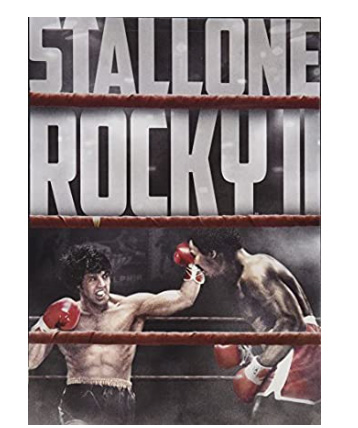
Rocky II
Synopsis
Following his exhausting championship fight against Apollo Creed, Rocky Balboa attempts to leave boxing behind and build a stable family life with Adrian. However, financial difficulties and his inability to find satisfying employment gradually push him back toward the sport. Meanwhile, Apollo becomes increasingly frustrated by the public perception that Rocky nearly defeated him. Determined to prove his superiority, the champion demands a rematch. Rocky initially struggles with doubts about his physical abilities and his responsibilities as a husband and father. With Adrian's support and Mickey's guidance, he eventually prepares for another confrontation that could change his life.
The Film's Origins
Rocky II was developed after the enormous commercial and critical success of the original Rocky. Sylvester Stallone wanted to continue the character's story while exploring what happens after an underdog receives international recognition. Rather than simply repeating the first film, he decided to examine the difficulties of adapting to fame, financial pressure and family responsibilities. The screenplay was written by Stallone himself, who also took over the directing duties from John G. Avildsen. The story begins immediately after the first championship fight and follows the consequences of Rocky's unexpected success. Apollo Creed's motivation also became more psychologically complex, as he struggles with the public perception that he had not truly defeated Rocky. The production was designed to preserve the emotional atmosphere of the original while offering a more spectacular sporting conclusion. The film remains an original continuation of the fictional story rather than an adaptation of real boxing events. Its central idea is that winning recognition does not necessarily solve the problems of everyday life. The sequel therefore combines family drama, sporting ambition and the desire to prove oneself once again.
Critical Reception
Rocky II received generally favorable reviews, although many critics considered it less original than the first film. Some appreciated Stallone's decision to explore the consequences of Rocky's sudden fame and the difficulties of family life. The performances of Stallone and Talia Shire were particularly appreciated for their emotional sincerity. The final boxing match was widely regarded as an effective and exciting climax. Other critics felt that the narrative followed too closely the structure of the original film.
Audiences responded enthusiastically, making Rocky II a major commercial success. The film earned approximately 200 million dollars worldwide and confirmed the popularity of the franchise. Viewers enjoyed seeing Rocky develop from an unknown boxer into a husband and father. The rematch with Apollo became one of the most memorable sequences in the series. Its popularity also helped establish the franchise as a lasting part of American popular culture.
Rocky II did not achieve the same level of Academy Award recognition as its predecessor. However, it received attention from several international organizations and maintained the franchise's strong commercial reputation. Its success demonstrated that audiences remained deeply attached to Rocky and his personal struggles. The film also strengthened Sylvester Stallone's position as a major Hollywood filmmaker.
Behind-the-Scenes Stories
Sylvester Stallone wanted to explore the less glamorous consequences of Rocky's sudden fame. He was interested in showing that financial success does not automatically create happiness or emotional stability. The character's difficulties finding work and adapting to family life provide a contrast with the excitement of professional boxing. Stallone also wanted Apollo Creed to become a more complex rival rather than a simple antagonist.
The production was more ambitious than the first film and required larger sets, more elaborate boxing sequences and a greater number of supporting performers. Stallone directed the film while also preparing for the demanding physical requirements of the central role. The boxing choreography needed to look convincing while remaining safe for the actors. The production also had to coordinate the filming of the large championship sequence with the atmosphere of a major sporting event.
The final rematch is the film's central spectacle. Stallone wanted the fight to feel more intense and dramatic than the original confrontation. The two fighters exchange powerful blows while struggling with exhaustion and injuries. The final moments are particularly famous because Rocky manages to rise just before the referee completes the count. His victory is presented as the culmination of the physical and emotional challenges developed throughout the film.
Sylvester Stallone returned as Rocky and also played a much larger role behind the camera as director and screenwriter. Carl Weathers reprised his role as Apollo Creed, while Talia Shire, Burt Young and Burgess Meredith returned as the central supporting characters. The continuity of the cast helped preserve the emotional relationships established in the first film. Frank Stallone also contributed to the music, strengthening the family connection within the production.
Themes Explored
Rocky II explores the difficulty of adapting to success and the responsibility that comes with personal achievement. Rocky discovers that becoming famous does not guarantee financial security or a satisfying life. His relationship with Adrian becomes central to his development as a husband and future father. The film also examines pride and the psychological pressure experienced by champions who feel that their reputation is threatened. Apollo Creed cannot accept that the public sees Rocky as a legitimate challenger. Their rivalry therefore becomes a struggle over identity as much as sporting superiority. Mickey represents discipline and the importance of preparation. The film also explores the tension between family responsibilities and individual ambition. Rocky must decide whether returning to boxing is worth the risks involved. His eventual decision reflects the need to find a purpose that gives meaning to his life. Ultimately, the story celebrates perseverance while recognizing that success requires sacrifices from both individuals and their loved ones.
Ending Explained
The final fight between Rocky and Apollo Creed determines the future of both men. Rocky begins the match with doubts about his ability to compete at the highest level, while Apollo is determined to eliminate any suggestion that their first encounter questioned his superiority. The fight becomes increasingly brutal as both athletes approach physical exhaustion. Rocky eventually manages to knock Apollo down and secure the victory. The result gives him the world heavyweight championship and confirms his status as a legitimate champion. The final moments also show Rocky dedicating his victory to Adrian, whose support helped him overcome his doubts. His success is therefore not presented as an individual achievement alone. It is the result of emotional support, discipline and determination. The ending completes the transformation begun in the first film, turning an unknown club fighter into a world champion. However, it also prepares the ground for future stories about the difficulties of maintaining success.
Meaning of the Title
The title Rocky II identifies the film as the direct continuation of Rocky Balboa's story. The Roman numeral emphasizes that the protagonist's journey is not complete after his first championship opportunity. It also reflects the importance of the rematch with Apollo Creed. The title keeps the focus on the individual rather than the sporting event itself. Rocky remains the central figure even as his circumstances change dramatically. It reinforces the idea that personal development is an ongoing process rather than a single moment of achievement.
Original Soundtrack
Bill Conti returned to compose the music for Rocky II, maintaining the recognizable orchestral identity of the original film. The score develops the themes introduced in the first installment while giving the sequel its own emotional variations. Gonna Fly Now returns as an important musical motif during Rocky's preparation. The music emphasizes the contrast between his difficult everyday life and the determination required to return to the ring. The soundtrack also includes contributions from Frank Stallone, particularly Take You Back. Conti's energetic compositions help transform the final championship fight into a memorable cinematic event.
Films with similar themes include Rocky, Rocky III, Creed, Cinderella Man, The Fighter, Warrior, Southpaw and Million Dollar Baby. These films explore the pressures of professional boxing, family responsibilities, ambition and the personal sacrifices required to achieve sporting success.