

 Français
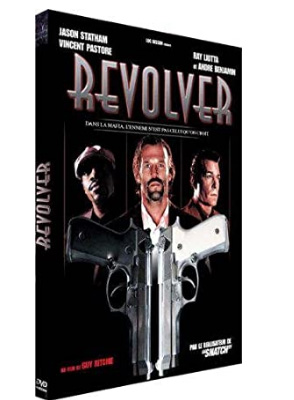
Revolver
Synopsis
Jake Green is a sharp, confident gambler who spends seven years in solitary confinement after taking the fall for a powerful casino boss named Dorothy Macha. Upon his release, Jake seeks brutal revenge against Macha using lessons learned from two mysterious cellmates in prison. Armed with a dangerous financial formula and an apparent terminal illness diagnosis, Jake systematically strips Macha of his wealth and power. However, as the mind games escalate, Jake realizes his greatest opponent is his own inner ego.
Genesis_of_the_Film
Director Guy Ritchie conceived the psychological crime thriller following a period of personal introspection and heavy interest in Kabbalah and chess philosophy. Ritchie wanted to move away from his traditional gritty British gangster comedies into a deeply philosophical, symbolic narrative. Luc Besson produced the international project, aiming for a stylized visual experience.
Critical Reception
Critics gave the film largely negative reviews upon its UK release, criticizing its confusing philosophical symbolism, pretentious tone, and convoluted narrative structure. Many reviewers felt that Ritchie strayed too far from the accessible crime formula of Lock, Stock and Two Smoking Barrels. Over time, however, the film gained a niche cult following among fans who appreciated its psychological and spiritual subtext.
Public reception was polarized, resulting in a commercial box-office disappointment compared to Ritchies earlier hits. General audiences found the heavy psychological metaphors difficult to follow during initial viewings. A dedicated sub-community of fans continues to analyze its intricate chess-themed symbolism.
The film did not receive mainstream award recognition, reflecting its divisive critical standing upon release. Jason Stathams physical commitment was praised by action fans despite the confusing screenplay. Ritchie later released a recut director version to address pacing criticisms.
Filming Anecdotes
Director Guy Ritchie drew inspiration from chess strategies, psychological thrillers, and spiritual self-help literature to construct the complex symbolic framework. He chose a sleek, neon-lit urban visual style to represent the internal workings of the human ego. His direction pushed Jason Statham to explore a much more internal, vulnerable psychological state.
Production faced heavy editing challenges as Ritchie attempted to weave animated sequences and philosophical interludes into a crime thriller format. Jason Statham underwent intense physical conditioning and studied chess strategy to portray the cool, calculating gambler. Ray Liotta brought fiery intensity to his role as the paranoid crime boss Macha.
A memorable sequence involves Jake Green trapped in an elevator experiencing a terrifying panic attack as his ego battles his rational mind. The scene utilizes rapid editing and stark lighting to visualize internal psychological warfare. Stathams raw performance anchored the surreal moment.
The casting process reunited Guy Ritchie with action star Jason Statham for a much more psychological and restrained role. Ray Liotta was brought on board to play the menacing American antagonist, adding star power and fiery screen presence. Andre Benjamin joined the cast as one of the mysterious philosophical mentors.
Themes Explored
The film explores the illusion of the ego, psychological warfare, self-deception, fear, and spiritual awakening. It examines how human beings are trapped by their own pride and mental constructs. Freedom is achieved by defeating inner inner enemies.
NULL
Title Significance
The title refers metaphorically to the revolving nature of the human ego and power dynamics, as well as the literal firearm. It symbolizes how power constantly shifts between opponents in a deadly psychological game.
NULL
NULL
Similar Films
Other similar films include Fight Club, Snatch, and Domino.