

 Français
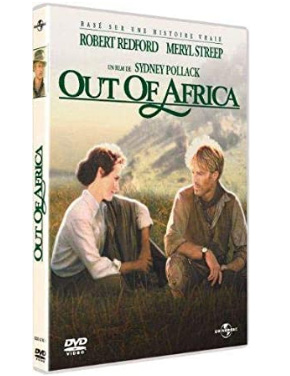
Out of Africa
Synopsis
In the early twentieth century, Karen Blixen, a Danish woman, moves to Kenya to run a coffee farm. Her marriage is disappointing, but she falls in love with the land and with Denys Finch Hatton, a free-spirited hunter and adventurer. As her farm struggles and her relationship grows, she must decide what she is willing to give up. The film is a sweeping romance set against the landscapes of East Africa.
The Making of the Film
Out of Africa is based on the memoir of the same name by Isak Dinesen, the pen name of Karen Blixen, published in 1937. The screenplay by Kurt Luedtke also drew on other writings by Blixen and on biographical material. Director Sydney Pollack had a long collaboration with Robert Redford, and he persuaded him to play Denys Finch Hatton. Meryl Streep was chosen to play Karen, and she worked hard to master a Danish accent. The film was shot on location in Kenya, which gave it a sense of grandeur and authenticity. It was released in 1985 and became one of the most acclaimed films of the decade.
Critical Reception
Summary of professional reviews
Critics admired the film's sweeping cinematography, its elegant direction and Meryl Streep's performance. Some felt that it was a little slow and that the romance was restrained, but most considered it a beautifully crafted epic. John Barry's score was widely praised.
Public reception
The film was a major box-office success and remains a beloved classic. Audiences were moved by its romantic spirit and its portrait of a vanished world.
Awards received
Out of Africa received eleven Academy Award nominations and won seven, including Best Picture, Best Director for Sydney Pollack and Best Adapted Screenplay. It also won the Oscars for Best Cinematography, Best Original Score, Best Art Direction and Best Sound.
Behind-the-Scenes Stories
Director's inspirations
Pollack wanted the film to be a romantic epic in the tradition of classic Hollywood, with the landscape playing a central role. He worked with cinematographer David Watkin to capture the light and the scale of the African plains.
Production difficulties
Filming in Kenya involved long periods in remote locations and the handling of wild animals. The production needed careful planning to protect the cast and crew.
Anecdote about a particular scene
The hair-washing scene, in which Denys gently washes Karen's hair beside the river, is one of the most famous romantic moments in cinema. It captures the intimacy between the characters with great delicacy.
Themes Explored
The film explores love, freedom and the desire to belong. Karen is attracted to a land and a man who cannot be possessed, and she must learn to accept loss. It also looks at colonialism and the relationship between Europeans and the people of Kenya, although it does so from a nostalgic perspective. Independence and sacrifice are central, particularly for a woman who defies the expectations of her time. Memory and storytelling frame the entire film, since it is told as a recollection.
Ending Explained
Karen's farm fails, and she is forced to leave Kenya. Shortly before her departure, Denys is killed in a plane crash. She attends his funeral and returns to Denmark, where she begins to write about her experiences. The film closes with her voice recalling a land that will always be part of her.
Meaning of the Title
The title is taken from Isak Dinesen's memoir and evokes a sense of departure and distance. It echoes an old Latin saying that something new always comes out of Africa, and it suggests both discovery and farewell.
Original Soundtrack
John Barry's score is one of the great film soundtracks of the 1980s. Its sweeping, romantic themes capture both the beauty of the landscapes and the emotional depth of the story. It won the Academy Award for Best Original Score and remains widely admired.
Similar Films
For epic romances, try The English Patient and Dr. Zhivago. Gorillas in the Mist and Born Free are also set in Africa and share a deep love of nature. The African Queen is a classic adventure romance in a similar setting.