

 Français
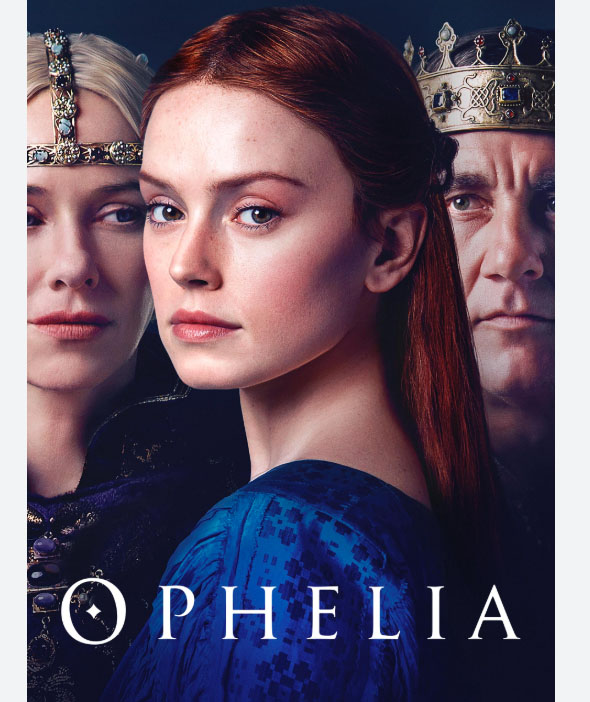
Ophelia
Synopsis
Ophelia retells Shakespeare's *Hamlet* through the eyes of its most tragic heroine. A bright, curious young woman, she is brought to the Danish court as a lady-in-waiting and falls in love with Prince Hamlet. As political intrigue and murder tear the court apart, she is drawn into the conspiracy and forced to make impossible choices. This version gives her the agency she never had in the original play.
The Making of the Film
The film is adapted from the 2006 young-adult novel Ophelia by Lisa Klein, which reimagines Hamlet from the point of view of the woman who is usually reduced to a mad, drowned symbol. Screenwriter Semi Chellas turned the book into a screenplay that keeps the familiar plot but gives Ophelia a voice, intelligence and an inner life. Director Claire McCarthy was drawn to the idea of restoring dignity and complexity to a character often seen as passive. The film premiered at the Sundance Film Festival in 2018, a fitting place for such a bold retelling.
Reviews and Reception
Summary of Professional Reviews
Reviews were mixed. Many critics admired the lavish production design and the premise of giving Ophelia her own story, but felt the screenplay stayed too safe and the tone wavered between romance, thriller and tragedy. The performances, especially Daisy Ridley in the title role and Naomi Watts in a double part, were generally seen as the strongest assets.
Audience Reception
Viewers were split between those charmed by the fresh feminist angle and those who preferred Shakespeare's original. Fans of period dramas and literary adaptations tended to be the most enthusiastic. The film found a quiet but loyal following once it reached home viewing.
Awards Won
The film did not make a significant mark on the major awards circuit. Its main distinction was being selected for the Sundance Film Festival.
Filming Anecdotes
Director's Inspirations
Claire McCarthy has explained that she wanted to see the story through a woman's eyes, keeping the grand tragedy of the original while shifting its emotional center. Lush paintings and Gothic imagery influenced the film's rich, moody look.
Anecdote About a Particular Scene
Naomi Watts plays both Queen Gertrude and the mysterious recluse Mechtild, two very different women whose paths cross in Ophelia's story. The double role gave the actress a chance to explore contrasting sides of power, wisdom and vulnerability.
Themes Explored
Ophelia explores female agency in a world where women are treated as political pawns. It looks at love, loyalty and betrayal within a court built on lies and ambition. The film also touches on the dangers of power and secrecy, showing how a single act of violence poisons an entire kingdom. Identity and freedom are central, as Ophelia struggles to choose her own fate rather than live inside the roles others write for her. In this sense, the film is as much about breaking free from tradition as it is about retelling a classic.
Ending Explained
Unlike in Shakespeare's play, where Ophelia dies by drowning, this version lets her fake her death with the help of Mechtild and slip away from the doomed court. The ending turns tragedy into survival and gives her the chance to start a new life on her own terms. It is a deliberate rewriting of literary destiny, suggesting that the "madness" the world saw in her was really a strategy for escape. The film closes on a note of hope rather than despair.
Meaning of the Title
The title is simply the name of Shakespeare's heroine, but it carries a quiet challenge: for once, she is the one whose story gets told. By putting her name on the poster instead of Hamlet's, the film announces its intention to shift the focus. It invites the audience to see her not as a tragic footnote, but as a protagonist.
Similar Films
- Hamlet (various adaptations): the source material.
- Romeo + Juliet: a bold, stylish reinterpretation of Shakespeare.
- The Favourite: a sharp look at women and power at court.
- Mary Queen of Scots: another historical drama centered on a woman's fate.