

 Français
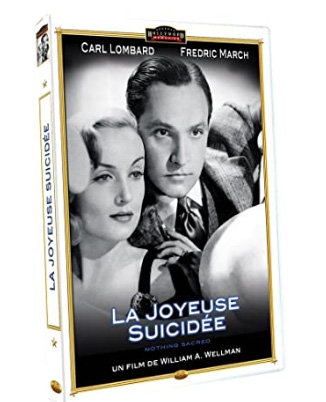
Nothing Sacred
Synopsis
Wally Cook is an ambitious New York newspaper reporter desperate to revive his failing career with a sensational story. He travels to a small Vermont town after learning that local resident Hazel Flagg is supposedly dying from radium poisoning. Unbeknownst to Wally, Hazel is actually in perfect health, but she seizes the opportunity to use the press-funded trip for a lavish final vacation in New York City. As the nationwide media frenzy grows, hilarious complications ensue as they try to keep the deception alive.
The Making of the Film
Director William A. Wellman adapted the film from a satirical magazine story written by James Street. Producer David O. Selznick wanted to create a biting screwball comedy lampooning sensationalist journalism and public gullibility. The project marked one of Technicolors early uses in live-action comedy feature films.
Critical Reception
Critics praised the film upon its initial release for its razor-sharp satirical wit, bright Technicolor cinematography, and fast-paced screwball comedy dialogue. Reviewers highlighted Carole Lombard and Fredric March for their brilliant comedic timing and sparkling chemistry. Some critics noted the cynical tone regarding human tragedy, but overall reception was enthusiastic.
Public reception was very strong, making it a hit with audiences who enjoyed the biting satire of media culture. Viewers appreciated the colorful visual style and the chaotic energy of the Manhattan high-society escapades. It remains a sparkling gem of pre-Code and classic Hollywood comedy.
The film earned an Academy Award nomination for Best Original Score. It cemented Carole Lombard as one of the definitive queens of classic screwball comedy. Its satirical bite on media obsession remains surprisingly relevant today.
Filming Anecdotes
Director William A. Wellman drew inspiration from classic newspaper comedies and wanted to utilize vibrant Technicolor to enhance the comedic artificiality of the world. He encouraged rapid-fire delivery of dialogue and physical slapstick moments during shooting. His direction ensured that the cynical humor remained lighthearted and engaging.
Production faced tension due to the rigorous demands of early Technicolor lighting equipment, which generated immense heat on the soundstages. Carole Lombard embraced her character with wild, carefree abandon, often improvising physical gags on set. Fredric March brought sharp, grounded professionalism to balance her comedic chaos.
A memorable sequence involves a chaotic wrestling match in a hotel suite between Wally and Hazel that destroys the upscale room. The scene highlights the physical comedy and utter absurdity of their escalating lies. Both actors performed their own energetic physical stunts.
The casting process brought together top-tier comedic and dramatic talent for the lead roles. Carole Lombard was the undisputed first choice for Hazel Flagg because of her fearless, eccentric comedic persona. Fredric March was brought in to play the cynical reporter, adding wonderful verbal sparring energy.
Themes Explored
The film explores media manipulation, public gullibility, celebrity culture, and the absurdity of modern fame. It highlights how society easily turns tragedy into profitable entertainment. Honesty versus the allure of extraordinary attention is a central comedic conflict.
NULL
Title Significance
The title refers ironically to the cynical worldview that nothing is sacred or immune to exploitation by media and public greed. It highlights the core satirical premise of capitalizing on a supposed fatal illness.
NULL
NULL
Similar Films
Other similar films include His Girl Friday, Bringing Up Baby, and The Front Page.