

 Français
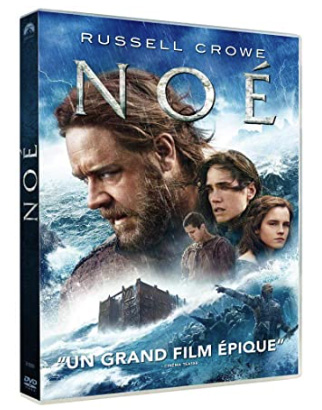
Noah
Synopsis
Noah is a righteous man living in a world consumed by violence, corruption and cruelty. After receiving visions from the Creator, he becomes convinced that a devastating flood will destroy humanity and that he must build an enormous ark to preserve the animals and his family. As construction progresses, Noah struggles with the terrifying responsibility placed upon him and begins questioning whether humanity deserves to survive. His mission becomes increasingly complicated when his own family challenges the severity of his interpretation of the divine plan.
The film's origins
Darren Aronofsky's fascination with Noah began during his childhood, when he wrote a poem about the biblical character as part of a school assignment. Years later, while searching for a new project after completing Pi, the filmmaker returned to this ancient story and imagined how it could become an ambitious cinematic epic. Aronofsky wanted to explore the psychological and moral dimensions of Noah rather than simply reproduce the familiar biblical narrative. He collaborated with Ari Handel to develop a screenplay that expanded considerably upon the relatively brief account found in the Book of Genesis. Their interpretation introduced additional characters, conflicts and philosophical questions about humanity's relationship with nature. The filmmakers also drew inspiration from ancient Jewish interpretations and other historical traditions surrounding the flood. The project took several years to develop and underwent substantial revisions before securing the necessary financial backing. Aronofsky ultimately created a personal interpretation of one of the most recognizable stories in religious history.
Critical reception and audience response
Professional reviews: Critics generally praised the film's visual ambition, impressive production design and powerful performances, particularly Russell Crowe's portrayal of Noah. Many appreciated Aronofsky's willingness to approach biblical material through a darker and more psychologically complex perspective. The extraordinary flood sequences and imaginative visual effects were frequently highlighted as major achievements. However, some reviewers considered the screenplay unnecessarily complicated and criticized its liberties with the biblical source material. The film also divided critics over its treatment of faith, morality and divine judgment.
Audience reception: The film attracted considerable attention from religious communities, science-fiction enthusiasts and mainstream audiences. Its impressive international box office performance demonstrated the commercial appeal of large-scale biblical storytelling. Some viewers appreciated its environmental message and philosophical questions, while others were disappointed by its departures from Scripture. The film nevertheless generated extensive discussions about the relationship between cinema, religious traditions and artistic interpretation.
Awards: The film received nominations at several major award ceremonies, including a Golden Globe nomination for the original song Mercy Is, performed by Patti Smith. Its visual effects and production design also attracted recognition from professional organizations. Although it did not become a major awards-season winner, its technical achievements were widely acknowledged. The soundtrack and visual presentation remain among its most distinctive artistic contributions.
Behind-the-scenes stories
Director's inspirations: Aronofsky approached Noah as a deeply human character confronted with an almost impossible moral responsibility. He was particularly interested in the tension between compassion for creation and the frightening consequences of absolute obedience. His earlier films had already explored obsession, sacrifice and psychological transformation, themes that naturally found their way into this biblical epic. He also wanted to present the natural world as a central character rather than merely a backdrop.
Production challenges: Creating the enormous ark and depicting a worldwide flood required an extensive combination of computer-generated imagery, practical sets and digital animation. The visual effects team had to design an entire animal kingdom without relying on real animals for the principal sequences. Industrial Light & Magic played a major role in creating the Watchers, the flood and the extraordinary transformation of the landscape. The production also faced considerable artistic disagreements with the studio concerning the final version of the film. Religious controversy surrounding the screenplay added another layer of complexity to its release.
Memorable scene: One of the most striking sequences depicts the creation of the universe through a rapidly unfolding visual journey through cosmic history. The filmmakers combined scientific imagery and poetic storytelling to represent the origins of life and the development of the natural world. This sequence stands apart from conventional biblical adaptations and reflects Aronofsky's interest in connecting ancient religious narratives with modern scientific ideas.
Original casting: Darren Aronofsky considered several possibilities before Russell Crowe ultimately secured the leading role. Crowe brought the physical presence and emotional intensity required for a character whose convictions gradually become increasingly unsettling. Jennifer Connelly was cast as his wife, Naameh, reuniting with Aronofsky after their collaboration on Requiem for a Dream. Emma Watson, Logan Lerman, Ray Winstone and Anthony Hopkins completed the principal cast.
Themes explored
The film examines faith, obedience and the difficult relationship between divine authority and human compassion. Noah's journey raises questions about whether following a sacred mission can ever justify actions that appear morally unbearable. Environmental destruction is another central theme, with humanity portrayed as responsible for the devastation of the natural world. The story also explores the possibility of redemption and whether individuals can change after committing terrible mistakes. Family loyalty becomes increasingly important as Noah struggles to reconcile his responsibilities with his love for his wife and children. The contrast between creation and destruction gives the film a powerful ecological dimension. Finally, the narrative questions the meaning of justice when punishment threatens to destroy the innocent alongside the guilty.
Ending explained
After surviving the catastrophic flood, Noah believes that his mission requires him to eliminate the possibility of humanity continuing through his descendants. He becomes convinced that the Creator intends for mankind to disappear and that the animals must inherit the renewed Earth. His family, however, represents the possibility of mercy and a different interpretation of the divine purpose. When Noah ultimately chooses not to kill the newborn children, he acknowledges that compassion is stronger than his desire to impose judgment. His decision allows humanity to continue despite the destruction that has taken place. The family eventually leaves the ark and begins rebuilding its life in a transformed world. The rainbow that appears in the sky recalls the biblical covenant between God and humanity. The ending suggests that the future depends not only on obedience but also on the capacity to love, forgive and choose mercy.
Meaning of the title
The title Noah refers directly to the biblical patriarch entrusted with preserving life during the great flood. His name immediately establishes the film's connection with one of the foundational narratives of the Abrahamic religious traditions. However, the title also emphasizes the personal journey of a man rather than simply describing a spectacular natural catastrophe. Noah becomes a symbol of faith, responsibility and the burden of making impossible decisions. His character embodies the conflict between justice and compassion that lies at the heart of the story. The simplicity of the title contrasts with the enormous philosophical and visual ambitions of the production. Ultimately, Noah invites viewers to reconsider the familiar biblical figure as a complex human being.
The original score by Clint Mansell is one of the film's major artistic strengths. Performed with the Kronos Quartet, the music combines orchestral textures, atmospheric passages and emotionally intense string arrangements. Mansell continues his long-standing creative collaboration with Darren Aronofsky, developing a sound that alternates between intimate contemplation and monumental dramatic intensity. Patti Smith contributes the haunting song Mercy Is, co-written with Lenny Kaye, which accompanies the closing credits. The soundtrack also includes Father Song (Lullaby), featuring lyrics associated with Smith and Kaye and performed within the film. The combination of classical instrumentation, contemporary composition and choral elements reinforces the story's spiritual atmosphere. The music is particularly effective during the creation sequence and the devastating flood.
Similar films
The Fountain explores mortality, faith, love and the search for spiritual meaning through an ambitious visual narrative. The Tree of Life by Terrence Malick offers another poetic reflection on creation, nature and humanity's place in the universe. The Passion of the Christ approaches biblical storytelling through a powerful and visually intense religious perspective. Kingdom of Heaven examines faith, religious conflict and moral responsibility within a historical epic. The Ten Commandments remains a major cinematic interpretation of an Old Testament narrative. The Prince of Egypt offers another imaginative adaptation of a foundational biblical story. Mother!, also directed by Aronofsky, shares Noah's interest in religious symbolism and humanity's destructive relationship with creation. These films provide different perspectives on spirituality, sacrifice and the consequences of human actions.