

 Français
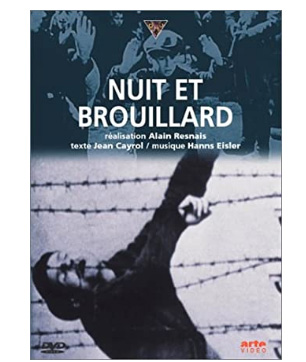
Night and Fog
Synopsis
Commissioned to commemorate the horrors of the Nazi concentration camps a decade after World War II, the landmark documentary contrasts haunting, peaceful color footage of abandoned ruins at Auschwitz and Majdanek with horrifying, stark black-and-white archival photographs and film reels shot by the Nazis themselves. Narrated with chilling poetic restraint, the film chronicles the systematic deportation, forced labor, medical experimentation, and industrial mass murder orchestrated across the Third Reich. It serves as an urgent, timeless warning against historical amnesia and returning fascism.
The Making of the Film
Director Alain Resnais was approached by the Comité d'histoire de la deuxième guerre mondiale to create a short documentary memorializing concentration camp atrocities, envolving concentration camp survivor Jean Cayrol as narrator and writer. Producers navigated delicate censorship hurdles regarding French complicity in Vichy deportations, ultimately ensuring the film addressed institutional collaboration. The production blended modern color tracking shots of empty barbed wire with rare archival footage. Argos Films backed the historical project.
Critical Reception
Critics showered the documentary with universal critical acclaim upon its release, praising Alain Resnais's solemn direction, Jean Cayrol's poetic narration, and Hans Eisler's haunting musical score. Reviewers lauded the film for its profound moral clarity, historical rigor, and refusal to rely on cheap emotional manipulation. Audiences across Europe were deeply shaken by its unflinching depiction of industrial genocide. It stands as one of the greatest documentary masterpieces ever produced.
Behind-the-Scenes Stories
Alain Resnais drew visual inspiration from historical photography, survivor testimonies, and Holocaust archives. Jean Cayrol, who survived Mauthausen concentration camp, penned the narration to ensure absolute emotional and historical fidelity. During filming at Auschwitz, modern color cameras glided silently over quiet grassy fields where barracks once stood, emphasizing the haunting ghosts of history. Censors requested minor edits regarding French police uniforms in archival clips.
Themes Explored
The narrative explores the Holocaust, industrial mass murder, historical memory, human complicity, and fascism. It examines how easily humanity forgets mass atrocities when physical ruins turn to grass. Furthermore, it highlights warning.
Ending Explained
The documentary concludes with a sobering warning that those who pretend atrocities ended with the war are blind to the rising hatred around them, ending on a haunting note of vigilance. A profound moral resolution closes the masterpiece.
Meaning of the Title
The French title 'Nuit et brouillard' refers to the Nazi 'Nacht und Nebel' (Night and Fog) decree, under which political prisoners vanished without a trace into concentration camps.
Hans Eisler composed a chilling, minimalist orchestral score featuring sparse brass and mournful strings that heightens the somber historical weight.
Other monumental Holocaust documentaries and films such as Shoah, Schindler's List, and The Pianist.