

 Français
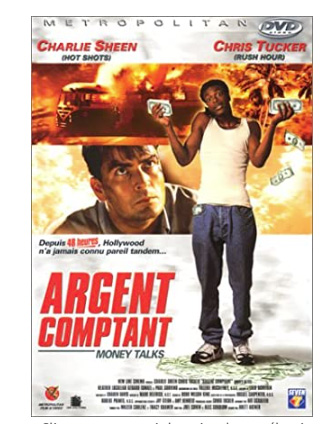
Money Talks
Synopsis
Franklin Hatchett is a small-time criminal whose life changes dramatically after he becomes involved in a prison transport incident. Following an unexpected escape, he finds himself pursued by the police and connected to a dangerous diamond-smuggling operation. A television journalist named James Russell becomes involved in the situation and sees an opportunity for a major story. The two men form an unlikely partnership as they attempt to survive a series of increasingly chaotic events.
The Film's Origins
Money Talks was developed as an action comedy built around the contrast between two very different personalities. The project brought together screenwriter Joel Cohen and Alec Sokolow, who created a story combining criminal intrigue with fast-paced humour. Producer and director Brett Ratner became involved after Chris Tucker recommended him for the directing position. The two had previously worked together on a music video, and Tucker believed Ratner understood his comic style. Rather than adapting a novel or a true story, the filmmakers created an original buddy-comedy narrative. Charlie Sheen was selected to play a television journalist whose controlled personality contrasts with Franklin Hatchett's impulsive behaviour. The production was designed to showcase Tucker's energetic delivery and his ability to create humour through rapid dialogue. Its storyline combines prison escapes, police investigations and diamond-related criminal activities. The film also marked the beginning of a professional collaboration between Ratner and Tucker that would continue with the Rush Hour franchise.
Critical Reception
Professional reviews: Critics generally gave the film negative or mixed reviews, with several considering its storyline predictable. Chris Tucker's energetic performance nevertheless attracted praise from some reviewers. His comic timing and distinctive delivery were frequently identified as the production's strongest elements. Charlie Sheen's performance received a more divided response, particularly because of the contrast between the two leading characters. Roger Ebert was among the critics who appreciated Tucker's screen presence and gave the film a more favourable assessment than many other reviewers.
Audience reception: The film performed reasonably well commercially and opened strongly at the American box office. Audiences responded positively to Chris Tucker's comedy and the fast-paced relationship between the two protagonists. Its popularity was particularly noticeable among viewers who enjoyed action comedies built around mismatched partners. Although it did not become a major critical success, it maintained a following through television and home video releases.
Awards: Money Talks did not receive major Academy Award or BAFTA recognition. Its soundtrack received commercial attention and achieved a Gold certification in the United States. The film's box-office performance also helped establish Brett Ratner as a commercially promising director. Its principal legacy is connected to the beginning of his collaboration with Chris Tucker, which subsequently became particularly successful through the Rush Hour films.
Behind-the-Scenes Stories
Director's inspirations: Brett Ratner wanted to create an energetic action comedy that would allow Chris Tucker to showcase his distinctive comic personality. The film follows the tradition of buddy movies in which two incompatible characters must cooperate to overcome a dangerous situation. Its humour relies heavily on rapid dialogue, misunderstandings and the contrast between the protagonists' personalities. The director also wanted to combine the conventions of crime thrillers with a more accessible comic atmosphere.
Production difficulties: The production required coordination between action sequences, police pursuits and numerous comic scenes. Filming on location involved practical challenges associated with traffic, stunt work and large supporting casts. The filmmakers also had to balance the energetic performances with the requirements of a coherent crime narrative. Because the film was intended to move quickly, the editing process played an important role in maintaining its rhythm. These elements helped create the fast-paced style associated with the finished production.
A memorable scene: Several of the film's most memorable moments involve Franklin attempting to escape situations that become increasingly complicated through his own impulsive decisions. His rapid-fire dialogue frequently transforms ordinary conversations into comic confrontations. The contrast between his streetwise personality and James Russell's more conventional behaviour provides much of the humour. The action sequences also use exaggerated situations to create comic tension. These moments demonstrate how the film relies on character interaction rather than elaborate plot twists.
Original casting choices: Chris Tucker was central to the project and played Franklin Hatchett. He personally recommended Brett Ratner as director after their previous professional collaboration. Charlie Sheen was selected to portray James Russell, creating a contrasting comic partnership. Heather Locklear played Grace Cipriani, while Paul Sorvino appeared as Guy Cipriani. The supporting cast also included Elise Neal, Faizon Love and several familiar character actors.
Themes Explored
Money Talks explores the relationship between crime, ambition and the pursuit of financial success. Franklin Hatchett represents an individual whose impulsive decisions repeatedly place him in dangerous situations. James Russell, by contrast, is motivated by professional ambition and the desire to secure a major journalistic opportunity. Their unlikely partnership demonstrates how people with different values can become dependent on one another. The film also examines the influence of media attention and the public fascination with criminal stories. Trust becomes an important issue as both men discover that cooperation is necessary for survival. Friendship develops through shared danger rather than an established personal connection. The comedy also highlights the contrast between social respectability and the criminal world. Ultimately, the film presents ambition and greed as forces that can lead individuals into unpredictable situations.
Ending Explained
The final confrontation brings Franklin and James closer to resolving the criminal conspiracy surrounding the stolen diamonds. Their cooperation allows them to overcome the immediate danger posed by the criminals and the authorities pursuing them. Franklin's quick thinking and James's professional resources become complementary strengths. The situation also forces James to reconsider his priorities, particularly the importance of personal loyalty compared with career advancement. Franklin emerges from the events with a better understanding of the consequences of his actions, although his personality remains fundamentally unchanged. Their relationship develops from reluctant cooperation into a genuine friendship. The resolution follows the conventions of the buddy-comedy genre, bringing the central conflict to a satisfying conclusion. The ending emphasises the importance of trust and teamwork in situations where neither protagonist could succeed alone.
Meaning of the Title
The title Money Talks refers to the influence of money over people's decisions and behaviour. It reflects the central role played by diamonds, criminal profits and financial ambition in the story. The expression also suggests that financial interests can become more powerful than personal values or conventional morality. The title has a deliberately playful tone that matches the film's energetic action-comedy style. It introduces the central motivation behind the criminal conspiracy while also hinting at the absurd situations created by greed. In a broader sense, it reflects the film's interest in the relationship between money, power and opportunity.
The film features a soundtrack released by Arista Records in August 1997. It combines hip-hop, R&B and contemporary urban music, reflecting the cultural atmosphere of the period. The soundtrack includes contributions from several performers and achieved a Gold certification in the United States. Its musical identity complements the film's energetic action-comedy style. Although it is not primarily remembered for an orchestral score, the soundtrack remains an important part of its 1990s atmosphere.
Viewers who enjoy Money Talks may appreciate Rush Hour, another action comedy starring Chris Tucker and built around an unlikely partnership. Bad Boys combines police action with humour and contrasting personalities. Beverly Hills Cop offers a similar mixture of criminal investigation and fast-paced comedy. The Last Boy Scout also combines crime, action and sharp comic dialogue.