

 Français
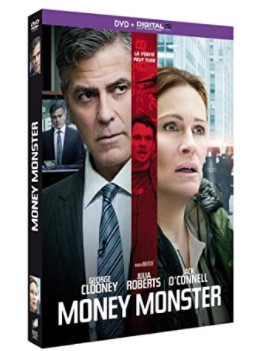
Money Monster
Synopsis
Lee Gates is the flamboyant host of a financial advice TV show, whose live broadcast is hijacked by a desperate young man. The intruder, who lost all his savings after following one of Lee's stock tips, takes the host hostage and forces the production team to find out what really happened. With the whole world watching, Lee and his producer Patty must race against time to uncover the truth behind a mysterious financial collapse. The film is a tense thriller about greed, media and the power of the markets.
The Making of the Film
Money Monster was directed by Jodie Foster and stars George Clooney, Julia Roberts and Jack O'Connell. The screenplay was inspired by the world of financial television, with its charismatic hosts and quick-fire investment advice, and by the anger many people felt toward the financial system after the 2008 crisis. Foster was drawn to the idea of ordinary people feeling powerless against opaque financial institutions. The film unfolds almost in real time, which gives it the tension of a live broadcast gone wrong. It was presented out of competition at the Cannes Film Festival in 2016 before its theatrical release. The film also reunited Clooney and Roberts, who had already worked together on the "Ocean's" films.
Reviews and Reception
Summary of Professional Reviews
Critics gave the film a mixed to positive reception. The performances of Clooney, Roberts and O'Connell were generally appreciated, as was Foster's efficient and suspenseful direction. Some reviewers criticized the script for being too simplistic in its portrayal of the financial world. Others felt that the film started with a strong idea but lost some of its bite in the final act.
Audience Reception
The film performed decently at the box office and was well received by viewers who enjoy fast-paced thrillers. Audiences were drawn to the combination of star power and topical subject matter. Many found it a tense and entertaining ride, even if it did not offer deep financial analysis. It remains a solid, accessible thriller about money and media.
Themes Explored
The film is a critique of the financial system and the way it can ruin ordinary lives with little accountability. It explores the role of the media in turning financial speculation into entertainment. The central hostage situation raises questions about responsibility: who is to blame when a bad investment destroys a family? Celebrity culture also comes under attack, as the host must face the real consequences of his on-screen persona. The story shows how technology and algorithms can hide the human cost of financial decisions. At its core, it is a moral thriller about truth and accountability.
Ending Explained
The film ends with the unraveling of the financial scheme behind the collapse, as the people involved are finally exposed to public scrutiny. The hostage drama reaches a tragic conclusion, reminding us that desperate actions often have irreversible consequences. The final scenes suggest that the truth can emerge when ordinary people refuse to look away, even if it comes at a cost. The ending leaves a sense of unease about how easily the system can protect those in power.
Meaning of the Title
"Money Monster" is the name of the fictional financial TV show hosted by Lee Gates. The phrase suggests both the excitement of money and its monstrous side, as an uncontrollable force that devours people. The title perfectly captures the film's theme: money as a spectacle and as a threat.
Similar Films
- Network (1976): a classic satire of television and media power.
- Dog Day Afternoon (1975): a tense, real-time drama of a desperate crime.
- The Big Short (2015): a look at the financial crisis of 2008.
- Wall Street (1987): a story about greed and corruption in the stock market.
- Inside Man (2006): a clever hostage thriller with a social undertone.