

 Français
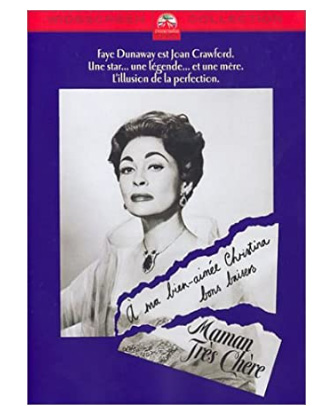
Mommie Dearest
Synopsis
Joan Crawford is a Hollywood superstar who adopts a little girl, Christina, hoping to show the world that she is the perfect mother. Behind closed doors, her obsession with control and perfection turns her home into a place of fear. As Christina grows up, she endures cruel punishments and emotional abuse while Joan's career begins to fade. The film is a dramatic portrait of a troubled star and the daughter who lived in her shadow.
The Making of the Film
Mommie Dearest is based on the 1978 memoir by Christina Crawford, who described her upbringing by the famous actress. Frank Perry directed the film, which was adapted by Frank Yablans, Frank Perry, Tracy Hotchner and Robert Getchell. Faye Dunaway took on the role of Joan Crawford, with Diana Scarwid playing the adult Christina and Mara Hobel the child. Dunaway transformed her appearance for the role, adopting Crawford's distinctive eyebrows and make-up. The film was released in 1981 and was intended as a serious drama about abuse behind the glamour of Hollywood.
Critical Reception
Summary of Professional Reviews
Critics were largely harsh, finding the film melodramatic and over the top. Many felt that Faye Dunaway's performance was so extreme that it turned the story into unintended camp. Some reviewers acknowledged her commitment and the unsettling power of certain scenes. Over time, the film has been re-evaluated as a fascinating, if wildly excessive, piece of cinema.
Audience Reception
The film was a commercial success despite its reviews, drawing curious audiences. Over the years, it has become a cult classic, enjoyed for its intensity and its quotable moments. Audiences have often laughed at scenes that were meant to be disturbing. It remains one of the most talked-about Hollywood biographical films.
Awards Received
The film was named Worst Picture at the Golden Raspberry Awards, and Faye Dunaway received the Worst Actress award. It was later also named Worst Picture of the Decade by the same awards. The wins cemented its reputation as a cult curiosity, although many admirers now consider the performance memorable in its own right.
Behind-the-Scenes Stories
Anecdote About a Particular Scene
The most famous scene of the film shows Joan raging at her daughter over wire clothes hangers in the closet. The sequence has been endlessly quoted and parodied and became the film's signature moment. Dunaway played the scene with such ferocity that it has overshadowed almost everything else about the movie.
Themes Explored
The film is a study of control, image and the damage that can be done behind a polished facade. It shows how a woman obsessed with perfection can become cruel to the people closest to her. The relationship between mother and daughter is marked by fear, resentment and a desperate wish for love. Fame and its pressures play a central role in Joan's behavior. The story also reflects on the way Hollywood glamour can hide private suffering. Ultimately, it is a portrait of a family destroyed by ego.
Ending Explained
After Joan's death, her children learn that she has left them out of her will. In the final scene, the adult Christina reacts to the reading with quiet and bitter disbelief, showing that the wounds of her childhood have never fully healed. The ending suggests that the cycle of resentment continues even after death. It leaves the audience with a sense of unresolved pain.
Meaning of the Title
"Mommie Dearest" refers to the way Joan Crawford insisted that her daughter address her. The phrase sounds affectionate, but in the story it takes on a bitter irony, reflecting the gap between the mother's public image and her private behavior. The title was also used for the memoir on which the film is based.
Original Soundtrack
The score was composed by Henry Mancini, the celebrated composer of "The Pink Panther" and "Breakfast at Tiffany's". His music adds elegance and melodrama to the story, matching its glamorous and unsettling mood. It is one of the more refined aspects of an otherwise outrageous film.
Similar Films
- Whatever Happened to Baby Jane? (1962): a gothic drama about two aging actresses.
- Mildred Pierce (1945): the classic film that won Joan Crawford an Oscar.
- Postcards from the Edge (1990): a comedy-drama about a mother and daughter in Hollywood.
- Feud: Bette and Joan (2017): a television series about the rivalry between two stars.