

 Français
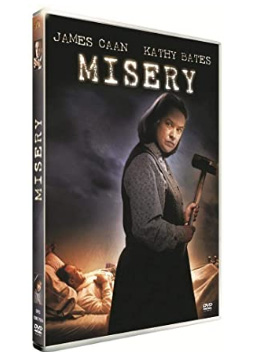
Misery
Synopsis
Misery is a terrifying and claustrophobic psychological thriller adapted from Stephen King's bestselling novel. The story follows Paul Sheldon, a successful best-selling novelist who crashes his car in a severe blizzard in rural Colorado and is rescued by Annie Wilkes, a former nurse who claims to be his number one fan. Initially nursing him back to health in her isolated home, Annie discovers that Paul has killed off her favorite literary character in his latest manuscript, unleashing a psychotic rage. Trapped with a broken legs and cut off from civilization, Paul must use his wits to survive his unhinged captor. The film delivers masterclass suspense and unforgettable tension.
The Making of the Film
Producer Andrew Scheinman and screenwriter William Goldman secured the film rights to Stephen King's 1987 novel after reading advance proofs, recognizing its incredible cinematic potential for a two-character thriller. Director Rob Reiner took on the project, aiming to craft a tight, Hitchcockian psychological suspense film rather than a traditional horror gore-fest. The production utilized an isolated studio soundstage to build Annie Wilkes's snowbound farmhouse, amplifying the suffocating claustrophobia. James Caan and Kathy Bates were cast as the lead duo, bringing intense dramatic gravitas and electric chemistry to their iconic confrontation scenes.
Critical Reception
Professional critics greeted the film with overwhelming critical acclaim, praising its masterclass suspense, tight screenplay, and extraordinary lead performances. Reviewers reserved their highest praise for Kathy Bates, whose terrifyingly complex and unhinged portrayal of Annie Wilkes became an instant cinematic benchmark. Critics commended Rob Reiner's confident direction for maintaining relentless psychological tension within a single primary location. It was hailed instantly as one of the finest Stephen King adaptations ever produced.
Audiences responded with immense enthusiasm and high box office receipts, turning the psychological thriller into a major commercial and cultural hit worldwide. Viewers were gripped by the terrifying ankle-hobbling scene and the nail-biting cat-and-mouse dynamics between the captive author and his crazed fan. Word-of-mouth recommendations cemented its status as a timeless classic of modern suspense cinema. Its iconic moments remain deeply embedded in popular culture.
The film achieved historic recognition during awards season, winning the Academy Award for Best Actress for Kathy Bates, marking a rare major win for a psychological horror thriller.
Behind-the-Scenes Stories
Director Rob Reiner drew inspiration from classic Alfred Hitchcock thrillers, gothic horror tropes, and stage play conventions to construct the claustrophobic indoor narrative. Coordinating the infamous hobbling scene required meticulous camera angles, specialized prop engineering, and careful physical stunt work to simulate brutal realism. During the filming of the tense dinner table scenes, Kathy Bates and James Caan maintained intense psychological focus between takes. Before Kathy Bates was cast, several veteran Hollywood actresses were considered for the demanding role of Annie Wilkes.
Themes Explored
Obsession, Captivity, Creativity, Survival, Fandom, Control
Ending Explained
The tense finale shows Paul finally overpowering Annie after a brutal struggle, escaping her farmhouse and eventually finding literary redemption with a new book.
Meaning of the Title
The title refers both to the romance novel series written by the protagonist and the name of the fictional character that sparks Annie Wilkes's psychotic obsession.
Original Soundtrack
Marc Shaiman composed a chilling, suspenseful orchestral score that utilized minimalist piano chords and eerie brass notes to amplify the psychological terror.
Fatal Attraction, The Silence of the Lambs, The Shining, Panic Room